Why Santa Clara Homeowners Are Choosing Heat Pumps for Year-Round Comfort
Heat pump installation in santa clara ca offers homeowners an efficient, all-in-one solution for year-round climate control. If you're researching heat pumps for your Santa Clara home, here's what you need to know:
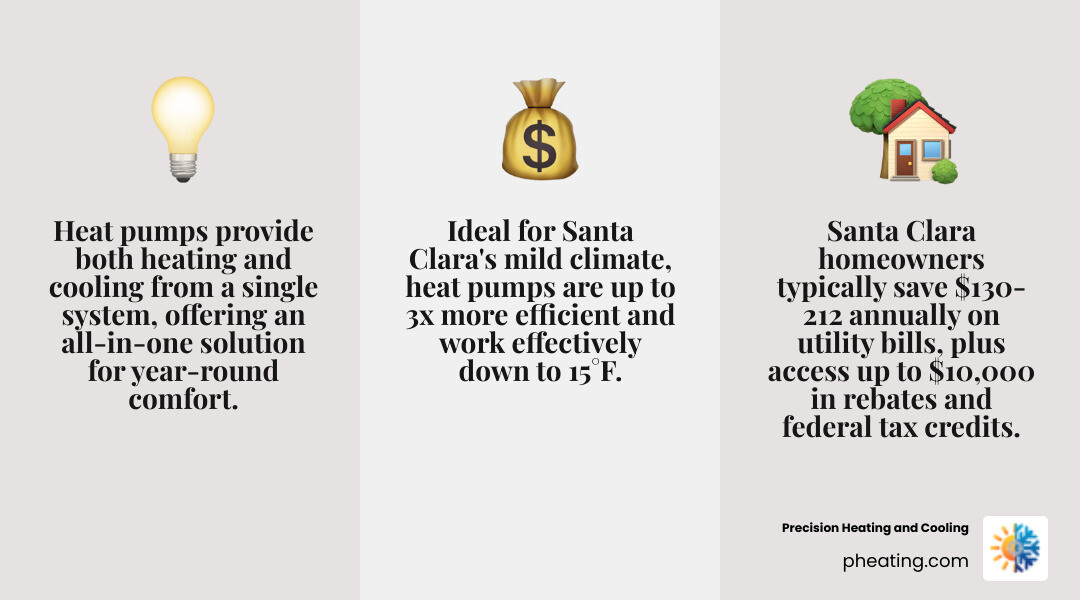
- All-In-One Solution: Heat pumps provide both heating and cooling from a single system
- Energy Efficiency: Up to 3x more efficient than traditional systems by transferring heat instead of generating it
- Santa Clara Climate: Ideal for our mild winters and warm summers, working effectively in temperatures down to 150F
- Incentives May Be Available: Depending on current programs, homeowners may be able to take advantage of rebates or tax credits
- Installation Timeline: Most installations complete in 1-2 days
Heat pumps work by transferring heat rather than creating it, making them a smart choice for Santa Clara's moderate Mediterranean climate. During summer, they pull heat from inside your home and release it outdoors, just like an air conditioner. In winter, the process reverses, extracting heat from the outside air and moving it indoors to warm your home. This dual functionality means you get consistent comfort year-round from one efficient system.
Beyond comfort, heat pumps align with California's electrification goals and can significantly reduce your home's carbon footprint compared to traditional gas furnaces. With high SEER ratings, modern inverter-driven models, and quieter operation, they're becoming a preferred choice for Santa Clara homeowners looking to upgrade their HVAC systems.
Looking for more information about heat pump services in Santa Clara? Get started with a free consultation from Precision Heating and Cooling today.
I'm Tony Lara, and I've spent years helping homeowners find the right HVAC solutions for their comfort and efficiency needs. My experience with heat pump installation in santa clara ca has shown me how transformative these systems can be for local families seeking reliable, energy-efficient climate control.
Why Heat Pumps are the Smart Choice for Santa Clara Homes
Santa Clara, with its delightful Mediterranean climate, boasts warm, sunny summers and mild, often damp, winters. This unique weather pattern makes heat pump installation in santa clara ca an exceptionally smart choice for local homeowners. Our climate, characterized by temperatures rarely dipping below 15 0b0F, is perfectly suited for the efficient operation of modern heat pumps. They excel at providing comfortable cooling during those pleasant 80s and low 90s summer days, and surprisingly effective heating during our gentle winters.
Beyond the immediate comfort, choosing a heat pump translates into tangible benefits for your home and the environment. Santa Clara County homeowners often experience improved efficiency and lower energy use after installing heat pumps, especially when replacing older, less efficient equipment. This is because heat pumps are designed to move heat rather than generate it, making them incredibly efficient.
The push for electrification in California also makes heat pumps a forward-thinking investment. By opting for an all-electric heat pump system, you're not only enhancing your home's comfort and efficiency but also contributing to the state's goals for reduced greenhouse gas emissions. For more information on energy-efficient heating and cooling options, you can refer to resources like the U.S. Department of Energy.
A heat pump provides year-round comfort from a single, integrated system, eliminating the need for separate furnaces and air conditioners. This streamlined approach offers consistent temperatures throughout your home, ensuring that you're always cozy, whether it's a brisk January morning or a warm August afternoon.
Advantages Over Traditional Heating and Cooling
When we talk about heating and cooling, many people still think of separate furnaces and air conditioners. However, heat pumps offer a compelling alternative, bringing a host of advantages that make them a superior choice for many Santa Clara homes:
- Up to Three Times More Efficient: This is perhaps the most significant advantage. Traditional systems generate heat by burning fuel or using electric resistance. Heat pumps, on the other hand, simply transfer existing heat from one place to another. This fundamental difference makes them up to three times more efficient.
- Lower Energy Consumption: Because they operate so efficiently, heat pumps typically consume significantly less energy than many conventional HVAC systems. This lower energy consumption can translate into reduced utility use, a benefit every homeowner appreciates.
- Consistent Temperatures: Heat pumps provide a more even and consistent temperature throughout your home. Modern inverter-driven, variable-speed models can precisely adjust their output, avoiding the large temperature swings often associated with older, single-stage systems. This means fewer cold spots in winter and fewer humid areas in summer.
- Improved Air Quality: Many heat pump systems come equipped with advanced filtration capabilities, helping to remove dust, allergens, and other airborne particles from your indoor environment. Some ductless mini-split systems can even offer peace of mind regarding airborne contaminants by eliminating the need for extensive ductwork where dust can accumulate.
- Dual Functionality: This is the ultimate convenience. One system handles all your heating and cooling needs year-round. No more switching between units or maintaining two separate systems. It's an all-in-one comfort solution.
Energy Efficiency and Environmental Sustainability
Where energy conservation and environmental impact are increasingly important, heat pumps shine as a guide of sustainable home comfort.
- High SEER Ratings Support Lower Energy Use: Heat pumps are rated with Seasonal Energy Efficiency Ratio (SEER) for cooling and Heating Seasonal Performance Factor (HSPF) for heating. Higher ratings indicate greater efficiency. By choosing a high-SEER heat pump, you're investing in a system that will use less electricity to achieve the same level of comfort.
- Reduces Greenhouse Gas Emissions: Unlike gas-fired furnaces that release carbon emissions directly into the atmosphere, heat pumps use electricity. If your electricity comes from renewable sources, your heat pump can operate with virtually zero on-site emissions, significantly reducing your home's carbon footprint. Even with grid electricity, they are still a cleaner option due to their high efficiency.
- Supports a Sustainable Home: Choosing a heat pump is a proactive step towards making your home more environmentally friendly and energy-independent. It aligns with broader sustainability goals and contributes to a healthier planet.
- Modern Inverter-Driven Models Offer Quieter Operation: Older HVAC systems could be quite noisy. However, modern inverter-driven, variable-speed heat pumps operate with remarkable quietness. This is a significant advantage, especially in denser Santa Clara neighborhoods, helping ensure your comfort isn't compromised by intrusive operational sounds. These advanced models also contribute to lower energy use by precisely matching heating and cooling output to your home's needs.
Understanding the Heat Pump Installation in Santa Clara, CA
Starting on a heat pump installation in santa clara ca is a significant upgrade for your home's comfort and efficiency. While the benefits are clear, understanding the process involved helps ensure a smooth and successful transition. From the initial assessment to the final system check, every step is crucial for optimal performance and longevity.
Our approach prioritizes meticulous site evaluation, selecting the right system for your specific needs, and executing a professional installation that adheres to all local codes and best practices. This comprehensive process ensures your new heat pump will deliver reliable, efficient comfort for years to come.
How a Heat Pump Works
At its core, a heat pump is an ingenious device that leverages a fundamental scientific principle: heat transfer. Instead of generating heat (like a furnace burning gas) or creating cold (like a traditional AC), it simply moves existing heat from one place to another. Think of it like a heat shuttle, moving warmth where you need it most.
The magic happens thanks to a special substance called refrigerant, which circulates through a closed loop system. Here's a simplified breakdown:
- Refrigerant Cycle: The refrigerant absorbs and releases heat as it changes between liquid and gas states, facilitated by a compressor, expansion valve, and two heat exchanger coils (one indoors, one outdoors).
- Reversing Valve Function: This clever component allows the heat pump to switch between heating and cooling modes. It simply reverses the direction of the refrigerant flow.
- Heating Mode (Winter): In winter, the outdoor coil acts as an evaporator, absorbing heat from the outside air (even cold air contains thermal energy!). The compressor then increases the refrigerant's temperature and pressure, sending it to the indoor coil. Here, the indoor coil acts as a condenser, releasing its heat into your home. The now-cooler refrigerant cycles back outside to repeat the process, warming your home by extracting heat from the environment.
- Cooling Mode (Summer): When summer arrives, the reversing valve kicks in. Now, the indoor coil becomes the evaporator, absorbing heat from inside your home. The refrigerant then carries this heat outside, where the outdoor coil acts as a condenser, releasing the heat into the ambient air. This process efficiently cools your home, much like a standard air conditioner.
This continuous transfer of heat, rather than generation, is why heat pumps are so remarkably energy-efficient.
Common Types of Heat Pumps
The world of heat pumps offers several options, each suited for different home structures and preferences. When considering heat pump installation in santa clara ca, we'll help you explore the best fit for your property:
- Air-Source Heat Pumps: These are the most common type and what most people refer to when discussing heat pumps. They transfer heat between your home and the outside air. Air-source heat pumps are an excellent choice for central HVAC replacement and are highly efficient in Santa Clara's moderate climate.
- Ductless Mini-Split Systems: Perfect for homes without existing ductwork, additions, or for creating zoned heating and cooling in specific rooms. Ductless mini-splits consist of an outdoor unit connected to one or more indoor air handlers. They offer incredible flexibility and efficiency, allowing you to control temperatures in individual areas of your home.
- Geothermal Heat Pumps: While highly efficient, these systems are less common in urban areas like Santa Clara due to the significant excavation required. Geothermal heat pumps exchange heat with the stable temperatures of the earth rather than the air, offering consistent performance regardless of outdoor air temperatures.
- Hybrid Systems: These combine the efficiency of a heat pump with the robust heating power of a traditional gas furnace. A hybrid system automatically switches between the heat pump and the furnace based on outdoor temperatures, optimizing for efficiency and comfort, and offering a gradual transition towards all-electric.
The Typical Installation Process
A successful heat pump installation in santa clara ca is a multi-step process that requires careful planning and execution. Our experienced team follows a thorough procedure to ensure your new system performs optimally:
- Home Load Calculation (Manual J): This is the critical first step. We perform a detailed assessment of your home's unique characteristics—including its size, insulation levels, window performance, and orientation—to accurately determine its heating and cooling demands. This ensures your new heat pump is precisely sized, preventing issues like short cycling, reduced efficiency, and premature wear that can occur with improperly sized units.
- Ductwork Inspection (for ducted systems): If you're installing a ducted heat pump, we carefully inspect your existing ductwork for leaks, blockages, or inadequate sizing. We may recommend sealing, insulating, or even modifying ducts to ensure optimal airflow and efficiency.
- Electrical Panel Review: Heat pumps require adequate electrical capacity. We assess your home's electrical panel to ensure it can safely support the new system, making any necessary upgrades to breakers or service as required.
- Outdoor Unit Placement: We carefully select the best location for the outdoor unit, considering factors like adequate clearance for airflow, minimizing noise disruption for you and your neighbors, and adherence to local regulations.
- Indoor Unit Installation: Depending on your system type (ducted or ductless), we'll install the indoor air handler(s) or mini-split units. For ducted systems, this involves integrating with your existing ductwork. For ductless systems, it means mounting compact indoor units strategically for optimal comfort.
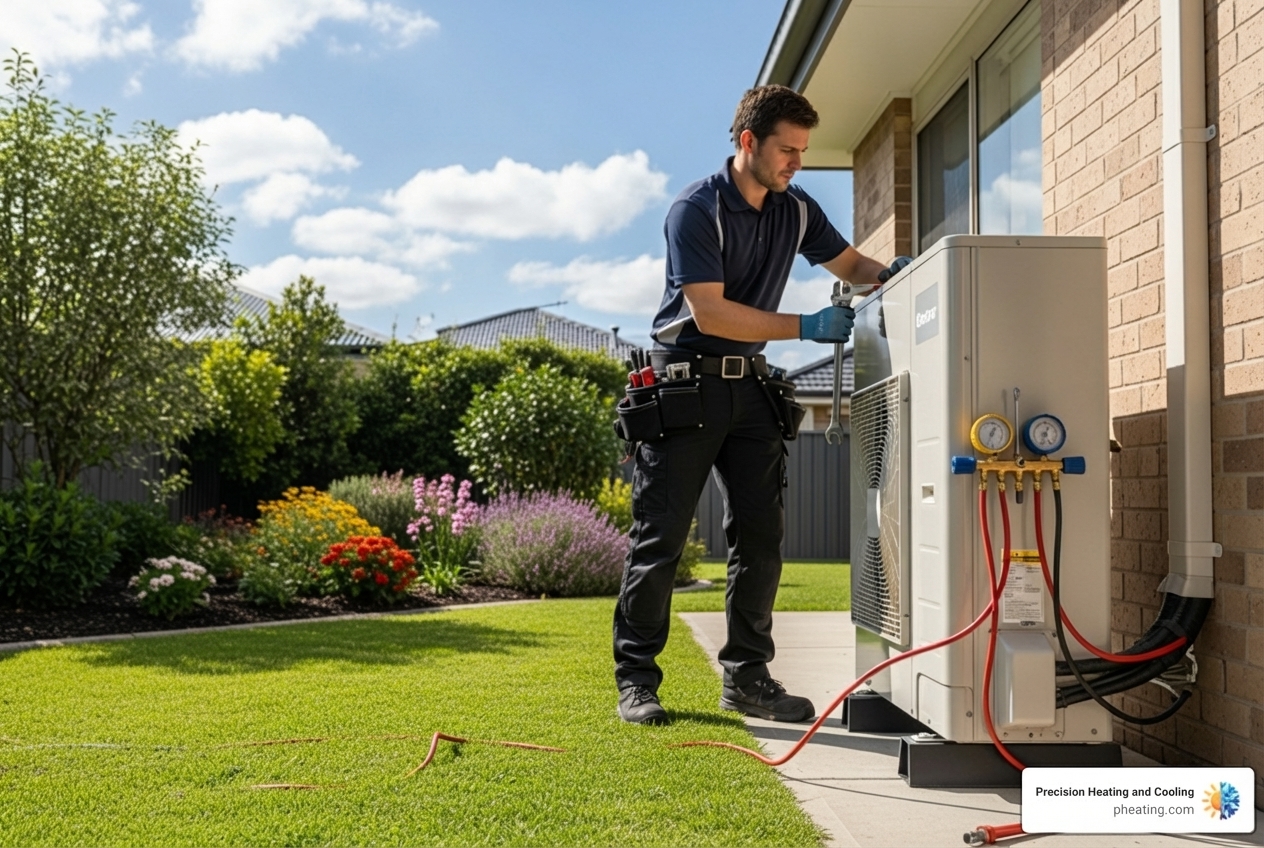
- Refrigerant Line and Electrical Connections: Our certified technicians handle the precise connections of refrigerant lines and electrical wiring, ensuring all components are properly sealed and safely integrated.
- System Testing and Commissioning: Once installed, we thoroughly test and commission the entire system. This includes verifying the refrigerant charge, checking airflow (CFM), static pressure, amperage draw, voltage, and calibrating the thermostat. We perform performance tests in both heating and cooling modes, checking defrost cycles and measuring temperature splits to confirm your system is operating to specifications and delivering consistent comfort.
- Permits and Code Compliance: We handle all necessary permits and ensure your installation complies with the City of Santa Clara Building Division requirements and California Title 24 energy code. This ensures your system is safe, legal, and eligible for any available rebates or incentives.
How to Choose the Right Heat Pump for Your Home's Specific Needs
Choosing the perfect heat pump for your Santa Clara home involves more than just picking a brand. It's about finding a system that seamlessly integrates with your lifestyle and home's unique characteristics. We'll guide you through these crucial considerations:
- Proper Sizing is Paramount: As mentioned, an accurately sized unit is vital. An undersized unit will struggle to heat or cool your home, running constantly and inefficiently. An oversized unit will "short cycle," turning on and off too frequently, which wastes energy, causes temperature fluctuations, and accelerates wear and tear. Our detailed home load calculation (Manual J) ensures we get this just right.
- Understanding SEER2 and HSPF2 Ratings: These ratings are your benchmarks for efficiency. SEER2 (Seasonal Energy Efficiency Ratio 2) measures cooling efficiency, while HSPF2 (Heating Seasonal Performance Factor 2) measures heating efficiency. In Santa Clara's moderate climate, high-efficiency SEER2/HSPF2 models and inverter-driven compressors are typically recommended to maximize energy savings and comfort.
- Home Layout and Insulation: These factors significantly influence your home's heating and cooling demands. A well-insulated home with efficient windows will require a smaller, less powerful system than an older, less insulated property. We take all these elements into account during our site evaluation.
- Existing Ductwork Condition: If your home has existing ductwork, we'll assess its condition. Repairing leaky ducts or upgrading insulation can drastically improve your system's efficiency. If ductwork isn't present or is in poor condition, ductless mini-split systems might be a more efficient and practical solution.
- Zoning Needs: Do you have a multi-story home, a home office, or areas with different comfort preferences? Zoning capabilities or multi-head ductless systems can provide individualized temperature control for different areas, preventing energy waste and enhancing comfort where it's needed most.
What to Expect After Your Installation
Once your new heat pump system is expertly installed, our commitment to your comfort continues. We believe that empowering you with knowledge is key to maximizing your system's performance and longevity.
Homeowner Orientation
After installation, our technicians will walk you through everything you need to know about your new system. This includes:
- Thermostat Programming: We'll show you how to program your smart or communicating thermostat, set schedules, and use any zoning controls to optimize comfort and energy savings.
- Maintenance Basics: You'll learn about simple tasks you can perform, such as regular filter changes, and understand the importance of seasonal checks.
- Documentation: We'll provide you with all warranty paperwork, installation records, and startup reports, which are crucial for future service or rebate claims.
Required Maintenance for Your Heat Pump System
Just like any finely tuned machine, your heat pump thrives on regular care. Consistent maintenance is the secret to ensuring its efficiency, extending its lifespan, and avoiding unexpected breakdowns.
- Regular Filter Changes: This is the easiest and most important task you can do. Dirty filters restrict airflow, making your system work harder and consume more energy. We'll recommend the right filter type and replacement interval for your home.
- Cleaning Outdoor Unit: Keep the outdoor unit free from leaves, dirt, and debris. Ensure adequate clearance around the unit to prevent airflow obstruction.
- Checking Condensate Drain: Periodically check the condensate drain line for clogs. A blocked drain can lead to water leaks and potential system shutdowns.
- Annual Professional Tune-ups: We recommend scheduling professional servicing at least once a year. Our annual tune-ups include checking refrigerant levels, cleaning coils, inspecting electrical components, and ensuring all parts are functioning correctly. This routine preventive maintenance is vital for preserving efficiency and warranty eligibility.
How Long Does a Heat Pump System Typically Last?
With proper care and maintenance, a heat pump system is a durable investment designed for the long haul. A heat pump typically lasts 10-15 years with regular maintenance. Some systems, especially well-maintained high-quality models, can even exceed this lifespan.
Regular maintenance plays a crucial role in achieving this longevity. Neglecting routine check-ups can lead to premature wear and tear, reducing the system's lifespan and increasing the likelihood of costly repairs. Manufacturer warranties usually cover major components like the compressor, and our installation labor is also backed by a warranty, giving you added peace of mind. Keeping all your warranty paperwork and installation records organized is important for any future claims.
Signs Your Current HVAC System Needs Replacement
Sometimes, a repair just won't cut it, and it's time to consider an upgrade, perhaps to a high-efficiency heat pump. Here are some common signs that your current HVAC system might be signaling its retirement:
- Rising Energy Bills: If your utility bills are steadily climbing without a corresponding increase in usage, your old system might be losing efficiency, working harder to achieve the same results.
- Frequent or Costly Repairs: Constantly calling for repairs or facing significant repair costs is a clear indicator that your system is nearing the end of its functional life. At some point, the cost of repairs outweighs the benefit.
- Inconsistent Temperatures: Are some rooms too hot while others are too cold? An aging system often struggles to distribute conditioned air evenly, leading to uncomfortable hot and cold spots.
- System Age Over 10 Years: While some systems can last longer, most traditional furnaces and AC units become less efficient after 10-15 years. This is a good time to start evaluating replacement options.
- Strange Noises or Odors: Grinding, squealing, banging, or unusual odors (like a burning smell) emanating from your HVAC system are red flags that something is seriously wrong and requires immediate attention.
If you're experiencing any of these issues, it might be time to explore the benefits of a modern heat pump.
Frequently Asked Questions about Heat Pump Installation
We understand you might have a few more questions as you consider heat pump installation in santa clara ca. Here are some common inquiries we receive:
How long does a heat pump installation typically take?
Most heat pump installations in Santa Clara County take one to two days to complete. The exact timeline can vary depending on the complexity of the job:
- Ductless mini-split installations often finish in a single day due to their simpler setup.
- Traditional ducted systems or installations requiring significant electrical work (like a panel upgrade) may extend to two days. Geothermal systems, while less common in Santa Clara, would naturally take longer due to excavation requirements.
Our team works efficiently and carefully to help ensure a smooth and timely installation process.
Are there rebates or incentives available for heat pump installations in Santa Clara?
Homeowners exploring heat pump installation in santa clara ca may have access to a variety of attractive rebates and incentives that can help reduce upfront investment:
- Federal Tax Credits: You may qualify for federal tax credits for high-efficiency heat pumps and mini-splits.
- State-Level Programs: California has multiple electrification incentive programs that periodically provide rebates for qualified installations.
- Utility Programs: Local utilities sometimes run specific heat pump rebate offerings. Income-qualified customers may even receive additional incentives through certain state and federal initiatives.
These programs can often be combined, meaning you might qualify for multiple incentives, making your heat pump installation even more attainable. We can help you navigate these options and ensure you claim all eligible savings.
Do heat pumps work well in Santa Clara's moderate climate?
Yes, heat pumps are exceptionally well-suited for Santa Clara's climate. Our mild winters and warm summers create ideal conditions for heat pump operation.
- Efficient Year-Round Performance: Modern heat pumps are designed to operate efficiently in a wide range of temperatures. They work effectively in temperatures down to about 15 0b0F, which is well below typical local winter temperatures. This means they can provide efficient heating throughout our mild winter months.
- Dual Functionality: The ability to provide both efficient heating and cooling from a single system makes them perfect for year-round comfort in Santa Clara, eliminating the need for separate units. The mild climate allows them to operate efficiently throughout the year, potentially extending their lifespan compared to regions with more extreme weather.
Your Partner for Year-Round Comfort
Choosing heat pump installation in santa clara ca is a decision that brings a multitude of benefits to your home and lifestyle. From energy-efficient operation and improved year-round comfort to contributing to environmental sustainability, heat pumps are a smart, forward-thinking investment. They offer consistent temperatures, improved indoor air quality, and the peace of mind that comes with a reliable, all-in-one heating and cooling solution.
At Precision Heating and Cooling, we bring over two decades of experience to every project. We're dedicated to providing Santa Clara homeowners with expert guidance and professional installation services, helping ensure your transition to a heat pump system is seamless and rewarding. Our team is here to help you select the perfect system for your home, handle the installation with precision, and provide the ongoing support needed to keep your heat pump running efficiently for years to come.
Ready to revolutionize your home's comfort and efficiency? Learn more about our heat pump installation services in Santa Clara, CA and discover how we can help you get pumped about your home's future.


.avif)






.avif)
