


.avif)





Recent Blogs
Stay updated with our latest blog posts.


This hvac repair vs replacement cost guide gives you a clear framework for making one of the most common — and costly — home decisions you'll face.
Quick Answer: Should You Repair or Replace Your HVAC System?
Use these two rules together to get a fast, reliable answer:
Always replace if any of the following are true:
Repair is usually fine if:
Picture this: your AC goes out in the middle of a San Jose summer heat wave, temperatures climbing past 92°F, and a technician is standing in your living room waiting for an answer. Do you pay for the repair — or finally pull the trigger on a new system? It's a high-pressure moment, and most homeowners aren't sure which choice will actually save them money in the long run.
The truth is, there's no single right answer for every situation. The right call depends on your system's age, what component failed, how much the repair costs relative to a replacement, what refrigerant your unit uses, and how efficiently your current system is running. Get the math wrong in either direction — repairing a system that's past its useful life, or replacing one that had years left — and you're leaving real money on the table.
This guide walks you through every factor that matters, with clear thresholds and practical examples so you can make a confident, informed decision.
My name is Tony Lara, and I've spent years in the HVAC field tracking down hard-to-find parts and helping homeowners navigate exactly the kind of hvac repair vs replacement cost decisions covered in this guide. That hands-on experience shapes every recommendation you'll find here.

When your heating or cooling system begins to falter, it is easy to fall into what we call the "repair spiral." This is the frustrating cycle of paying for one minor fix, only to have another component fail a few months later, and then another. Before you know it, you have spent a significant portion of what a brand-new, highly efficient system would have cost, yet you are still left relying on an aging, out-of-warranty unit.
To prevent this financial headache, we recommend applying two objective, mathematical benchmarks: the 50% Rule and the $5,000 Rule.
The 50% Rule is straightforward: if a professional repair estimate is more than half the cost of a complete system replacement, you should put that money toward a new installation. Investing heavily in a system that has already lost a portion of its operational life is rarely a sound financial move.
The $5,000 Rule provides an age-adjusted perspective. To apply this formula, multiply the exact age of your equipment in years by the estimated repair quote in dollars:
$$\text{Age of System (Years)} \times \text{Repair Cost (Dollars)} = \text{Score}$$
If your final score is under $5,000, proceeding with the repair is generally the more sensible choice. If the score exceeds $5,000, replacement is typically the wiser long-term investment.
Let's look at how this plays out in two real-world scenarios:
By using these objective calculations, you can strip the emotion and panic out of the decision. If you are trying to determine where your current system stands on this spectrum, reading our detailed breakdown on Should I Repair or Replace My HVAC System can help you map out your next steps.
Every HVAC system is a collection of mechanical and electrical parts working under constant thermal stress. To make an accurate choice, you must evaluate both the age of the system and the severity of the specific component failure.
While routine maintenance can extend the life of your equipment, every machine eventually reaches its natural limit. In our region—stretching from the coastal-influenced Bay Area down to the warmer Central Valley—systems experience varying levels of operational demand.
If your system is nearing or has surpassed these age thresholds, even minor repairs should be viewed with skepticism. To learn more about timing your heating upgrades, check out our guide on When Is the Right Time to Replace Your Heater and read up on Knowing When Your AC Needs a Replacement.
Not all equipment failures are created equal. Some are simple electrical hiccups, while others represent terminal structural damage.
If your system is under 12 to 15 years old, minor component failures should simply be repaired. These include:
If you are experiencing any of these minor issues, scheduling a prompt visit for HVAC Repair San Jose CA will get your home back to a comfortable temperature without breaking the bank.
Certain component failures are so severe that they should immediately tip your decision toward replacement:
If you do decide that replacement is the smartest path forward, it is important to understand that the total investment is determined by several variables beyond the physical equipment box.
When preparing for a system upgrade, taking the time to review the Factors to Consider Before a Heater Replacement and Understanding the AC Replacement Process will ensure you know exactly what to expect from start to finish.
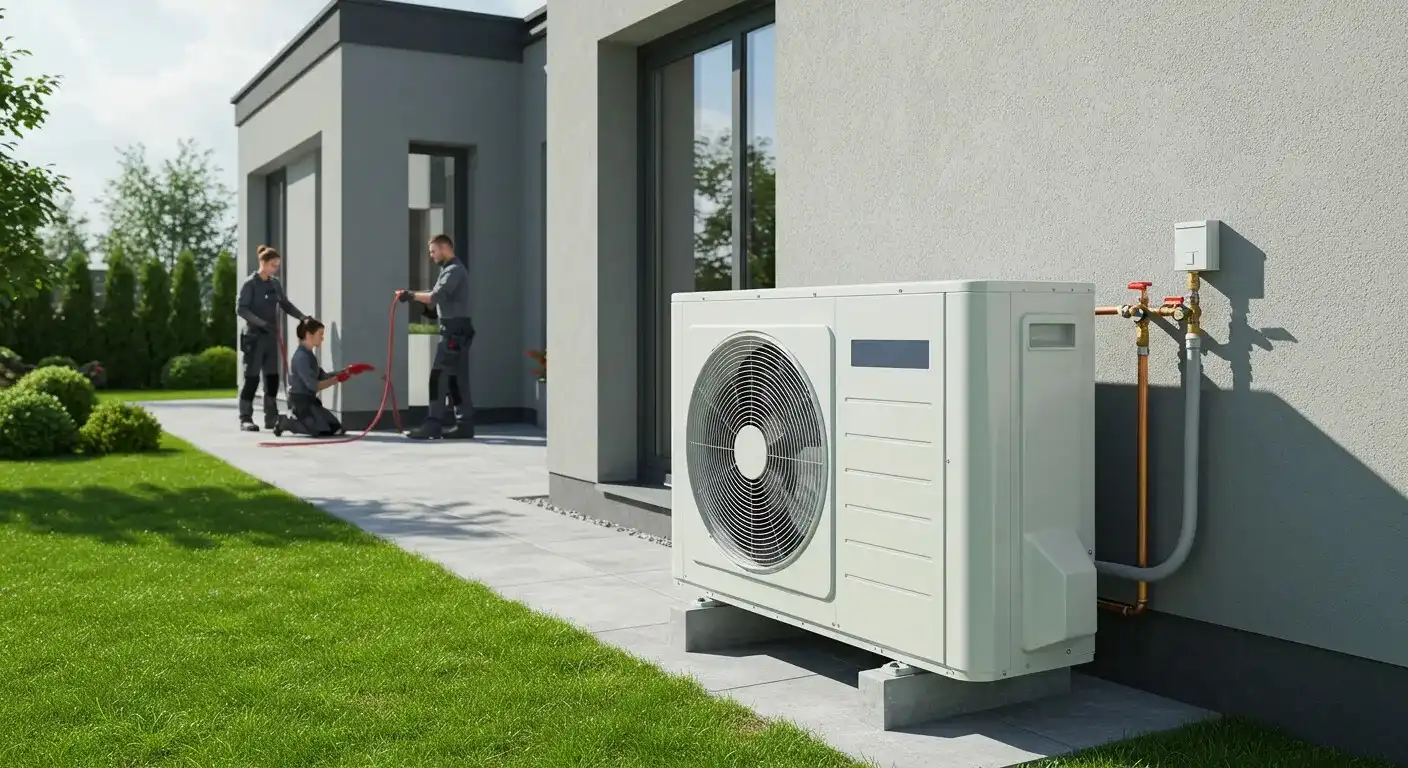
While a new heating and cooling system represents a significant upfront commitment, it is helpful to look at it as an investment that immediately begins paying you back.
Modern systems are vastly more efficient than those built a decade or two ago. For example, upgrading from an outdated SEER 10 air conditioner to a modern SEER2 16+ system can reduce your cooling energy consumption by 20% to 40%. If you opt for an ENERGY STAR certified model, you can expect an additional 15% savings over standard modern equipment.
One of the biggest technological leaps in home comfort is variable-speed technology. Traditional single-stage systems operate like a light switch—they are either 100% on or completely off. This leads to temperature swings and poor humidity control. Variable-speed systems, on the other hand, act like a smooth vehicle accelerator. They run quietly at lower speeds for longer periods, maintaining a perfectly steady temperature while using a fraction of the electricity.
Furthermore, there are substantial financial incentives available to help offset your replacement costs:
Beyond monthly utility savings, a new HVAC system is a highly attractive feature for future home buyers. It removes a major immediate expense concern and often comes with transferable warranties that protect the next owner. To dive deeper into these financial benefits, read our articles on How a New HVAC System Increases Home Value and Is a High Efficiency Furnace Worth the Extra Cost.
Yes, in the vast majority of cases, replacing both units simultaneously is the most cost-effective choice. Your air conditioner and furnace share the same indoor blower motor and duct system. When you pair a brand-new, high-efficiency outdoor AC unit with an old, inefficient indoor furnace, the system cannot operate at its rated efficiency.
By replacing them together, you ensure you have a fully matched system designed to communicate perfectly. You also save significantly on labor costs, as our technicians only need to prep, permit, and install equipment in your home once. To see what goes into a professional installation, read about the Steps Technicians Take for Smooth AC Replacement.
Under federal environmental regulations, R-410A refrigerant—the standard fluid used in most air conditioners for the past two decades—is undergoing a structured production phase-down. This does not mean your current R-410A system is illegal to own or service.
However, as the supply of R-410A decreases, the cost to repair refrigerant leaks will naturally rise. New systems installed today utilize next-generation, low-GWP (Global Warming Potential) refrigerants such as R-454B and R-32, which are designed to be more environmentally friendly and highly efficient.
Absolutely. Older systems often struggle to maintain proper airflow, allowing dust, pet dander, and allergens to settle in your living spaces. Modern air handlers are designed to accommodate advanced filtration systems, such as media filters or HEPA filtration, without restricting airflow.
Additionally, because variable-speed systems run for longer, gentler cycles, they provide continuous air filtration and superior humidity control, preventing the damp conditions that allow mold and mildew to thrive.
Making the choice between repairing your old system or investing in a new one doesn't have to be a stressful guessing game. By looking at the system's age, calculating your score with the $5,000 Rule, and factoring in the long-term energy savings of modern equipment, the right financial path quickly becomes clear.
At Precision Heating and Cooling, we have spent over two decades helping homeowners throughout the San Jose Bay Area and the Central Valley make smart, practical decisions for their homes. Whether you need a simple, reliable repair in Cupertino CA, a heat pump upgrade in Los Gatos CA, or comprehensive system maintenance in Sunnyvale CA, our team is committed to delivering honest advice, competitive pricing, and flexible payment options.
We proudly serve families across our local communities, including:
When you work with us, you gain the peace of mind that comes from experienced, local professionals who prioritize your comfort and safety. To learn more about the advantages of working with an established local team, read about the Benefits of Choosing a 25 Year Local HVAC Company.
Ready to get an honest, professional assessment of your heating or cooling system? We are here to help you find the perfect solution for your home's unique needs.
Schedule a professional consultation today to restore reliable, worry-free comfort to your home.

Leslie was amazing for her outstanding customer service skills with me the other day. Thanks to her help my air conditioner is now all set up. She answered all my questions and took away all my problems. Leslie broke it down step by step to set it up easier. Now thanks to her my air conditioner is working perfectly. I really appreciate it Leslie and I’ll be sure to ask for you if I ever come back.
I contacted Precision Heating and Cooling for my home's AC repair. They were punctual and very professional. Guillermo was very kind and thorough. I would highly recommend them!
I am writing to express my sincere appreciation for the excellent work performed by Pablo and Alejandro from Precision Heating and Cooling. Their commitment to quality and customer satisfaction is truly commendable. Awesome job guys!
I would like to extend my sincere gratitude to Alejandro for his exceptional hard work. His passion for helping others is evident, and he consistently goes above and beyond in his service. Alejandro's thorough cleaning of my fireplace has truly made a significant difference. His dedication and professionalism are greatly appreciated.
I was very impressed. Came at night (after 9pm) to fix our AC during the middle of a heat wave the day before a national holiday! Technician was very courteous and efficient, got the job done quickly. Will definitely call them again for any AC servicing I need!
Fast and efficient, arrived when scheduled for repairs and replacement parts were ordered and installed quickly. Techs were very friendly and professional. AC system works great now! I highly recommend their services if you need repairs. Tim



.avif)
