


.avif)







Recent Blogs
Stay updated with our latest blog posts.


Is your water heater pilot light refusing to stay lit, leaving you searching for answers and wondering how much it actually costs to replace a water heater thermocouple in the Bay Area? You are not alone. At Precision Heating & Cooling, we field calls from frustrated San Jose homeowners dealing with this exact issue every week. As late summer transitions into the busy back-to-school season, those chilly Bay Area mornings make reliable hot water an absolute daily necessity. An unexpected pilot light failure is highly disruptive, and the frustration often compounds when homeowners start researching the problem online.
A quick search usually reveals that the physical thermocouple is an incredibly inexpensive component. This often leads to a confusing realization: if the part itself costs next to nothing, why does a professional repair quote look like a standard service bill? The disconnect between the hardware store price tag and the professional service quote creates a critical decision point for many homeowners. You must choose between hiring a licensed professional for guaranteed safety or attempting a highly dangerous DIY fix just to save on labor.
Here is the reality of residential gas appliance repair that our team emphasizes daily: when you hire a company for professional HVAC and water heater services, the quote reflects specialized diagnostic time, strict gas safety protocols, and liability protection. You are not simply buying a piece of metal wire; you are investing in the safe handling of your home's active gas lines. Understanding what goes into that service call helps clarify why professional expertise is the only safe option for restoring your home's hot water.
To understand the professional service requirements, you first need to understand what this component actually does. Our technicians always explain to our customers that a thermocouple is not just a standard wire or a basic operational switch—it is a critical, primary safety device built directly into your gas water heater. Assuming your system operates on natural gas or propane, this small sensor stands between normal operation and a catastrophic gas leak.
The thermocouple sits directly in the path of the pilot light flame. As long as the pilot light is burning steadily, the heat generates a tiny electrical current inside the thermocouple. This electrical current travels up to the main gas valve, signaling that it is safe to keep the gas flowing. If a draft blows the pilot light out, or if the burner assembly fails, the thermocouple cools down immediately. Once it cools, the electrical current stops, triggering the gas valve to snap shut. This prevents unburned gas from flooding into your garage, basement, or utility closet.
Because the thermocouple interacts directly with the main gas control valve, replacing it requires manipulating active gas connections. It is not a basic hardware swap like changing a lightbulb or replacing a standard water filter. The repair process requires licensed HVAC gas safety protocols to ensure that the new component seats perfectly inside the valve without damaging the delicate threading or compromising the gas seal.
When you schedule water heater repair and replacement with Precision Heating & Cooling, our technicians evaluate the entire safety mechanism. The table below outlines the difference between normal operation and a failing component, which helps explain why professional diagnostics are required.
• Normal Operation (Pilot Lit) — Thermocouple Action: Generates continuous electrical current — Gas Valve Response: Remains open, supplying gas to the main burner
• Flame Blown Out — Thermocouple Action: Cools down, current drops to zero — Gas Valve Response: Snaps shut automatically to prevent gas buildup
• Failing Thermocouple — Thermocouple Action: Fails to generate current even when heated — Gas Valve Response: Refuses to open; pilot light dies when button is released
The most common misconception we encounter about water heater repairs is that the customer is simply purchasing a part. In reality, the physical thermocouple makes up only a tiny fraction of the overall service investment. The bulk of a professional repair quote covers the invisible overhead and expertise required to bring a fully stocked, mobile repair shop directly to your driveway.
A professional technician does not just guess at the problem. When a water heater fails to stay lit, the symptoms of a bad thermocouple are nearly identical to the symptoms of a failing gas control valve. Guessing wrong can lead to replacing unnecessary parts and wasting valuable time. Licensed professionals use specialized multimeters and diagnostic equipment to test the exact millivolt output of the sensor under load. Fast, accurate diagnosis saves time and ensures the repair actually solves the problem on the first visit.
This efficiency is a hallmark of professional service. For instance, one local customer recently reached out during the late summer heat with an unspecified HVAC system issue that left their equipment completely inoperable. Our technician, Anthony, arrived promptly, utilized professional diagnostic tools to pinpoint the exact failure immediately, and had the system safely repaired and running within 30 minutes. That level of speed and accuracy is what a professional service call provides.
• Mobile Workshop and Dispatch: You are paying for the logistics of dispatching a trained technician, fuel, vehicle maintenance, and the convenience of having the repair handled at your home.
• Specialized Diagnostic Tools: Technicians carry expensive, calibrated equipment designed specifically for testing gas appliance safety mechanisms.
• Liability Insurance: Licensed contractors carry comprehensive insurance policies that protect your home and property during the repair process.
• Ongoing Safety Training: Gas safety standards evolve, and professional technicians undergo continuous training to stay current on the latest manufacturer specifications.
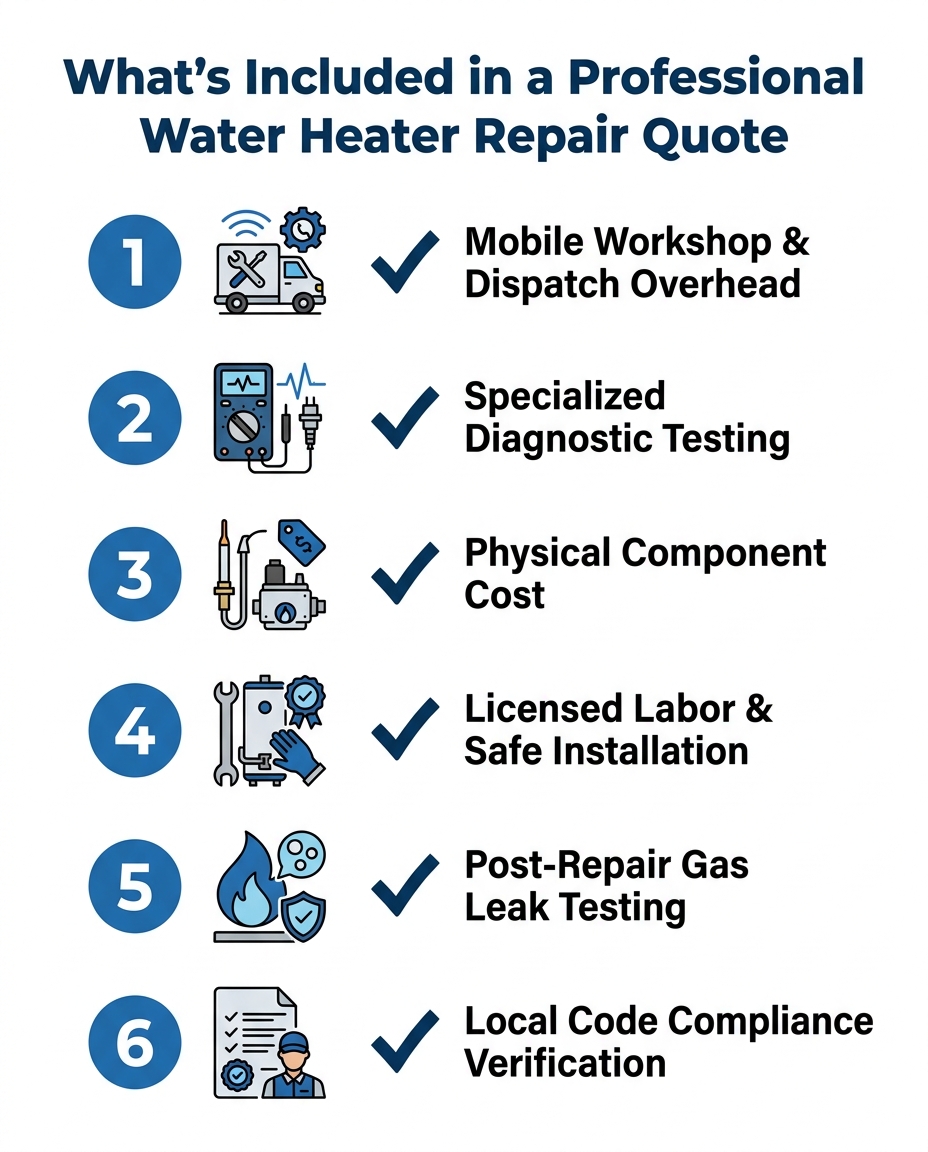

With countless online videos showing homeowners how to tinker with their appliances, it can be tempting to try and swap the component yourself. However, DIY replacement of gas appliance components is highly dangerous and never recommended by manufacturers or safety organizations. Precision Heating & Cooling maintains a strict commitment to safety, emphasizing that paying for professional labor is an investment in protecting your home from catastrophic gas hazards.
When you attempt to remove a thermocouple, you are working directly adjacent to the main gas control valve. If you cross-thread the new connection, overtighten the fitting, or accidentally bump the pilot tube, you can easily create a slow gas leak. Because water heaters are often located in utility closets or garages, a slow leak might go unnoticed until the gas concentration reaches a highly dangerous level.
Furthermore, an improperly seated thermocouple can lead to incomplete combustion, which produces carbon monoxide—an invisible, odorless gas that is deadly to humans and pets. This is exactly why bypassing a failing thermocouple is dangerous and why our team makes professional installation non-negotiable.
• Voided Manufacturer Warranties: Almost all major water heater manufacturers explicitly state that any repairs involving the gas valve or safety sensors must be performed by a licensed professional. DIY work instantly voids your warranty.
• Homeowner Liability: If an improper DIY repair causes property damage or a fire, your homeowners insurance provider may deny the claim due to unlicensed gas work.
• System Damage: Stripping the threads on the gas control valve during a botched DIY attempt will force you to replace the entire valve assembly, turning a standard repair into a massive expense.
Living in San Jose and the greater Bay Area means adhering to some of the strictest building and mechanical codes in the country. Our installation crews at Precision Heating & Cooling navigate these regulations daily. They are not in place to make repairs difficult; they exist to ensure public safety, particularly in a region prone to seismic activity. Local mechanical codes govern everything from how a water heater is strapped to the wall to how its gas lines are connected and vented.
When a licensed professional arrives at your home, they are not just looking at the broken part. They are evaluating the entire installation against current local codes. In the Bay Area, water heaters must be properly braced, anchored, and strapped to resist falling or horizontal displacement during an earthquake. If a water heater falls, it can sever the gas line, creating an immediate fire hazard.
By relying on a professional who serves Bay Area service areas, you guarantee that your system remains compliant with these critical safety standards. Technicians will inspect your earthquake strapping, verify the integrity of the flexible gas connector, and ensure the venting system has adequate draft. Unpermitted or improper DIY gas work not only puts your family at risk but can also cause significant issues during future home inspections if you ever decide to sell your property.
A professional service call covers the entire appliance's health, not just a single part replacement. When a technician replaces a thermocouple, they are using that opportunity to perform a comprehensive safety check of your entire water heater system. This holistic approach ensures the system will run reliably for the rest of the season and beyond.
When you call us for comprehensive heating services or water heater repairs, our technicians perform several critical post-repair steps that a DIY approach completely misses.
• Post-Repair Leak Testing: Once the new part is installed and the pilot is lit, professionals use electronic combustible gas leak detectors and specialized bubble solutions to verify that every connection is 100% sealed.
• Burner Assembly Inspection: The technician will inspect the main burner for rust, soot buildup, or improper flame characteristics that could indicate an airflow or combustion issue.
• Venting System Verification: Ensuring that carbon monoxide and exhaust gases are drafting properly up the flue and out of your home.
• Overall Tank Health: Checking for signs of internal corrosion, external leaks at the fittings, and verifying the temperature and pressure relief (T&P) valve is functional.
The bottom line: A professional repair does more than just give you hot water today; it provides the peace of mind that your system is safe, efficient, and thoroughly inspected for tomorrow.
The part itself is incredibly inexpensive, but you are paying for the licensed technician's time, travel, specialized diagnostic tools, and liability insurance. Professional labor guarantees the safe handling of active gas lines and prevents dangerous mistakes. When you hire a professional, you are investing in accurate diagnostics, post-repair gas leak testing, and adherence to local mechanical codes, rather than just the physical wire.
No, it is highly discouraged due to the severe risks of carbon monoxide leaks and explosive gas buildup. Only licensed professionals should handle repairs involving residential gas valves. Tampering with the gas connections without proper training and leak-detection equipment can result in slow, dangerous leaks or voided manufacturer warranties.
A licensed professional can typically diagnose the issue, replace the part, and perform comprehensive safety testing in under an hour. Because they carry the correct parts and specialized tools on their trucks, the process is highly efficient. DIY attempts often take much longer, require multiple trips to the hardware store, and carry significant safety risks.
The sensor will fail to detect the pilot light flame, triggering the gas valve to shut off completely as a safety precaution. This results in a total loss of hot water until the component is replaced. Even if you manually light the pilot, a bad thermocouple will not generate the electrical current needed to keep the gas valve open once you release the control button.
The most common sign is a pilot light that lights when the button is held down but goes out immediately the second the button is released. However, a failing gas control valve can mimic these exact same symptoms, which is why professional diagnostics are necessary. A technician will use a multimeter to test the millivolt output to confirm whether the sensor or the valve is to blame.
Dealing with a sudden loss of hot water is incredibly frustrating, especially when you discover the replacement part seems cheap online. However, the true value of a professional repair lies far beyond the physical component. By hiring a licensed expert, you are securing guaranteed gas safety, proper diagnostics that eliminate guesswork, and strict compliance with Bay Area mechanical codes.
Taking chances with DIY gas appliance repair is never worth the risk to your home or your family. If your pilot light refuses to stay lit, trust the experts at Precision Heating & Cooling to handle the active gas lines and system testing. Reach out to our licensed local professionals today for a transparent explanation of the labor, diagnostic time, and strict safety requirements involved, and get your hot water restored safely and efficiently.

Leslie was amazing for her outstanding customer service skills with me the other day. Thanks to her help my air conditioner is now all set up. She answered all my questions and took away all my problems. Leslie broke it down step by step to set it up easier. Now thanks to her my air conditioner is working perfectly. I really appreciate it Leslie and I’ll be sure to ask for you if I ever come back.
I contacted Precision Heating and Cooling for my home's AC repair. They were punctual and very professional. Guillermo was very kind and thorough. I would highly recommend them!
I am writing to express my sincere appreciation for the excellent work performed by Pablo and Alejandro from Precision Heating and Cooling. Their commitment to quality and customer satisfaction is truly commendable. Awesome job guys!
I would like to extend my sincere gratitude to Alejandro for his exceptional hard work. His passion for helping others is evident, and he consistently goes above and beyond in his service. Alejandro's thorough cleaning of my fireplace has truly made a significant difference. His dedication and professionalism are greatly appreciated.
I was very impressed. Came at night (after 9pm) to fix our AC during the middle of a heat wave the day before a national holiday! Technician was very courteous and efficient, got the job done quickly. Will definitely call them again for any AC servicing I need!
Fast and efficient, arrived when scheduled for repairs and replacement parts were ordered and installed quickly. Techs were very friendly and professional. AC system works great now! I highly recommend their services if you need repairs. Tim


.avif)
