


.avif)






Recent Blogs
Stay updated with our latest blog posts.


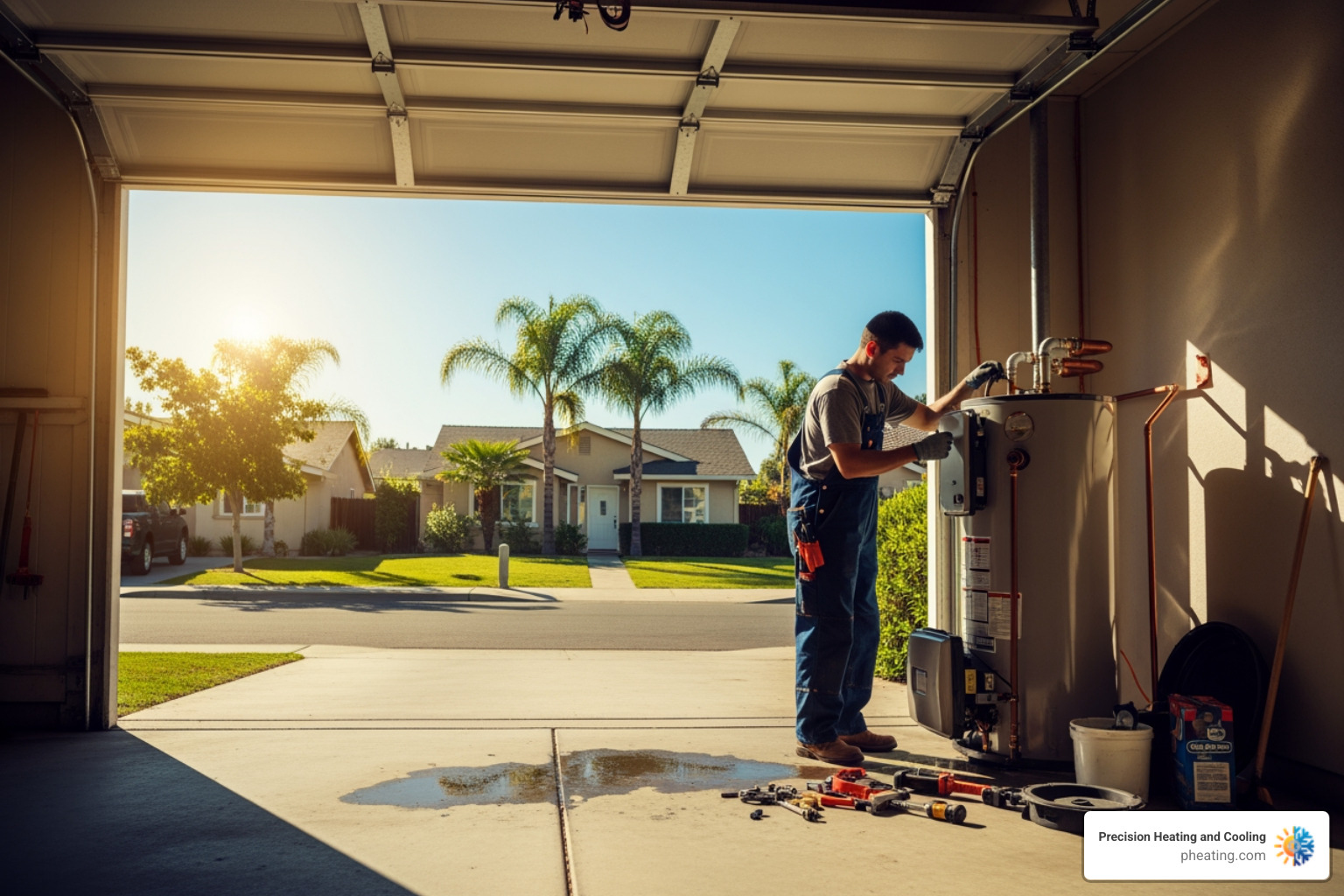
Finding emergency water heater repair in sunnyvale, ca becomes urgent when you're faced with a leaking tank, no hot water, or strange noises from your unit. When you need an emergency response, your first steps are always the same: shut off the water supply to the heater, turn off the power (circuit breaker for electric or gas valve for gas units), and call a licensed professional immediately to prevent further damage.
A failed water heater doesn't wait for a convenient time. You might wake up to cold showers, find water pooling around your garage floor, or hear loud banging sounds that signal something is seriously wrong. In Sunnyvale homes, where daily routines depend on reliable hot water for everything from morning showers to washing dishes, a broken water heater disrupts more than comfort—it can lead to property damage, mold growth, and extensive repairs if not addressed quickly. The difference between a minor inconvenience and a major headache often comes down to how fast you recognize the warning signs and take action.
For urgent water heater issues, learn more about water heater services or schedule same-day repair with Precision Heating and Cooling.
I'm Tony Lara, and I've spent years helping Sunnyvale homeowners solve urgent plumbing and HVAC challenges, including emergency water heater repair in sunnyvale, ca. My hands-on experience has taught me that quick, informed action makes all the difference when your water heater fails.
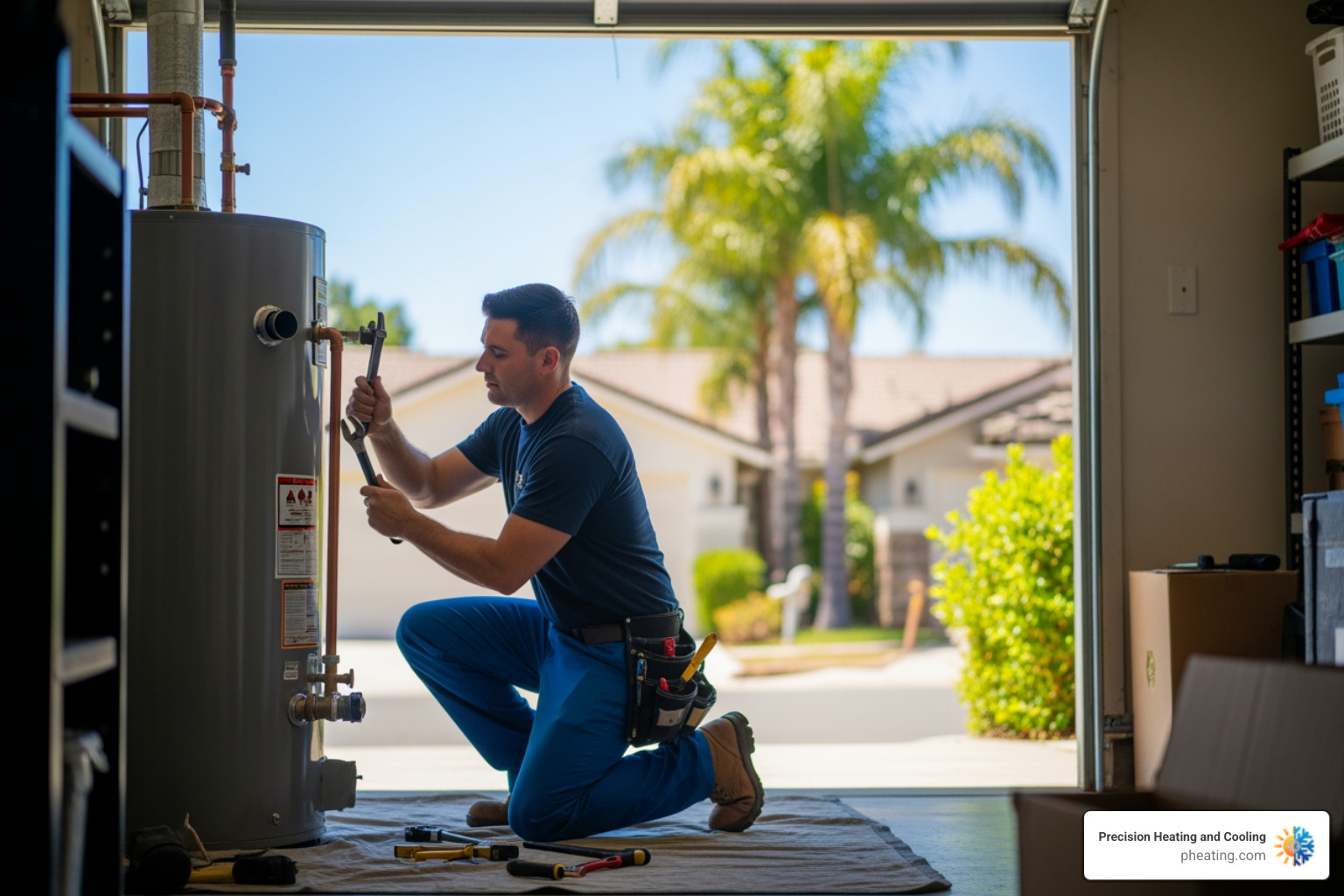
A water heater rarely fails gracefully. Instead, it often provides a dramatic warning that demands immediate attention. Recognizing these critical signs can help you determine if you're facing a true emergency and guide your immediate actions. If you notice any of the following, it’s time to act fast to prevent further damage and restore your home’s comfort.
One of the most obvious signs, and arguably the most inconvenient, is a complete lack of hot water. Imagine stepping into what you expect to be a warm, soothing shower, only to be met with an icy blast – a surefire sign that your water heater is not doing its job. This could be due to a faulty heating element, a tripped thermostat, or a pilot light issue.
A leaking tank is another undeniable emergency. Water pooling around the base of your water heater, a dripping sound, or visible cracks are all indicators of a compromised tank. Leaks can quickly lead to extensive water damage to your floors, walls, and belongings, creating an environment ripe for mold growth.
Strange noises emanating from your water heater are also a cause for concern. Loud banging, popping, or rumbling sounds often indicate sediment buildup at the bottom of the tank. This sediment can harden over time, causing the heating elements to overheat and potentially damaging the tank. If you hear a high-pitched whining sound, it could be a sign of excessive pressure.
Perhaps the most alarming sign is the smell of gas near your water heater. Gas leaks are extremely dangerous and require immediate evacuation and a call to your gas provider and emergency services. Do not try to locate the leak yourself. Similarly, issues with the pilot light, such as it frequently going out or refusing to relight, can indicate a problem with the gas supply or the thermocouple.
Finally, if your hot water appears discolored, rusty, or has an unusual odor, it's a strong indication of internal corrosion or a problem with the anode rod. While not always an immediate flood risk, these issues signify that your water heater's integrity is compromised and should be addressed promptly.
When any of these critical signs appear, your immediate action is to shut off the water supply to the unit, cut off its power source (either the circuit breaker for electric models or the gas valve for gas models), and then call for same-day professional service. Swift action protects your home and helps us get your hot water flowing again.
Finding a water heater leak can be startling, but a calm and quick response can prevent significant damage. Here’s what we recommend you do immediately:
While a leak is a visible emergency, noises and discolored water are often internal warnings that shouldn't be ignored.
In either of these situations, we advise you to avoid using hot water as much as possible until a professional can assess the situation. Continued use could exacerbate the problem or indicate a more serious underlying issue. Schedule a professional inspection promptly to diagnose the cause and recommend the appropriate repair or replacement. For more insights into these issues, you can refer to our Water Heater Repair Sunnyvale Guide.
Even the most robust water heaters have a lifespan, and several factors can contribute to their untimely demise, especially in a dynamic environment like Sunnyvale. Understanding these common causes helps us diagnose problems quickly and efficiently.
One of the most frequent culprits is sediment buildup. Over time, minerals in the water, such as calcium and magnesium, settle at the bottom of the tank. This sediment acts as an insulator, forcing the heating element or burner to work harder, reducing efficiency, and causing those unsettling banging or popping noises. Sunnyvale's water quality, like that of many Bay Area communities, can contribute to this issue.
Another common cause is thermostat failure. The thermostat is responsible for regulating the water temperature. If it malfunctions, you might experience water that's too cold, too hot, or wildly inconsistent.
A corroded tank is a serious issue that often leads to leaks. As mentioned, the anode rod is designed to protect the tank from corrosion, but once it's used up, the tank itself becomes vulnerable. This is especially true for units that are nearing or past their typical lifespan.
A faulty T&P (Temperature and Pressure) relief valve is a safety concern. This valve is designed to release water if the temperature or pressure inside the tank becomes too high, preventing explosions. If it fails, it can lead to dangerous conditions.
Finally, the age of the unit is a significant factor. Most conventional tank water heaters have a lifespan of 10 to 15 years. As they age, components wear out, efficiency decreases, and the likelihood of sudden failure increases. If your water heater is over 10 years old, it's wise to consider its retirement.
Traditional tank water heaters, common in many Sunnyvale homes, have a few specific vulnerabilities:
When these issues arise, we often recommend considering a replacement, especially if the unit is older. You can explore your options for a new unit on our Water Heater Replacement Sunnyvale page.
Tankless water heaters, while more energy-efficient and compact, have their own set of potential emergency issues:
If your tankless unit is acting up, our experts are well-versed in diagnosing and repairing these specialized systems. Learn more about our services on our Tankless Water Heater Repair Sunnyvale page.
When your water heater fails, particularly in an emergency, choosing the right professional is paramount. In Sunnyvale, you need a team that combines local expertise with rapid response times and the assurance of quality service. We pride ourselves on providing reliable, 24/7 emergency service with licensed and insured technicians ready to tackle any water heater crisis.
Our over two decades of experience serving the San Jose Bay Area, including Sunnyvale, means we understand the unique demands of local homes and the urgency of a plumbing emergency. We know that heating, air conditioning, and plumbing emergencies always seem to happen during odd hours, which is why our availability is key. Whether it's a clogged toilet or a major sewer line issue, or a water heater emergency, our commitment is to be there when you need us most.
Choosing a local plumber for your emergency water heater repair in sunnyvale, ca offers distinct advantages:
Sunnyvale, like the rest of California, has specific codes and regulations governing water heater installation and repair, many of which are designed for safety and earthquake preparedness. Our technicians are well-versed in these requirements:
Adhering to these regulations is not just about compliance; it's about ensuring the safety and longevity of your water heating system and your home.
While emergency repairs are a necessity when things go wrong, proactive maintenance is the key to avoiding future crises and extending the life of your water heater. Think of it as a regular check-up for one of your home's hardest-working appliances.
Regular, annual maintenance can significantly reduce the likelihood of needing emergency water heater repair in sunnyvale, ca. This includes:
These preventative measures not only extend the lifespan of your water heater but also improve its efficiency, potentially lowering your utility bills. An efficient water heater means less energy wasted and more reliable hot water for your family. For comprehensive care, consider our Heating Maintenance Sunnyvale services, which can include water heater checks.
We understand that a water heater emergency can bring a lot of questions. Here are some common inquiries we receive from Sunnyvale residents:
When you're facing a water heater emergency, speed is of the essence. We offer same-day service for urgent water heater repairs and installations. Our 24/7 emergency response means you can count on us any hour, any day, to get your hot water back on track. Calling a local company like ours ensures quicker dispatch and arrival, minimizing the time your home is without hot water and helping to prevent further water damage. Our goal is to respond quickly, professionally, and efficiently to get your system running again.
This is a common dilemma. Here’s how we help you decide:
Delaying an emergency water heater repair can lead to a cascade of problems:
Prompt action not only restores your comfort but also protects your home and family from these preventable risks.
Dealing with a water heater emergency is never pleasant, but with the right partner, it doesn't have to be a nightmare. Recognizing the warning signs, taking swift immediate action, and calling a professional are the crucial steps to minimize disruption and damage.
At Precision Heating and Cooling, we understand the importance of a reliable hot water supply for your Sunnyvale home. With over two decades of experience serving the San Jose Bay Area, we bring unparalleled expertise, reliable service, and flexible payment options to every job. Our team is dedicated to providing prompt, professional solutions for all your home’s needs, especially when an emergency strikes. We're here to ensure your comfort and peace of mind.
Don't let a cold shower or a leaking tank ruin your day. For fast, dependable emergency water heater repair in sunnyvale, ca, turn to the team that local residents trust. We're ready to help you get your hot water flowing again.
Contact us today to schedule your water heater repair or service.

Leslie was amazing for her outstanding customer service skills with me the other day. Thanks to her help my air conditioner is now all set up. She answered all my questions and took away all my problems. Leslie broke it down step by step to set it up easier. Now thanks to her my air conditioner is working perfectly. I really appreciate it Leslie and I’ll be sure to ask for you if I ever come back.
I contacted Precision Heating and Cooling for my home's AC repair. They were punctual and very professional. Guillermo was very kind and thorough. I would highly recommend them!
I am writing to express my sincere appreciation for the excellent work performed by Pablo and Alejandro from Precision Heating and Cooling. Their commitment to quality and customer satisfaction is truly commendable. Awesome job guys!
I would like to extend my sincere gratitude to Alejandro for his exceptional hard work. His passion for helping others is evident, and he consistently goes above and beyond in his service. Alejandro's thorough cleaning of my fireplace has truly made a significant difference. His dedication and professionalism are greatly appreciated.
I was very impressed. Came at night (after 9pm) to fix our AC during the middle of a heat wave the day before a national holiday! Technician was very courteous and efficient, got the job done quickly. Will definitely call them again for any AC servicing I need!
Fast and efficient, arrived when scheduled for repairs and replacement parts were ordered and installed quickly. Techs were very friendly and professional. AC system works great now! I highly recommend their services if you need repairs. Tim


.avif)
