


.avif)






Recent Blogs
Stay updated with our latest blog posts.


Understanding the right hvac maintenance frequency for Silicon Valley homes could be the difference between a system that runs smoothly for 20 years and one that fails on the hottest day in August. Most homeowners in San Jose, Palo Alto, Los Gatos, and the surrounding South Bay assume that mild California weather means their heating and cooling systems have an easy job. In reality, the opposite is true.
Silicon Valley's Mediterranean climate creates a unique set of challenges: wide daily temperature swings that can push from the low 50s overnight to above 90°F in the afternoon, persistently dry air that drives dust onto coils and filters, seasonal wildfire smoke that can clog a filter in a matter of days, and distinct coastal-versus-inland microclimates that affect how hard your system works. On top of that, 2026 brings new local regulations from the Bay Area Air Quality Management District (BAAQMD), refrigerant transitions, and zero-NOx furnace requirements that directly shape what proper maintenance looks like.
Here is a quick answer to what most Silicon Valley homeowners need to know:
Recommended HVAC Maintenance Frequency for Silicon Valley Homes
| System Age | Recommended Frequency | Notes |
|---|---|---|
| New (0-5 years) | Once per year | Spring or fall tune-up |
| Mid-age (5-10 years) | Twice per year | Spring (cooling) + fall (heating) |
| Older (10+ years) | Twice per year, minimum | Higher breakdown risk; closer monitoring needed |
| During wildfire season | Check filters monthly | Replace MERV 13+ filters as needed |
| Coastal locations | Inspect for salt air corrosion annually | Corrosion can cut system life by 30-50% |
I'm Tony Lara, an HVAC professional with hands-on experience helping Bay Area homeowners navigate the exact challenges that drive hvac maintenance frequency for Silicon Valley homes — from tracking down hard-to-find parts to solving the wear patterns that the region's dry air and temperature swings create. In this guide, Precision Heating and Cooling walks you through everything you need to know to protect your system, lower your energy bills, and stay ahead of costly repairs.
When establishing the ideal hvac maintenance frequency for the silicon valley homes, a simple "once-and-done" approach rarely suffices. While a baseline recommendation of annual servicing keeps basic warranties intact, a bi-annual schedule—scheduling professional tune-ups once in the spring for your cooling system and once in the fall for your heating system—is the true gold standard.
By committing to a twice-yearly schedule, you unlock the full Benefits of Regular HVAC Maintenance in Mild Mediterranean climates. Our mild winters and warm summers mean our heat pumps and air conditioners cycle on and off frequently throughout the year. This constant thermal cycling places unique stresses on electrical components, fan motors, and compressor coils.
To help homeowners manage this frequency without stress, we recommend enrolling in a structured HVAC Maintenance Plan. A dedicated plan automates your scheduling, ensuring that your system is serviced exactly when it needs to be—before the summer heatwaves roll into the Santa Clara Valley and before the winter chill sets in.
One of the most fascinating aspects of living in the Bay Area is our geography. Within a 30-mile radius, temperatures can swing by up to 30°F on the exact same afternoon. This microclimate variation heavily influences the wear and tear on your climate control systems.
Your system’s age is a primary driver of how often a technician should inspect it. As components age, their tolerance for environmental stress decreases.
Regular care is the single best way to ensure you Regular AC Maintenance Extend Your System beyond the average lifespan. For older homes throughout the South Bay, scheduling consistent HVAC Maintenance San Jose CA ensures that aging compressors and heat exchangers are monitored closely for safety and efficiency.
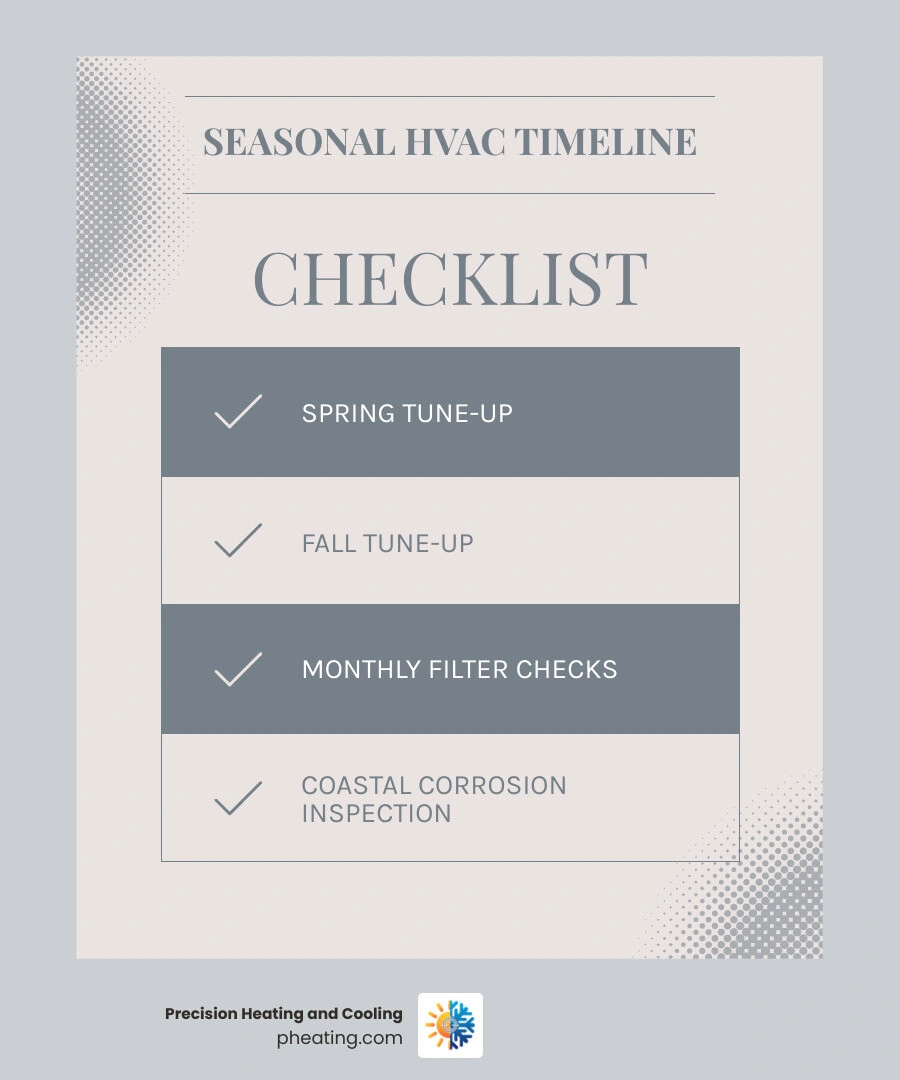
To help you understand what happens during these seasonal visits, we’ve broken down the essential tasks performed during our spring and fall tune-ups.
| Spring Cooling Maintenance | Fall Heating Maintenance |
|---|---|
| Clean outdoor condenser coils | Inspect and clean furnace burners |
| Check refrigerant pressure and levels | Examine heat exchanger for cracks |
| Inspect condensate drain line for blockages | Test heating elements and ignition systems |
| Calibrate thermostat settings | Check carbon monoxide detectors |
| Tighten electrical connections | Measure gas pressure and adjust |
| Lubricate fan motors and moving parts | Test safety limit controls |
Whether you are booking HVAC Maintenance Cupertino CA in the spring or scheduling HVAC Maintenance Sunnyvale CA in the late autumn, keeping to this seasonal rhythm ensures your system is never caught off guard by sudden weather shifts.
While we always recommend professional servicing for complex mechanical and electrical tasks, there are several DIY steps you can take to keep your system running smoothly between visits.
What You Can Do (DIY):
What to Leave to Certified Technicians:
For a deeper dive into how to structure your system's long-term care, consult our comprehensive HVAC Maintenance Plans Guide.
The type of HVAC system installed in your home changes both the maintenance scope and how local environmental rules affect your property.
In 2026, California homeowners face some of the strictest environmental regulations in the nation. Staying compliant requires a proactive approach to maintenance:
If you are unsure how these new rules impact your home, scheduling a professional inspection with our HVAC Maintenance Santa Clara CA team can give you clarity and keep your home fully compliant.
You shouldn't always wait for your scheduled appointment if your system is showing warning signs. Call a technician immediately if you notice:
Regular maintenance has a massive impact on your monthly utility bills. Consider these statistics:
By keeping your coils clean, sealing minor duct leaks, and replacing filters, professional tune-ups pay for themselves in direct energy savings.
Yes, but the tasks are slightly different. Because ductless mini-splits run on zone-specific indoor air handlers, they do not suffer from the 20-30% energy loss associated with leaky ducts. However, because they draw air directly from the rooms they heat and cool, their filters accumulate dust, pet dander, and cooking grease quickly. Homeowners should wash the reusable plastic mesh filters inside each wall unit every 4 to 6 weeks. Additionally, a professional should perform an annual deep clean of the indoor coils and blower wheels to prevent mold growth and maintain optimal heat exchange.
Determining the right hvac maintenance frequency for Silicon Valley homes is not just about avoiding a breakdown; it’s about protecting your investment, staying compliant with 2026 California environmental mandates, and keeping your energy bills manageable.
At Precision Heating and Cooling, we bring over two decades of local experience to every service call. We understand the unique microclimates of the South Bay and Central Valley, from Cupertino and Los Gatos to Palo Alto, Santa Clara, Sunnyvale, Clovis, and Hanford. We pride ourselves on reliable service, competitive pricing, and flexible payment options designed to fit your family's budget.
Don't wait for the next major heatwave or winter storm to find out if your system is up to the task. Contact us today to schedule your seasonal tune-up or to learn more about our comprehensive HVAC Service San Jose CA plans!

Leslie was amazing for her outstanding customer service skills with me the other day. Thanks to her help my air conditioner is now all set up. She answered all my questions and took away all my problems. Leslie broke it down step by step to set it up easier. Now thanks to her my air conditioner is working perfectly. I really appreciate it Leslie and I’ll be sure to ask for you if I ever come back.
I contacted Precision Heating and Cooling for my home's AC repair. They were punctual and very professional. Guillermo was very kind and thorough. I would highly recommend them!
I am writing to express my sincere appreciation for the excellent work performed by Pablo and Alejandro from Precision Heating and Cooling. Their commitment to quality and customer satisfaction is truly commendable. Awesome job guys!
I would like to extend my sincere gratitude to Alejandro for his exceptional hard work. His passion for helping others is evident, and he consistently goes above and beyond in his service. Alejandro's thorough cleaning of my fireplace has truly made a significant difference. His dedication and professionalism are greatly appreciated.
I was very impressed. Came at night (after 9pm) to fix our AC during the middle of a heat wave the day before a national holiday! Technician was very courteous and efficient, got the job done quickly. Will definitely call them again for any AC servicing I need!
Fast and efficient, arrived when scheduled for repairs and replacement parts were ordered and installed quickly. Techs were very friendly and professional. AC system works great now! I highly recommend their services if you need repairs. Tim


.avif)
