


.avif)






Recent Blogs
Stay updated with our latest blog posts.


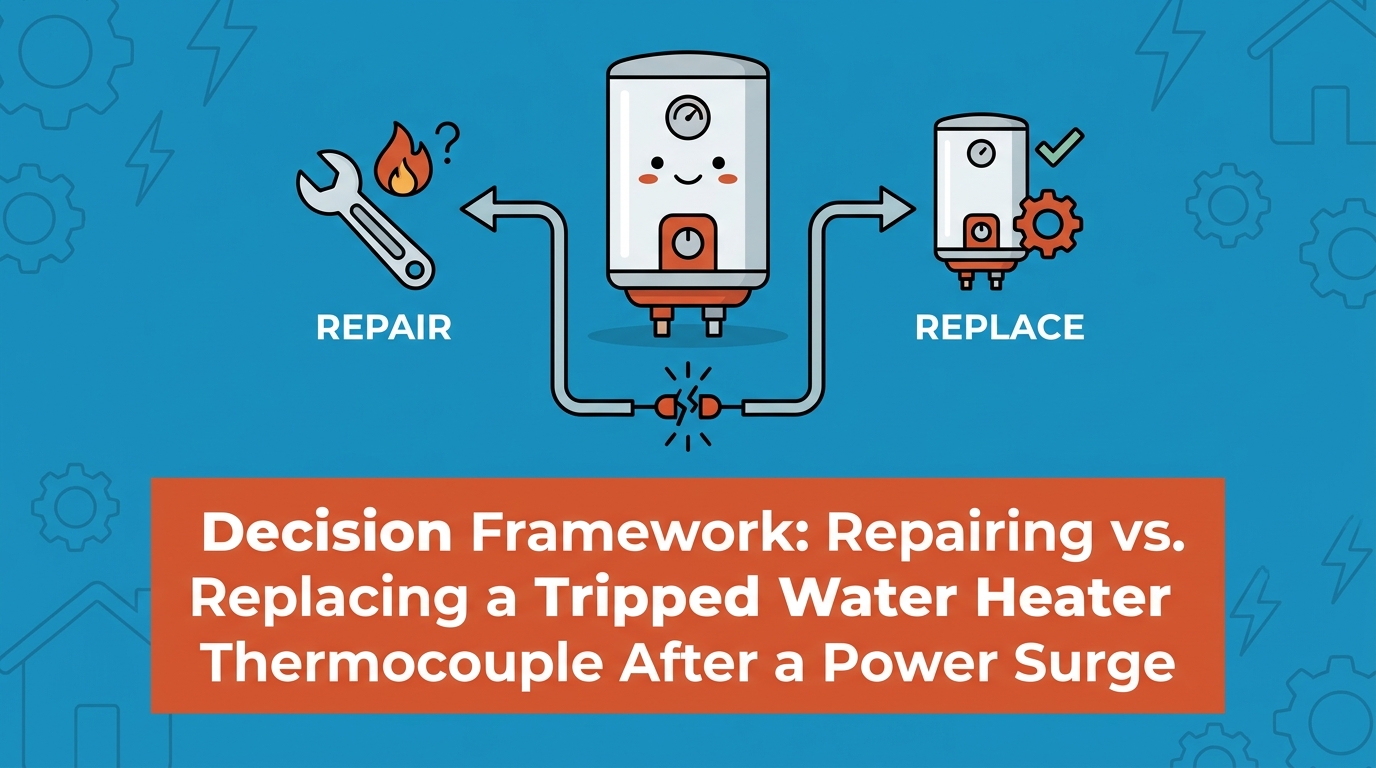
A common misconception we hear from homeowners at Precision Heating & Cooling is that a small, inexpensive replacement part automatically guarantees a quick, cheap repair. However, when you are navigating the process of repairing vs. replacing a tripped water heater thermocouple after a power surge, that assumption often falls apart. If you find yourself without hot water because your pilot light refuses to stay lit following a rolling blackout, you are facing a much more complex situation than a simple parts swap.
During periods of extreme July peak summer grid strain, our technicians frequently see electrical anomalies wreak havoc on home appliances. Many people associate water heater failures exclusively with freezing winter temperatures, but summer power surges are notorious for knocking out the sensitive safety components on gas appliances. The core decision you face is not just about buying a new thermocouple; it is about weighing the necessary professional labor required to safely restore your gas system against the overall age and condition of the unit itself.
Because gas appliances carry inherent safety risks, addressing this issue requires more than guesswork. Relying on comprehensive home services ensures that a licensed professional accurately diagnoses the root cause of the failure, rather than just putting a temporary bandage on a potentially compromised system. Making the right choice requires understanding exactly what happened to your equipment during that summer brownout.
To make an informed decision about your equipment, you first need to understand the technical mechanism behind the failure. In our years of serving San Jose residential areas, our team has seen firsthand how peak summer air conditioning usage places massive demand on the electrical grid. This heavy load frequently leads to voltage drops, rolling brownouts, and unexpected power surges when the electricity spikes back on. While you might immediately check your televisions and computers after a surge, your gas water heater is equally vulnerable to these electrical fluctuations.
You might wonder how an electrical surge affects a gas appliance. Modern gas water heaters rely on delicate safety mechanisms to operate correctly. The most critical of these is the thermocouple (or thermopile in some models). This component sits directly in the pilot light flame and generates a tiny electrical current. That current signals the main gas control valve to stay open. If the pilot light goes out, the thermocouple cools down, the electrical current stops, and the gas valve snaps shut to prevent a dangerous gas leak.
Here is how a summer power surge disrupts this process:
• Voltage spikes: A sudden surge of electricity through your home's grounding system can overwhelm the sensitive electromagnet inside the gas control valve that the thermocouple communicates with.
• Sensor disruption: Electronic ignition models and power-vented units plugged into standard outlets can suffer immediate sensor failure during a voltage spike.
• False tripping: A brownout can cause the system to shut down abruptly, forcing the thermocouple and gas valve out of calibration, making it impossible for the pilot light to remain lit once the power stabilizes.
This failure mechanism frequently catches homeowners off guard. Because the ambient temperature outside is sweltering, losing hot water feels counterintuitive. Yet, as we see every July, the extreme grid instability of summer is a primary catalyst for these specific component failures.
The Problem: You have no hot water, and a quick online search tells you that a replacement thermocouple is a highly affordable part. The immediate temptation is to purchase the component from a local hardware store and attempt to swap it out yourself to save money.
The Cause: The internet often oversimplifies appliance repair, framing it as a simple matter of unscrewing one part and attaching another. What these tutorials fail to mention is that the thermocouple is physically integrated into the main gas control valve and the sealed burner assembly of your water heater.
The Solution: You must rely on professional labor to handle gas-line components. Accessing the thermocouple requires safely isolating the gas supply, dismantling the combustion chamber, and correctly recalibrating the gas control valve upon reassembly. Attempting this without proper licensing and training introduces severe risks, including highly dangerous gas leaks, fire hazards, and the potential for carbon monoxide exposure in your home.
The true cost of replacing a thermocouple is not the part itself; it is the hidden labor investment required for a licensed technician to perform the work safely and legally. At Precision Heating & Cooling, we see the value of professional diagnostics constantly. For example, our team recently helped a local homeowner who was dealing with a brand-new HVAC system that started malfunctioning shortly after its initial installation. When our technicians arrived, we identified and repaired numerous underlying installation issues that had been missed, resolving the system's erratic behavior. The same principle applies to your gas water heater. A tripped thermocouple might look like a standalone issue, but only an expert has the training to ensure the entire gas control system is operating safely.
When a power surge hits your home, the electricity does not discriminate. It travels through the paths of least resistance, potentially affecting multiple components simultaneously. If your thermocouple is damaged or continuously tripping after a July peak summer grid strain event, there is a strong possibility that it is only the most obvious symptom of a much larger problem.
This is where professional insight becomes invaluable. With 20 years of experience serving San Jose and our status as a Day And Night Elite Dealer, our Precision Heating & Cooling technicians are trained to look beyond the immediate symptom. We frequently encounter situations where a homeowner assumes they only need a minor repair, but our deeper inspection reveals comprehensive surge damage.
A proper diagnostic evaluation involves several critical steps:
• Testing the Gas Control Valve: The electromagnet inside the valve may be fried. If this is the case, installing a new thermocouple will not solve the problem, as the valve itself will refuse to open.
• Evaluating Electronic Sensors: Newer water heaters feature flammable vapor ignition resistant (FVIR) sensors and electronic thermostats that are highly susceptible to voltage spikes.
• Checking the Grounding System: A technician will verify that the appliance is properly grounded, ensuring that future surges do not immediately destroy the newly installed components.
The risk of skipping a comprehensive diagnostic is significant. You could pay for the labor to replace the thermocouple, only to discover that the main gas valve is also ruined. This leads to throwing good money after bad, compounding your repair bills on a system that might already be fundamentally compromised. A thorough evaluation prevents this scenario, giving you a clear picture of the total system health before you commit to any repairs.
Once a professional has diagnosed the full extent of the surge damage, you face the core decision: do you invest in the labor to fix the current unit, or do you put that money toward a brand-new system? To make this choice confidently, you need to evaluate the age of the tank, the scope of the damage, and the overall condition of the equipment.
Because San Jose residential areas feature a wide mix of historic homes and newer builds, our crew sees water heaters in every possible stage of their lifecycle. Utilizing professional water heater repair and replacement services provides the clarity needed to weigh these factors side-by-side.
Repairing the unit makes the most logical sense when the water heater is still relatively young and the damage is strictly isolated. You should strongly consider moving forward with the repair if:
• The unit is under 8 years old: The tank still has plenty of functional life left, making the labor investment worthwhile.
• Damage is isolated: A professional diagnostic confirms that only the thermocouple was affected by the surge, and the main gas valve is operating perfectly.
• Excellent overall condition: The tank shows zero signs of rust, corrosion, or slow leaks, and you have kept up with annual flushing and maintenance.
• Warranty coverage: The unit is still under the manufacturer's parts warranty, which may offset some of the material costs.
Conversely, there is a tipping point where continuing to repair an older unit becomes a poor financial decision. You should seriously consider a full replacement if:
• The unit is over 8 to 12 years old: The structural integrity of the tank is nearing its end, and a catastrophic leak is becoming increasingly likely.
• Multiple components are fried: The surge damaged the thermocouple, the gas control valve, and the electronic ignition system. The combined labor to replace all these parts is prohibitive.
• History of frequent issues: The pilot light has been a recurring problem long before the power surge occurred.
• Visible deterioration: The tank exhibits rust around the fittings or makes loud rumbling noises during operation, indicating heavy sediment buildup.
• System Age — Lean Toward Repair: Under 8 years old — Lean Toward Replacement: Over 8-12 years old
• Scope of Damage — Lean Toward Repair: Isolated to the thermocouple — Lean Toward Replacement: Gas valve or multiple sensors fried
• Tank Condition — Lean Toward Repair: Clean, no rust, well-maintained — Lean Toward Replacement: Visible corrosion, sediment buildup, leaks
• Labor Investment — Lean Toward Repair: Minimal diagnostic and single part swap — Lean Toward Replacement: Extensive teardown and recalibration required
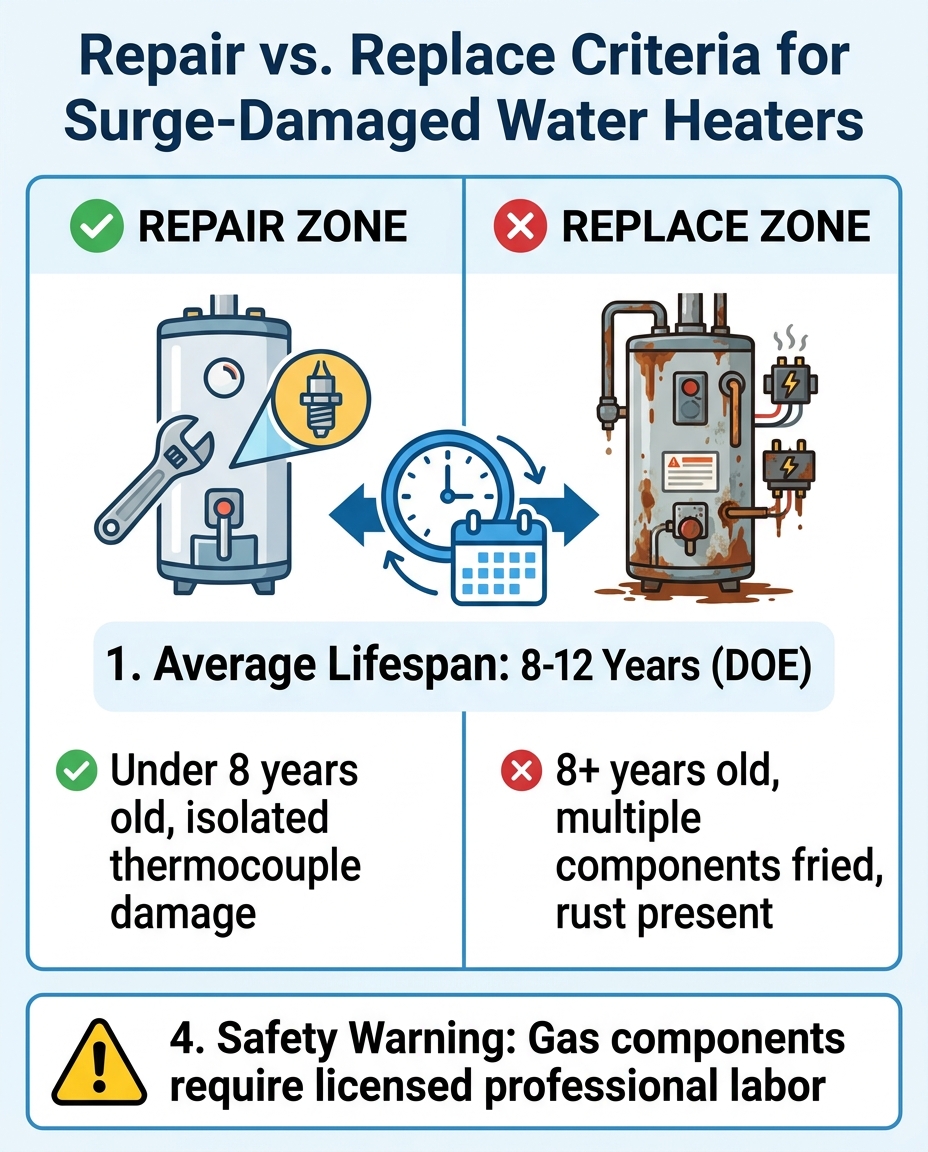

When weighing your options, it is essential to look at the long-term financial math rather than just the immediate repair bill. According to Department of Energy (DOE) data, standard gas water heaters have an average lifespan of 8 to 12 years. If your unit was installed a decade ago, investing significant professional labor into replacing a thermocouple and a gas valve yields rapidly diminishing returns. You might fix the electrical surge damage today, only to have the steel tank rust through and flood your garage six months from now.
Upgrading to a newer system offers substantial benefits that help offset the initial investment over time. Modern water heaters feature vastly improved insulation and more efficient burner designs, which translates to lower monthly energy consumption. During periods of July peak summer grid strain, an efficient home appliance operates more reliably and places less demand on your utility bills.
Furthermore, managing the cost of a sudden replacement does not have to be an overwhelming burden. Rather than repeatedly paying for emergency repairs on a failing system, you can take advantage of flexible financing options. Financing allows you to upgrade to a high-efficiency model immediately, ensuring your home has safe, reliable hot water without draining your emergency savings all at once. By factoring in the energy savings and the elimination of future repair bills, a proactive replacement often proves to be the smarter financial strategy for aging units.
Whether you ultimately decide to repair your current water heater or invest in a brand-new system, taking proactive steps to protect your equipment is essential. Grid instability is an ongoing reality in San Jose residential areas, and you want to ensure your appliances are shielded from the next inevitable summer brownout.
Getting an honest evaluation is crucial before you invest in any protective measures. During a recent summer heatwave, one local customer called us for service because their air conditioning was still malfunctioning even after previous attempts to fix it. Our Precision Heating & Cooling technician provided a thorough, honest assessment and finally resolved the root cause. We bring that exact same transparency to evaluating and protecting your water heater. We want to solve the problem permanently, not just treat the symptom.
Here are the most effective ways to future-proof your hot water supply:
1. Install Whole-Home Surge Protection: Unlike standard power strips, a whole-home surge protector is installed directly at your electrical panel. It acts as a gatekeeper, diverting massive voltage spikes into the ground before they can reach the delicate sensors and gas valves of your major appliances.
2. Enroll in a Preventative Plan: Routine care keeps components clean and less susceptible to failure. A routine maintenance plan ensures that a professional inspects your burner assembly, tests the thermocouple, and flushes the tank annually.
3. Focus on Safe Upkeep: Instead of attempting dangerous DIY fixes, educate yourself on proper system care. Reviewing affordable water heater repair tips can help you identify warning signs early, allowing you to call a professional before a minor issue turns into a major breakdown.
4. Check Your Grounding: Ensure that your home's electrical grounding system is up to modern code. Poor grounding exacerbates the damage caused by power surges, turning a minor voltage fluctuation into a component-destroying event.
Implementing these strategies provides profound peace of mind. When the grid strains under heavy summer loads, you can rest easy knowing your home's critical systems are fortified against unexpected electrical anomalies.
Dealing with a pilot light that refuses to stay lit after a power surge is undeniably frustrating. While the thermocouple itself is a small component, the severe safety implications of gas-line work and the necessary professional labor make this a major decision factor, especially on older units. You have to weigh the immediate fix against the long-term viability of the tank.
The good news is that you do not have to navigate this decision blindly. By relying on a professional diagnostic from Precision Heating & Cooling, you gain a clear, practical decision framework that helps you evaluate your water heater's true condition. If you are tired of struggling with a compromised system during July peak summer grid strain, schedule an expert assessment with our team today to secure a safe, reliable resolution for your home.
Yes, a power surge can cause significant damage to a gas water heater. Modern gas units rely on sensitive electronic components, such as the thermocouple, gas control valve electromagnets, and electronic ignition sensors. When a massive voltage spike travels through your home's wiring, it can easily fry these delicate parts, preventing the pilot light from staying lit or the burner from igniting.
The value of replacing a thermocouple depends heavily on the overall age and condition of the tank. If the water heater is over 10 years old and showing signs of rust or sediment buildup, investing in professional labor for a new thermocouple may yield diminishing returns. However, if the unit is relatively new and a diagnostic confirms the damage is isolated, the repair is usually a highly worthwhile investment.
Replacing a thermocouple safely requires hiring a licensed professional, as the process involves dismantling the sealed burner assembly and working directly with the main gas control valve. Attempting this repair as a DIY project introduces severe risks, including gas leaks, fire hazards, and carbon monoxide exposure. A trained technician ensures the gas lines are properly isolated, the new part is correctly calibrated, and the system is rigorously tested for leaks before being put back into service.
The most common indicator of a bad thermocouple is a pilot light that repeatedly goes out or refuses to stay lit after you release the gas control knob. Because the thermocouple's job is to generate the electrical current that keeps the gas valve open, a failure means the valve will automatically snap shut as a safety precaution. A professional technician can test the exact millivolt output of the component to confirm if it has failed.
Beyond the thermocouple, summer brownouts and surges can damage several other critical components. The main gas control valve is highly susceptible to voltage spikes, as are electronic thermostats, flammable vapor ignition resistant (FVIR) sensors, and power-vent blower motors. A comprehensive diagnostic is necessary to ensure that fixing one part doesn't just reveal a secondary failure in another.
Energy efficiency rebates and federal tax credits may apply to qualifying high-efficiency water heater installations, such as modern heat pump models. These incentives can help offset the cost of upgrading a surge-damaged unit to a more advanced system. Because specific programs and availability change frequently, you should always verify current incentives with your local utility provider or a qualified tax professional before making your final purchase decision.

Leslie was amazing for her outstanding customer service skills with me the other day. Thanks to her help my air conditioner is now all set up. She answered all my questions and took away all my problems. Leslie broke it down step by step to set it up easier. Now thanks to her my air conditioner is working perfectly. I really appreciate it Leslie and I’ll be sure to ask for you if I ever come back.
I contacted Precision Heating and Cooling for my home's AC repair. They were punctual and very professional. Guillermo was very kind and thorough. I would highly recommend them!
I am writing to express my sincere appreciation for the excellent work performed by Pablo and Alejandro from Precision Heating and Cooling. Their commitment to quality and customer satisfaction is truly commendable. Awesome job guys!
I would like to extend my sincere gratitude to Alejandro for his exceptional hard work. His passion for helping others is evident, and he consistently goes above and beyond in his service. Alejandro's thorough cleaning of my fireplace has truly made a significant difference. His dedication and professionalism are greatly appreciated.
I was very impressed. Came at night (after 9pm) to fix our AC during the middle of a heat wave the day before a national holiday! Technician was very courteous and efficient, got the job done quickly. Will definitely call them again for any AC servicing I need!
Fast and efficient, arrived when scheduled for repairs and replacement parts were ordered and installed quickly. Techs were very friendly and professional. AC system works great now! I highly recommend their services if you need repairs. Tim


.avif)
