


.avif)






Recent Blogs
Stay updated with our latest blog posts.


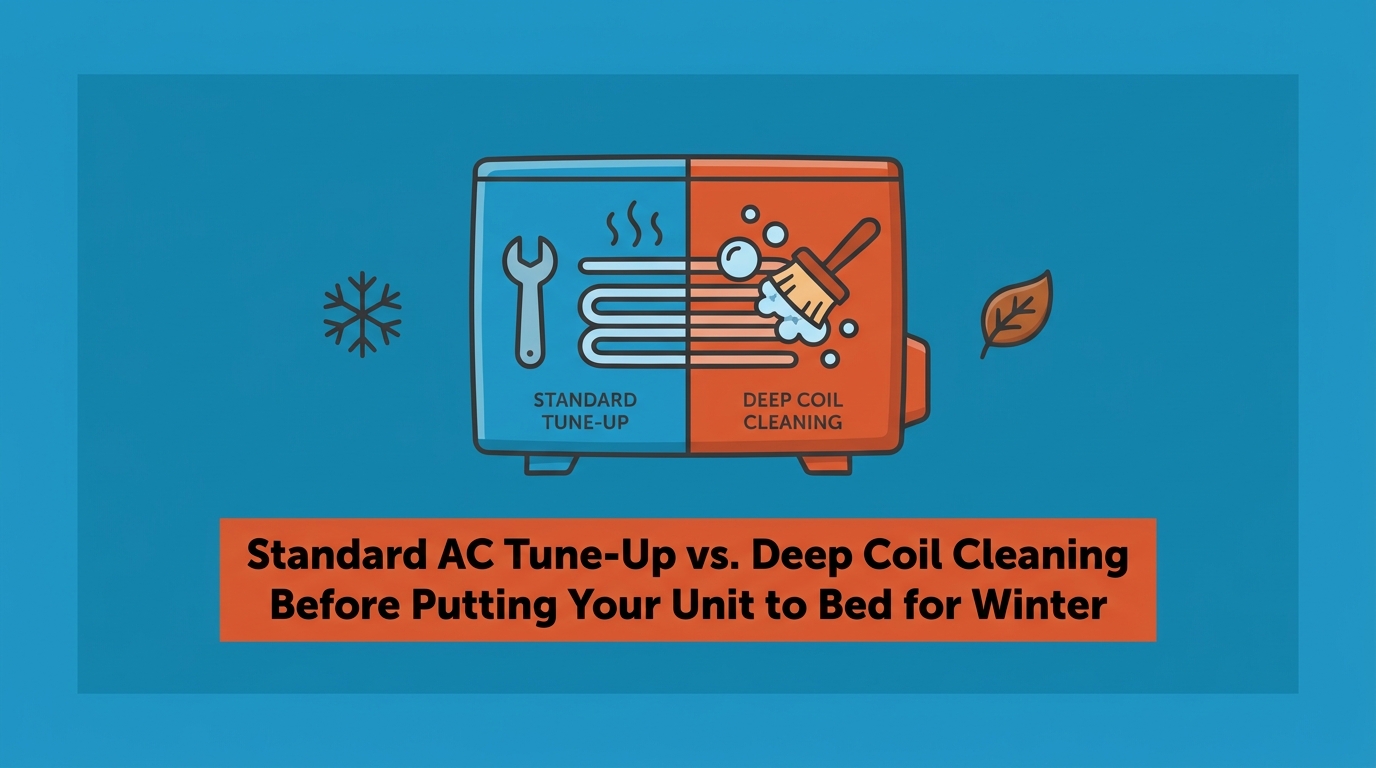
If you are trying to decide between a Standard AC Tune-Up vs. Deep Coil Cleaning Before Putting Your Unit to Bed for Winter, you are not alone in wondering whether your system needs a simple wipe-down or a heavy-duty wash after a long cooling season. Here at Precision Heating & Cooling, we frequently help San Jose homeowners navigate this exact September fall transition. Before you power down your air conditioner for the season, you have to address the mechanical wear and environmental tear it endured over the summer. Your outdoor condenser unit has spent months pulling in hot air, dust, and debris, and evaluating its post-summer condition is a critical step in home maintenance.
Making the right choice between a basic tune-up and a comprehensive chemical cleaning determines how well your equipment survives its winter dormancy. Leaving corrosive grime on your system while it sits idle can lead to permanent damage, whereas the right level of cleaning protects the delicate internal components. By investing in professional air conditioning services and adhering to a routine maintenance plan, you ensure your system rests safely and is ready to perform efficiently when the heat returns next spring.
To understand why end-of-season cleaning is so important, you have to look at how your outdoor unit actually operates. Your air conditioner does not create cold air; it removes heat from inside your home and pumps it outside. The outdoor condenser coils are responsible for releasing that trapped heat into the surrounding air. To do this effectively, the unit pulls vast amounts of outdoor air through the narrow aluminum fins that protect the coils.
In our years of servicing systems across San Jose's urban and suburban areas, our team sees firsthand how this process exposes the equipment to a unique set of harsh environmental factors. As the summer progresses, the buildup on your coils acts like a suffocating blanket, trapping heat inside the system. According to the U.S. Department of Energy, dirty condenser coils can reduce your system's overall efficiency by up to 30 percent. Here is how specific summer conditions degrade your system's performance:
1. Airborne dust accumulation: San Jose's dry summer heat creates an environment where fine dust is constantly swirling. As the condenser fan pulls air inward, this dry dust coats the slightly damp coils, creating a stubborn layer of grime that restricts necessary airflow.
2. Wildfire smoke and PM2.5 particulate matter: Late-summer air quality alerts and regional wildfires introduce microscopic particulate matter (PM2.5) into the air. Unlike loose dirt, this sticky, acidic ash bakes directly onto the hot aluminum fins, forming a hardened crust that a simple rainstorm cannot wash away.
3. Biological debris and yard waste: Throughout the cooling season, grass clippings, falling leaves, and pollen get sucked into the condenser vents. As this organic matter breaks down, it traps moisture against the metal components, setting the stage for future corrosion.
When environmental grime coats your condenser coils, the system loses its ability to transfer heat efficiently. Because the heat cannot escape, the compressor has to run longer and work significantly harder to reach the temperature set on your thermostat. This extended run time not only drives up your monthly energy bills but also places immense mechanical stress on the compressor motor, leading to premature wear and tear.
A standard tune-up is the baseline end-of-season service designed for systems that have experienced normal, light-to-moderate use. If your air conditioner is relatively new, heavily protected from the elements, or was just thoroughly cleaned in the spring, a standard service during the September fall transition is often sufficient.
This level of maintenance focuses on evaluating the overall health of the system rather than aggressively stripping away baked-on grime. It is a preventative measure designed to catch small mechanical or electrical issues before they turn into major breakdowns. When you schedule this service as part of your comprehensive HVAC solutions, our technicians will perform a system-wide health check.
• Refrigerant level verification: The technician will check the system's pressures to ensure there are no slow leaks that developed over the summer. Low refrigerant forces the compressor to overwork and can cause the indoor evaporator coil to freeze.
• Electrical component testing: All contactors, capacitors, and relays are tested for proper voltage and amperage. Loose wires are tightened to prevent electrical shorts during the winter.
• Basic debris removal: The technician will clear away loose yard debris, such as leaves, twigs, and grass clippings, from the base of the outdoor cabinet.
• Light coil cleaning: Standard coil cleaning usually involves a soft bristle brush or a low-pressure water rinse to wash away loose, unbaked dirt and surface dust.
The takeaway: A standard tune-up is excellent for maintaining an already healthy system. However, if the water rinse fails to remove the hardened layer of smoke and smog, your system will require a more advanced approach.
If your system has been heavily taxed by the San Jose urban and suburban areas' dry heat, or if it was exposed to significant wildfire smoke, our technicians will tell you that a simple water rinse will not be enough. This is when a deep chemical coil cleaning becomes necessary. A deep clean targets the microscopic, baked-on grime that suffocates the aluminum fins and severely restricts heat transfer.
A deep chemical wash utilizes specialized, professional-grade foaming detergents. When applied to the condenser coils, these chemicals undergo a reaction that causes them to expand and foam aggressively. This foaming action pushes deep between the tightly packed aluminum fins, lifting out embedded dirt, oxidized metal, and sticky ash that a standard hose could never reach. As the foam expands, it pushes the debris outward where it can be safely rinsed away.
It is critical to note that a deep chemical coil cleaning is not a weekend DIY project. The chemicals used are highly potent and, if left on the coils too long, can actually eat away at the fragile aluminum fins. A licensed HVAC professional understands exactly how long to let the foaming agent sit and how to properly neutralize and rinse the chemicals to protect the metal. Furthermore, the high-pressure water needed to rinse the foam must be applied at a very specific angle; otherwise, the delicate fins will bend and flatten, permanently blocking airflow.
• Systems exposed to heavy smoke: Properties that experienced dense wildfire smoke over the summer almost always require chemical intervention to remove the sticky ash.
• Homes near busy roadways: Constant exposure to vehicle exhaust and kicked-up street dust creates a thick, greasy sludge on the coils.
• Units with skipped maintenance: If you have missed your annual maintenance for two or more years, standard water pressure will not break through the accumulated layers of grime.
By restoring the coil surface area to its original factory condition, a chemical wash immediately improves heat transfer efficiency, lowering your energy consumption and extending the lifespan of the compressor.
To make the best decision for your home during the September fall transition, it helps to see exactly how these two services stack up against one another. While both aim to improve system longevity, their methods, tools, and ideal use cases are vastly different.
• Primary Focus — Standard AC Tune-Up: System-wide electrical and mechanical health check. — Deep Chemical Coil Cleaning: Targeted, aggressive removal of heavy, baked-on grime.
• Tools Used — Standard AC Tune-Up: Multimeter, soft brush, low-pressure water rinse. — Deep Chemical Coil Cleaning: Professional foaming chemicals, neutralizing agents, fin combs.
• Ideal Candidate — Standard AC Tune-Up: Well-maintained systems with light-to-moderate summer use. — Deep Chemical Coil Cleaning: Systems exposed to heavy particulate matter, smoke, or missed maintenance.
• Time & Effort — Standard AC Tune-Up: Relatively quick, standard preventative maintenance visit. — Deep Chemical Coil Cleaning: Significantly longer process requiring careful chemical application and safe rinsing.
• Expected Outcome — Standard AC Tune-Up: Verification that the system is safe to shut down for winter. — Deep Chemical Coil Cleaning: Complete restoration of coil surface area and heat transfer efficiency.
Understanding these differences empowers you to ask the right questions when your technician arrives. Instead of guessing what your system needs, you can have an informed conversation about the actual condition of your outdoor unit.
The Efficiency Impact: Dirty condenser coils can lead to up to a 30% loss in overall system efficiency, forcing your compressor to work harder.
• Standard Tune-Up: Focuses on electrical checks, refrigerant verification, and light debris removal (leaves, loose dust).
• Deep Cleaning: Utilizes foaming chemical washes to target and remove baked-on grime, PM2.5 particulate matter, and sticky wildfire smoke ash.
One of the biggest mistakes we see homeowners make in the fall is purchasing a one-size-fits-all maintenance package. Every home is different, and the environmental stress your unit faced this summer is entirely unique to your neighborhood's specific microclimate and landscaping.
This is why our team at Precision Heating & Cooling utilizes a thorough diagnostic approach. Rather than pushing a flat-rate service, our technicians evaluate the actual toll summer took on the unit before recommending a cleaning level. This diagnostic process involves inspecting the depth of the grime, checking the airflow restriction, and assessing the condition of the aluminum fins. By taking the time to evaluate the system properly, we ensure homeowners get exactly what their system needs without unnecessary upselling.
When companies offer a generic "fall tune-up" without diagnosing the equipment first, they often perform a basic water rinse on a system that desperately needs a chemical wash, leaving the homeowner with a false sense of security. Conversely, they might push an aggressive chemical wash on a perfectly clean system, wasting the homeowner's time and resources.
During a recent summer heatwave, our crew helped a local homeowner who realized their AC was still struggling to cool the house even after being serviced by other companies. Our technician evaluated the unit, provided an honest and trustworthy assessment of the baked-on coil grime that the previous companies had missed, and resolved the AC issue with honest service. This condition-based approach guarantees that you only receive the exact level of care your equipment requires. For more insights on navigating these decisions, reviewing AC service deals and tune-up guides can help you understand the true value of diagnostic maintenance.
It is tempting to look at a dirty air conditioner in the fall and think, "I'll just deal with it next spring before I need to use it again." However, leaving summer grime on your coils over the winter is one of the most damaging things you can do to your HVAC system.
The dirt on your coils is not just inert soil. It is a mixture of acidic ash, chemical pollutants, and biological matter. When you leave this mixture on the unit during the September fall transition, you are setting the stage for severe metal degradation.
1. The moisture multiplier effect: During the winter, rain, morning frost, and high humidity introduce constant moisture to the outdoor unit. When this winter moisture interacts with the acidic summer grime baked onto the coils, it creates a corrosive chemical reaction.
2. Pitting and galvanic corrosion: Over the dormant months, this corrosive mixture slowly eats away at the thin aluminum fins and the copper tubing inside. This process, known as pitting, creates microscopic holes in the metal. Once the copper tubing is compromised, the system will slowly leak its refrigerant into the atmosphere.
3. Hard start-ups in the spring: If a system is put to bed dirty, the grime hardens like concrete over the winter. When you turn the unit on for the first time during the next spring heatwave, the compressor has to fight through that hardened blockage. This leads to "hard starts," where the motor draws excessive electricity, frequently tripping circuit breakers and risking total compressor failure.
The quick fix: Do not wait for spring. Having the coils evaluated and cleaned now neutralizes acidic compounds and protects the structural integrity of the metal all winter long.
Understanding the difference between a Standard AC Tune-Up vs. Deep Coil Cleaning Before Putting Your Unit to Bed for Winter empowers you to protect your most expensive home appliance. Whether your system just needs a basic electrical check and a quick rinse, or it requires a professional foaming chemical wash to remove baked-on wildfire ash, taking action now prevents costly corrosion during the dormant season.
You do not have to guess which service is right for your home. Our professional diagnostic inspection will provide clear, honest answers about the exact condition of your condenser coils. Protect your comfort and your equipment by scheduling a comprehensive evaluation and securing a routine maintenance plan with our team before the harsh winter weather sets in.
An AC tune-up is a broad system health check that includes testing electrical components, checking refrigerant, and performing a basic water rinse of the coils. A chemical wash is a highly targeted, advanced cleaning process. It uses professional foaming detergents to aggressively lift and remove baked-on grime, ash, and oxidation that a standard water rinse cannot remove.
Yes, cleaning your condenser before winter is highly recommended. Leaving acidic dirt, biological debris, and smog on the unit allows winter moisture to create a corrosive reaction. Cleaning the unit in the fall neutralizes these elements, preventing the aluminum fins and copper tubing from pitting and rusting while the system sits idle.
Your coils likely need a deep cleaning if you can visibly see a thick, matted layer of dirt that doesn't wash away with a garden hose. Other signs include longer-than-normal cooling cycles, a noticeable spike in your summer energy bills, or if the unit was exposed to heavy wildfire smoke and urban smog over the past few months.
A standard tune-up typically includes testing all electrical relays and capacitors, verifying proper refrigerant pressure, and clearing loose yard debris from the outdoor cabinet. The technician will also inspect the indoor blower motor and perform a light brush or low-pressure water rinse on the outdoor condenser coils to remove loose surface dust.
Wildfire smoke carries fine particulate matter (PM2.5) and acidic ash that can permanently damage your unit if left untreated. When this ash bakes onto the hot condenser coils, it restricts airflow and causes the compressor to overheat. If left on the coils over the winter, the acidic nature of the ash can corrode the metal fins.
No, it is never safe to use a standard pressure washer on your AC condenser coils. The aluminum fins that protect the coils are incredibly thin and fragile. The high force of a pressure washer will instantly bend and flatten the fins, permanently blocking airflow and ruining the unit's ability to release heat.

Leslie was amazing for her outstanding customer service skills with me the other day. Thanks to her help my air conditioner is now all set up. She answered all my questions and took away all my problems. Leslie broke it down step by step to set it up easier. Now thanks to her my air conditioner is working perfectly. I really appreciate it Leslie and I’ll be sure to ask for you if I ever come back.
I contacted Precision Heating and Cooling for my home's AC repair. They were punctual and very professional. Guillermo was very kind and thorough. I would highly recommend them!
I am writing to express my sincere appreciation for the excellent work performed by Pablo and Alejandro from Precision Heating and Cooling. Their commitment to quality and customer satisfaction is truly commendable. Awesome job guys!
I would like to extend my sincere gratitude to Alejandro for his exceptional hard work. His passion for helping others is evident, and he consistently goes above and beyond in his service. Alejandro's thorough cleaning of my fireplace has truly made a significant difference. His dedication and professionalism are greatly appreciated.
I was very impressed. Came at night (after 9pm) to fix our AC during the middle of a heat wave the day before a national holiday! Technician was very courteous and efficient, got the job done quickly. Will definitely call them again for any AC servicing I need!
Fast and efficient, arrived when scheduled for repairs and replacement parts were ordered and installed quickly. Techs were very friendly and professional. AC system works great now! I highly recommend their services if you need repairs. Tim


.avif)
