


.avif)






Recent Blogs
Stay updated with our latest blog posts.


Nearly 70% of early fall mechanical failures trace back to a single, overlooked factor: shifting from cooling to heating: the toll transition weather takes on your heat pump when daily temperatures swing wildly. Most homeowners assume that peak summer heat waves or dead-of-winter freezes are the hardest times for their HVAC equipment. However, the transition season actually creates a unique, intense form of mechanical stress. Here in the Bay Area, our specific microclimate means September afternoons often feel like the peak of summer, demanding robust air conditioning. Yet, as soon as the sun dips below the horizon, the temperature drops rapidly, requiring reliable heating just hours later.
This frequent switching forces your system to work double duty. Instead of settling into a consistent operational groove for months at a time, your equipment is jolted back and forth between two entirely different mechanical processes within a single 24-hour period. Experiencing 80+ degree days to 50-degree nights is a staple of our local early fall weather, but it is exactly this dramatic diurnal temperature shift that leaves heat pumps vulnerable to premature wear. The decision you make at the thermostat—whether to manage these settings manually or leave the system to guess—can be the difference between a minor adjustment and a major mechanical failure. If you want to protect your heat pump systems from this hidden seasonal threat, exploring a preventative maintenance plan is the smartest first step.
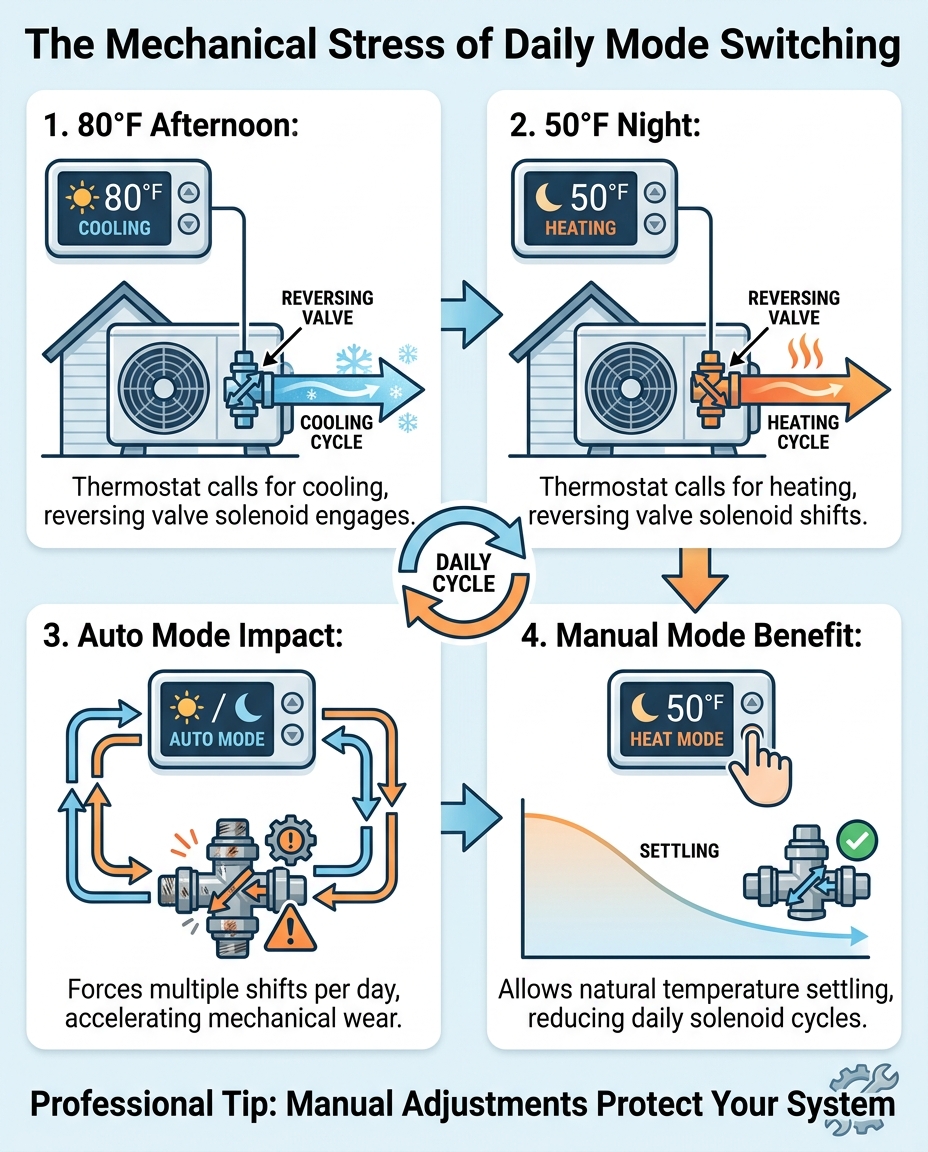
To understand why the September transition in San Jose is so hard on your equipment, you have to look at the physical components doing the heavy lifting. Unlike a traditional furnace and separate air conditioner setup, a heat pump uses a single refrigeration cycle to handle both heating and cooling. The magic behind this dual functionality is a component called the reversing valve. This heavy brass valve physically changes the direction of the refrigerant flow inside the system. When you switch from cooling to heating, a small electrical component called a solenoid activates, sliding an internal mechanism that reroutes the high-pressure refrigerant.
This component is a marvel of engineering, but it is designed primarily for seasonal shifts—switching over once in the spring and once in the late fall. It is not designed for rapid-fire daily toggling. Every single time that valve shifts, it performs a physical, mechanical action under immense internal pressure. Over time, these actions cause incremental wear and tear on the internal seals and the electrical solenoid coil.
When your system is forced to switch modes multiple times a day, the stress on the solenoid coil multiplies. The pressure equalization problem: When a heat pump shuts off, the high and low-pressure sides of the refrigerant cycle take time to equalize. If the system is immediately asked to reverse direction and start up again in the opposite mode, the reversing valve is forced to slide against extreme, unequal pressure. This strains the internal sliding block. Over the course of a long transition month, this daily mechanical friction degrades the valve's ability to create a tight seal, eventually leading to a system that gets physically "stuck" between heating and cooling.
The Problem: The most common mistake homeowners make during early fall is leaving their thermostat set to "Auto" mode. While this setting feels incredibly convenient, it is a mechanical trap during transition weather. In Auto mode, the thermostat strictly follows your temperature parameters, completely blind to how often it must force the system to switch operations.
The Cause: Consider a typical transition day with 80+ degree days to 50-degree nights. Your thermostat might be set to cool at 74°F and heat at 68°F. At 2 PM, the afternoon sun heats the house to 76°F, and the cooling kicks on. By 6 PM, the house cools down and the system shuts off. At 10 PM, the rapid evening chill drops the indoor temperature to 67°F, and the heating kicks on. The reversing valve is forced to shift under pressure twice in a single day. If the thermostat itself is struggling to read temperatures accurately, the problem compounds. One local homeowner experienced this firsthand during a recent spring transition when a non-functioning thermostat completely prevented their furnace from turning on during a cold morning; Guillermo from our team responded quickly and replaced the faulty thermostat, resolving the issue before it caused deeper mechanical lockouts.
The Solution: Manual intervention is mechanically superior during high-swing transition weather. By taking control of the mode selection, you prevent the thermostat from making rapid, unnecessary switches that degrade your reversing valve.

The reversing valve isn't the only component that suffers when you bounce between cooling and heating on a daily basis. The compressor—the heart of your heat pump—relies on proper refrigerant flow and pressure stabilization to function smoothly. When the reversing valve is constantly shifting during the September transition in San Jose, the compressor is repeatedly subjected to abrupt changes in operating pressure. This rapid cycling prevents the compressor oil from circulating properly, which can lead to overheating and premature failure.
Furthermore, daily mode switching confuses the system's defrost control board. Heat pumps rely on a delicate defrost cycle to keep the outdoor coils free of ice during cold evening operation. If the system is constantly being interrupted and forced back into cooling mode the next afternoon, the defrost sensors can misread the coil temperatures, leading to inefficient operation or unnecessary defrost cycles that waste energy.
With Precision Heating & Cooling's 20 years of local experience diagnosing these exact transition-season failures in the Bay Area, we consistently see how this specific daily mechanical cycle drives up failure rates. The wear and tear accumulates invisibly until the system finally locks up. Proper management now doesn't just protect your heating reliability for the winter; it also preserves optimal air conditioning performance for those lingering hot fall afternoons.
Because the reversing valve is a physical mechanism, it will usually give you warning signs before it fails completely. Catching these symptoms early is the key to preventing a total system lockout when you need it most. If your system is struggling to manage the shift from 80+ degree days to 50-degree nights, watch for these critical indicators:
• Loud hissing sounds: A distinct, prolonged hissing noise when the system changes modes often indicates that the reversing valve is failing to seat properly, allowing high-pressure refrigerant to bleed across the internal seals.
• Clicking without startup: If you hear the thermostat click and the outdoor unit hum, but the air never starts flowing, the solenoid may be energized but the physical valve is stuck in place.
• Grinding or groaning noises: Mechanical grinding from the outdoor unit during a mode switch suggests the internal slide mechanism is operating without proper lubrication or against extreme pressure imbalances.
• Blowing warm air in cooling mode (or vice versa): The most obvious performance sign of a stuck valve is a system that runs continuously but delivers the wrong temperature air because the refrigerant is flowing in the wrong direction.
A stuck reversing valve is not a wait-and-see issue. During a similar transition period last spring, a local customer called in with a sudden mechanical failure; Anthony on our team promptly diagnosed the issue and completed the repair within 30 minutes. Fast, accurate diagnosis is critical to restoring reliable operation before the deep winter chill sets in. If you notice any of these signs, you need professional heating services immediately to prevent secondary compressor damage.
You don't have to sacrifice indoor comfort to protect your equipment. By adjusting how you interact with your thermostat during the September transition in San Jose, you can significantly reduce the mechanical strain on your reversing valve while keeping your home perfectly comfortable.
1. Set modes manually: Instead of relying on Auto, physically set the thermostat to "Cool" during the heat of the day. When the sun goes down, turn the system completely "Off" for a few hours to let the pressures equalize, then manually switch it to "Heat" before bed.
2. Widen your temperature deadband: If you must use Auto mode, program a wider "deadband"—the temperature gap between your cooling setpoint and heating setpoint. Setting cooling to 76°F and heating to 66°F creates a 10-degree buffer that prevents the system from toggling back and forth over a single degree of temperature change.
3. Utilize natural ventilation: Take advantage of the natural Bay Area evening breeze. Opening windows as the sun goes down can rapidly cool your house, completely eliminating the need for an evening air conditioning cycle and saving your reversing valve a trip.
4. Avoid drastic temperature setbacks: When you do switch to heating, don't demand a massive temperature jump all at once. Pushing the thermostat from 62°F to 72°F forces the system to run at maximum capacity immediately after a mode switch. Move the temperature up gradually.
5. Leverage smart thermostat scheduling: Program your smart thermostat specifically for transition months. Create a schedule that locks out heating during the afternoon hours and locks out cooling during the deep night, ensuring the system only operates in the appropriate mode for that time of day.
Understanding the mechanical stress of transition weather is the first step, but proactive protection requires a professional assessment. Early fall is the absolute optimal time to test your reversing valve's operation under controlled conditions, long before you are dealing with 80+ degree days to 50-degree nights on a daily basis.
During a professional fall tune-up, a technician does much more than just change the air filter. They will specifically test the solenoid voltage to ensure the electrical component has the power it needs to shift the valve cleanly. They will monitor the refrigerant charge, as improper refrigerant levels exacerbate the pressure imbalances that cause valve wear. They will also inspect the electrical connections and contactors that take a beating during high-cycle transition days.
Addressing minor wear and tear now prevents total system lockouts when the first true cold snap arrives. By reviewing critical pre-heating season checks with a professional, you ensure that every component—from the reversing valve to the defrost control board—is prepared for the heavy winter load ahead.
Occasional switching isn't inherently bad, but doing it constantly throughout the day causes excessive wear. Every time you switch from AC to heat, the reversing valve must physically shift under high pressure. During the September transition in San Jose, frequent daily switching degrades the internal seals and stresses the solenoid coil, leading to premature mechanical failure.
During high-swing transition seasons, it is generally better to avoid Auto mode. Auto mode blindly follows temperature setpoints, which can force your system to switch between heating and cooling multiple times a day as the sun rises and sets. Manually selecting your mode or widening the temperature gap (deadband) prevents this unnecessary mechanical cycling.
When a reversing valve gets stuck, your heat pump loses the ability to change the direction of the refrigerant flow. This means the system will either be permanently stuck in heating mode, permanently stuck in cooling mode, or stuck somewhere in the middle, which causes the unit to blow room-temperature air while severely straining the compressor.
The safest way to transition your heat pump is to give the system time to equalize before switching modes. Turn the thermostat to the "Off" position for at least five to ten minutes before switching from cooling to heating. This allows the internal refrigerant pressures to balance out, ensuring the reversing valve doesn't have to shift against extreme resistance.
A brief whooshing sound is completely normal when a heat pump changes modes. This noise is the sound of high-pressure refrigerant rapidly changing direction as the reversing valve slides into its new position. However, if the whooshing turns into a prolonged hissing or grinding noise, it indicates the valve is struggling to seat properly and requires professional attention.
Understanding the mechanical stress caused by shifting between 80+ degree days to 50-degree nights is the first step to protecting your HVAC investment. Your reversing valve works incredibly hard during the early fall, and leaving your thermostat on Auto mode only accelerates the wear and tear that leads to sudden breakdowns.
Taking action now ensures reliable, efficient operation when the temperatures drop permanently and the deep winter chill sets in. Don't wait until your system is stuck blowing cold air on a freezing morning. Secure a professional assessment to safeguard your reversing valve and overall system health by enrolling in a preventative maintenance plan today.

Leslie was amazing for her outstanding customer service skills with me the other day. Thanks to her help my air conditioner is now all set up. She answered all my questions and took away all my problems. Leslie broke it down step by step to set it up easier. Now thanks to her my air conditioner is working perfectly. I really appreciate it Leslie and I’ll be sure to ask for you if I ever come back.
I contacted Precision Heating and Cooling for my home's AC repair. They were punctual and very professional. Guillermo was very kind and thorough. I would highly recommend them!
I am writing to express my sincere appreciation for the excellent work performed by Pablo and Alejandro from Precision Heating and Cooling. Their commitment to quality and customer satisfaction is truly commendable. Awesome job guys!
I would like to extend my sincere gratitude to Alejandro for his exceptional hard work. His passion for helping others is evident, and he consistently goes above and beyond in his service. Alejandro's thorough cleaning of my fireplace has truly made a significant difference. His dedication and professionalism are greatly appreciated.
I was very impressed. Came at night (after 9pm) to fix our AC during the middle of a heat wave the day before a national holiday! Technician was very courteous and efficient, got the job done quickly. Will definitely call them again for any AC servicing I need!
Fast and efficient, arrived when scheduled for repairs and replacement parts were ordered and installed quickly. Techs were very friendly and professional. AC system works great now! I highly recommend their services if you need repairs. Tim


.avif)
