


.avif)





Recent Blogs
Stay updated with our latest blog posts.


Annual HVAC maintenance is it worth it — and for most homeowners in the San Jose Bay Area, the answer is yes. A well-maintained system runs more efficiently, lasts longer, and is far less likely to fail on the hottest day of summer or the coldest night in January.
Here is a quick breakdown of when it makes sense:
The evidence is consistent across industry sources and real homeowner experiences: neglected systems lose efficiency, rack up repair costs, and fail years sooner than they should. One often-cited example involves a homeowner who skipped routine service for several years, only to face a mid-season compressor failure — a repair that cost far more than years of tune-ups combined would have.
I'm Tony Lara, an HVAC professional who has spent years tracking down hard-to-find parts and solving the kinds of problems that regular maintenance is designed to prevent — so I know how much a simple annual check-up can change the answer to annual HVAC maintenance is it worth it for your specific system. In the sections below, we'll break down exactly what's included, what it costs, and how to decide what's right for your home.
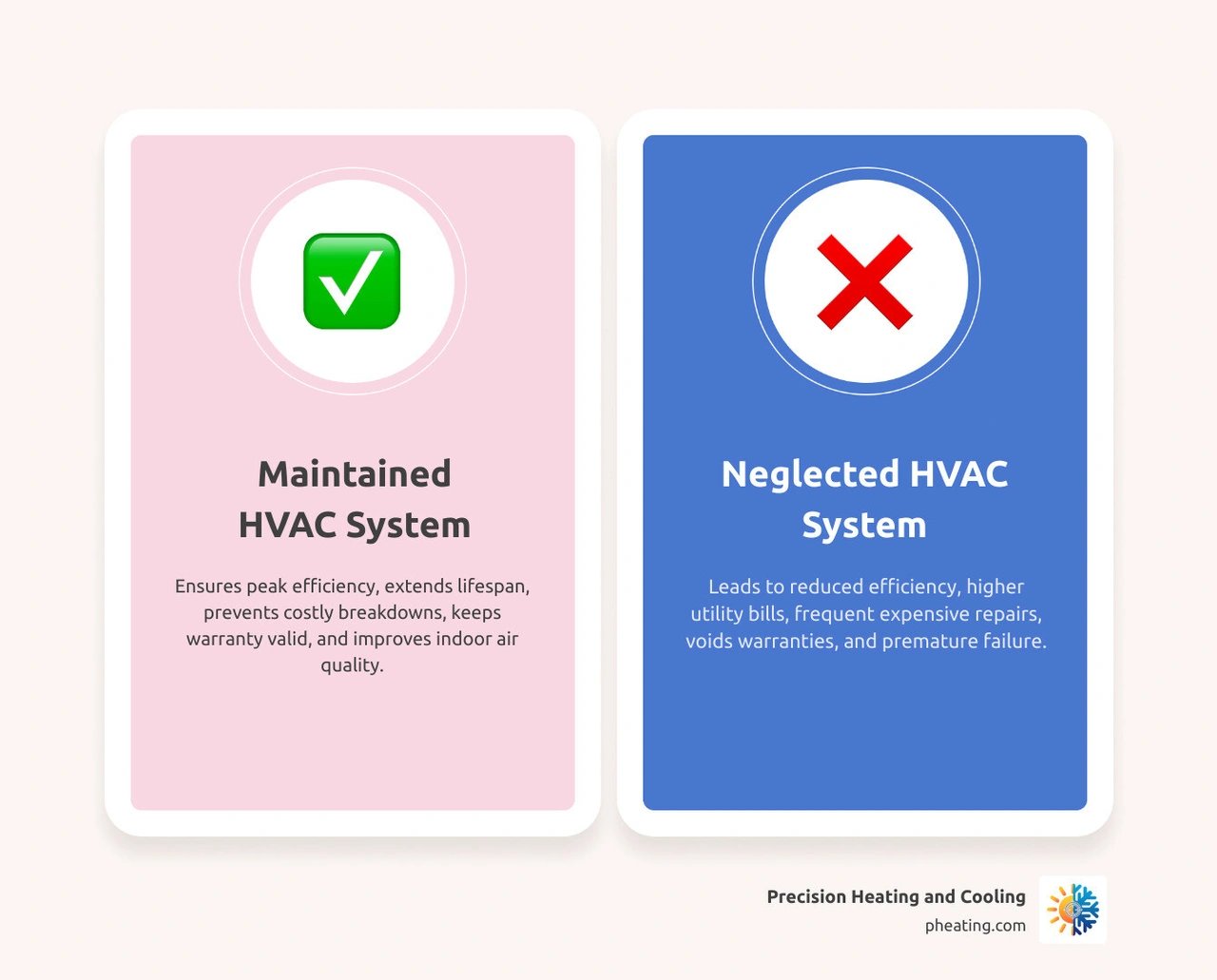
At its core, HVAC maintenance is a comprehensive wellness check for your home’s most expensive appliance. Think of it like a dental cleaning or an oil change for your car; you do it to prevent a catastrophe, not just to fix a current problem. In the San Jose Bay Area and Central Valley, where our systems often transition quickly from cooling to heating, this professional oversight is vital.
A professional HVAC Maintenance San Jose CA visit typically involves a 20+ point inspection. During a standard service, a technician should perform the following:
When homeowners ask us, "annual hvac maintenance is it worth it?" we often point to the utility bills. According to the U.S. Department of Energy, regular maintenance can reduce energy consumption by 5% to 15%. In a climate like ours, where the AC might be running for months straight, those savings add up quickly.
Efficiency isn't just about the monthly bill; it's about the "stress" on the machine. A clean system with balanced airflow and lubricated parts doesn't have to struggle to reach your target temperature. This translates directly into a longer lifespan. While a neglected unit might struggle to hit the 10-year mark, a well-maintained system can easily last 15 to 20 years.
| Feature | Maintained System | Neglected System |
|---|---|---|
| Average Lifespan | 15–20 Years | 8–10 Years |
| Energy Efficiency | Peak (up to 15% lower bills) | Drops ~5% every year |
| Breakdown Risk | Minimal (95% lower) | High (especially in peak season) |
| Air Quality | High (filtered and clean) | Poor (circulates dust/allergens) |
| Warranty Status | Valid | Often Voided |
Beyond the hardware, The Importance of Regular AC Service extends to your indoor air quality. HVAC systems play a massive role in filtering out dust, pollen, and pet dander. When maintenance is skipped, these contaminants build up in the coils and ducts, potentially worsening respiratory issues for anyone in the home with allergies or asthma.
In areas like Santa Clara, Sunnyvale, and Palo Alto, the "once a year" rule is a minimum, but it isn't always the gold standard. The right frequency often depends on what kind of equipment you have.
For traditional "split systems" (a separate furnace and air conditioner), we generally recommend a visit in the spring for the AC and a visit in the fall for the furnace. This ensures "seasonal readiness" before you actually need to rely on the system. There’s nothing quite as stressful as turning on your heater for the first time in November only to realize it's blowing cold air.
However, for heat pumps, biannual service is almost non-negotiable. Because heat pumps provide both heating and cooling, they work year-round. They don't get a "vacation" in the shoulder seasons, meaning components like the reversing valve and compressor experience double the wear. AC Tune-Ups: Why Technicians Recommend Them Yearly is a good starting point, but for year-round comfort in the Central Valley, twice-yearly checks are the safest bet.
If your system was installed within the last 10 years, you likely have a manufacturer's parts warranty. What many homeowners don't realize is that these warranties are conditional. Most major brands require proof of documented professional maintenance to honor a claim.
If a major component like a compressor fails, the manufacturer may ask for service records. If you can't provide them, they may deny the claim, leaving you to pay for a replacement part that should have been covered. For these homeowners, an HVAC Tune-Up Santa Clara CA is essentially an insurance policy for their 10-year warranty.
For older systems in Sunnyvale or Los Gatos, maintenance is less about the warranty and more about "survival." As a system ages, parts like capacitors, contactors, and fan motors begin to wear down.
A proactive technician can often spot a $20 capacitor that is starting to bulge or leak. Replacing it during a routine HVAC Maintenance Sunnyvale CA visit prevents that capacitor from failing and taking out a $2,000 compressor along with it. For aging units, maintenance is about early issue detection and helping you plan for an eventual replacement rather than being forced into an emergency purchase during a heatwave.
We often get asked if a homeowner can just "do it themselves" to save money. There is certainly a list of tasks you should be doing, but there are limits to what is safe and effective for a non-professional.
What you SHOULD do (DIY):
What the PROS should do:
For homeowners in HVAC Maintenance Palo Alto CA, balancing these DIY tasks with a professional annual visit is the best way to ensure safety and performance.
Many companies, including us at Precision Heating and Cooling, offer formal HVAC Maintenance Plan options. These are designed to take the guesswork out of scheduling. But are they worth it?
A good maintenance plan generally offers several "perks" beyond the actual tune-up:
However, you should be wary of plans that feel like "upsell traps." A reputable contractor uses a maintenance visit to ensure the health of your system, not to pressure you into a new unit every year. Look for plans that focus on transparency and provide a detailed checklist of what was performed.
In our region, you should check your filter every month. If it looks gray or "fuzzy," change it. At a minimum, change it every 90 days. Homes with pets, smokers, or residents with allergies should stick to a 30-day schedule, especially during high-pollen seasons or when wildfire smoke is present in the valley.
While no one can guarantee 100% uptime, industry data suggests that up to 95% of emergency repairs could have been prevented with regular maintenance. Most "emergencies" are caused by dirt buildup or small parts failing that could have been spotted months earlier during a routine check.
In many cases, yes. Most manufacturers (like Trane, Lennox, or Carrier) explicitly state in their warranty terms that the equipment must be maintained by a qualified professional. Without service records, you may find yourself paying out-of-pocket for expensive parts that should have been covered.
At the end of the day, the answer to "annual hvac maintenance is it worth it" depends on your goals. If you want the lowest possible monthly bills, a system that lasts 20 years, and the peace of mind that your family is safe from carbon monoxide or sudden breakdowns, then it is one of the best investments you can make for your home.
At Precision Heating and Cooling, we bring over two decades of experience to every home we visit across the San Jose Bay Area and Central Valley. Whether you are in Cupertino, Los Gatos, or Hanford, our goal is to keep you comfortable through every season. We pride ourselves on reliable service and competitive pricing, ensuring that your HVAC system remains a reliable foundation of your home’s comfort rather than a source of stress.
If you're ready to protect your investment, explore our HVAC Service San Jose CA and maintenance options today. We’re here to help you stay cool in the summer, warm in the winter, and worry-free all year long.

Leslie was amazing for her outstanding customer service skills with me the other day. Thanks to her help my air conditioner is now all set up. She answered all my questions and took away all my problems. Leslie broke it down step by step to set it up easier. Now thanks to her my air conditioner is working perfectly. I really appreciate it Leslie and I’ll be sure to ask for you if I ever come back.
I contacted Precision Heating and Cooling for my home's AC repair. They were punctual and very professional. Guillermo was very kind and thorough. I would highly recommend them!
I am writing to express my sincere appreciation for the excellent work performed by Pablo and Alejandro from Precision Heating and Cooling. Their commitment to quality and customer satisfaction is truly commendable. Awesome job guys!
I would like to extend my sincere gratitude to Alejandro for his exceptional hard work. His passion for helping others is evident, and he consistently goes above and beyond in his service. Alejandro's thorough cleaning of my fireplace has truly made a significant difference. His dedication and professionalism are greatly appreciated.
I was very impressed. Came at night (after 9pm) to fix our AC during the middle of a heat wave the day before a national holiday! Technician was very courteous and efficient, got the job done quickly. Will definitely call them again for any AC servicing I need!
Fast and efficient, arrived when scheduled for repairs and replacement parts were ordered and installed quickly. Techs were very friendly and professional. AC system works great now! I highly recommend their services if you need repairs. Tim


.avif)
