


.avif)







Recent Blogs
Stay updated with our latest blog posts.


Is your water heater refusing to stay lit just as the weather starts to cool down? Can I replace my water heater thermocouple myself? The risks we see in the field tell a very different story than the quick-fix videos you might find online. When San Jose's autumn morning temperatures frequently drop into the 50s, waking up to a freezing shower quickly turns reliable hot water from a background convenience into an urgent daily necessity. If you find yourself repeatedly kneeling in front of your utility closet, holding down the pilot button, and listening to the flame die the second you let go, the frustration is entirely understandable. The immediate temptation is to run to a local hardware store, grab a replacement part, and attempt a quick DIY fix to get your morning routine back on track.
However, the thermocouple is not just a simple temperature sensor; it is your gas appliance's primary safety mechanism. While the component itself appears visually straightforward, tampering with it carries heavy mechanical and safety consequences, especially during your early fall pre-heating-season preparations. What seems like an easy weekend project routinely cascades into severe damage to the entire gas control system. For safe, reliable solutions, our team provides comprehensive professional HVAC and plumbing services to keep your home comfortable and secure without the hidden dangers of DIY gas work.
To understand why DIY replacement is so heavily discouraged, you first need to understand exactly what this component does. In standard atmospheric venting gas water heaters, the thermocouple serves as the critical bridge between the pilot flame and the main gas supply. It operates on a scientific principle known as the Seebeck effect, where two dissimilar metals joined together generate a small electrical voltage when subjected to heat.
The Anatomy of the Safety System:
• The Probe: This is the tip that sits directly inside the pilot flame. As long as the flame is burning, the probe absorbs that heat.
• The Copper Tubing: This acts as the conductive pathway, carrying the generated electrical current away from the burner assembly.
• The Millivolt Connection: The threaded end connects directly into the main gas control valve on the outside of the tank.
When the pilot flame is lit, the probe heats up and generates a tiny electrical current—measured in millivolts. This microscopic current travels up the copper tubing and powers a small electromagnet located inside the gas control valve. As long as the electromagnet receives power, it holds the main gas valve open, allowing fuel to flow to the burner when the thermostat calls for heat.
If a downdraft blows the pilot light out, or if the burner assembly becomes clogged, the probe rapidly cools down. The millivolt current stops flowing, the electromagnet loses its charge, and a heavy spring instantly snaps the gas valve completely shut. This prevents raw, unburned natural gas from flooding into your home. Bypassing, mishandling, or improperly installing this component effectively disables the appliance's core safety mechanism. If you are experiencing issues with your system's ignition, relying on professional water heater repair and installation ensures that this vital fail-safe operates exactly as engineered.
The most common and costly mistake DIYers make does not happen inside the burner chamber; it happens at the exterior connection point. The thermocouple must be threaded into the main gas control valve to deliver its electrical current. Because the system relies on such a tiny voltage, the connection must be absolutely flawless to ensure proper conductivity. To achieve this, manufacturers use very fine threads cut into relatively soft metals, typically copper or brass.
Leveraging Precision Heating & Cooling's extensive field experience, we consistently see that ruined control valves are the most common aftermath of botched DIY thermocouple jobs. Homeowners often attempt the repair in poorly lit utility closets, working at awkward angles with standard adjustable wrenches instead of the specialized line wrenches required for delicate plumbing fittings. When the soft metal threads of the new thermocouple are forced into the gas control valve at a slight angle, the harder metal of the valve body can easily strip or cross-thread.
Once the internal threads on the gas control valve are damaged, the entire valve is permanently ruined. A component that was intended to be a minor fix suddenly requires a major, expensive full-valve replacement. In some cases, if the water heater is older and the specific gas valve is no longer manufactured, a cross-threaded connection forces the premature replacement of the entire water heater tank.
The margin for error when securing a millivolt connection on standard atmospheric venting gas water heaters is incredibly slim. Here is exactly how inexperienced handling leads to mechanical failure:
• Overtightening — Mechanical Cause: Applying too much torque with a heavy wrench compresses the soft metal seal incorrectly. — Resulting Consequence: Cracks the internal contact point, preventing the millivolt current from reaching the electromagnet.
• Undertightening — Mechanical Cause: Leaving the connection loose out of fear of breaking the component. — Resulting Consequence: Fails to engage the electrical contact fully, causing the pilot to continue dropping out randomly.
• Misalignment — Mechanical Cause: Screwing the fitting in at a slight angle due to poor visibility or awkward positioning. — Resulting Consequence: Permanently strips the threading on the main gas control valve, requiring a full valve replacement.
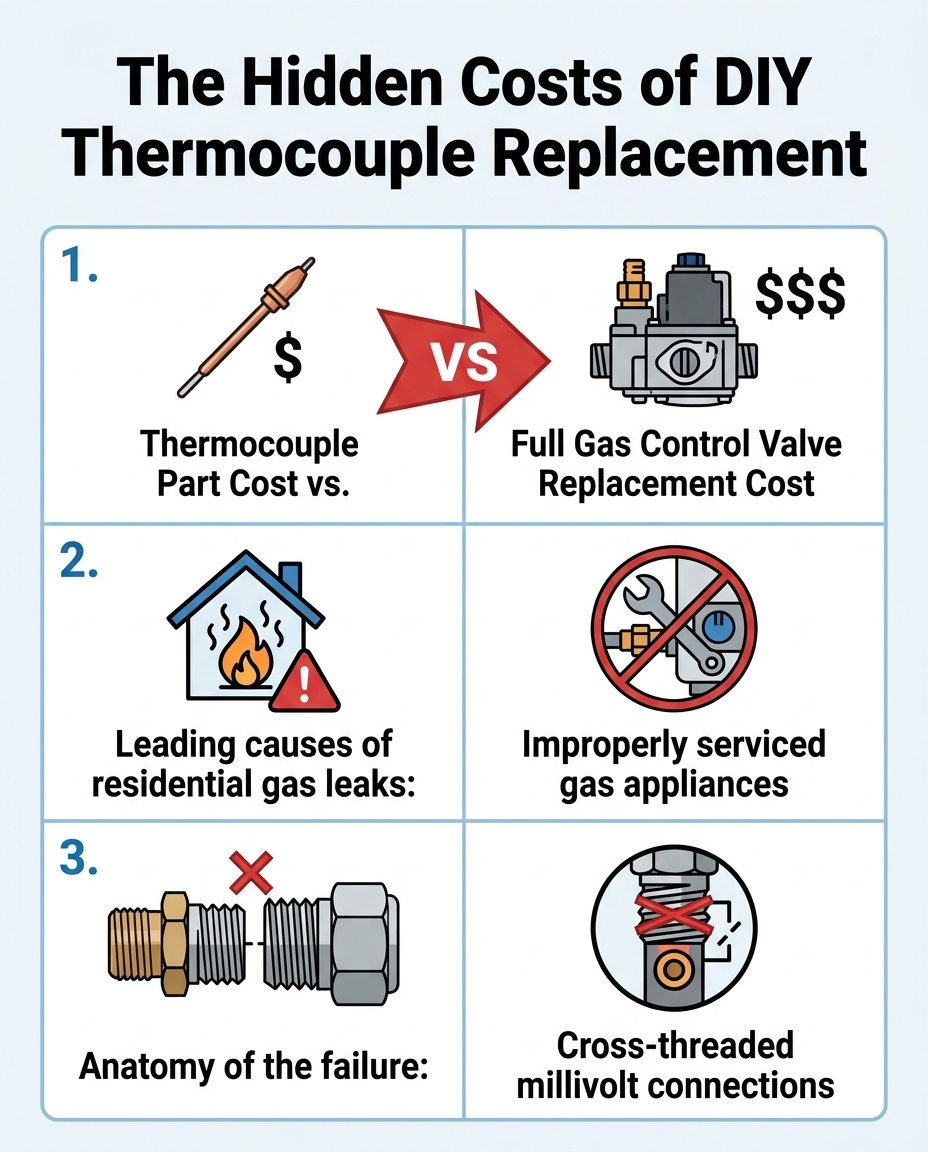

Beyond the mechanical risks to the equipment, tampering with any gas-fired appliance introduces severe threats to household safety. Data from organizations like the National Fire Protection Association (NFPA) and the Consumer Product Safety Commission (CPSC) consistently highlight that improperly serviced gas appliances are a leading cause of residential gas leaks and carbon monoxide exposure. Replacing a thermocouple requires working directly adjacent to the main burner assembly and the primary gas supply lines.
When an untrained individual attempts to manipulate these components, they often inadvertently disturb the surrounding gas lines or fail to secure the burner door gasket properly upon reassembly. This can create undetectable micro gas leaks. Natural gas is highly combustible, and because water heaters are typically located in confined utility closets, garages, or basements with limited ventilation, even a microscopic leak can allow gas to pool and build up over time. If you ever notice a faint gas smell from your water heater, you should evacuate the area and contact a professional immediately.
Furthermore, improper installation can interfere with the appliance's drafting process. If the burner assembly is not seated correctly, or if the flame is obstructed, the water heater may begin producing high levels of carbon monoxide. Because carbon monoxide is colorless and odorless, a botched DIY job can introduce a silent, life-threatening hazard into your home's living spaces. Any work involving gas lines, combustion chambers, or safety shut-off valves legally and practically requires a licensed professional.
One of the most frustrating aspects of DIY water heater repair is that a pilot light that refuses to stay lit isn't always caused by a bad thermocouple. Homeowners frequently spend hours struggling to install a new part, risking damage to their gas valve, only to find that the pilot still drops out immediately. A professional technician brings the expertise to accurately diagnose the true root cause before any wrenches are turned.
What a professional diagnostic check actually covers:
• Millivolt Output Testing: Technicians use specialized multimeters to measure the exact electrical output of the existing thermocouple to determine if it has actually failed.
• Gas Pressure Evaluation: A weak pilot flame caused by low gas pressure will fail to heat the probe properly, mimicking a broken component.
• Draft and Venting Inspection: Downdrafts or obstructed flues can blow the pilot out repeatedly, which is a venting issue, not a sensor issue.
• Control Valve Assessment: The electromagnet inside the gas valve may have failed, meaning a new thermocouple will not solve the problem.
When your system fails, fast and accurate service is paramount. One San Jose homeowner reached out when their heating system suddenly failed on a cold winter Saturday morning. A technician was dispatched and arrived early the very next day, professionally diagnosing the root cause and servicing the unit to restore warmth quickly and safely. Relying on professional heating system services ensures that your equipment is repaired using exact OEM parts and specialized tools. More importantly, it provides the peace of mind that comes from knowing your home's gas connections are legally, safely, and securely restored during your early fall pre-heating-season prep.
While it is physically possible to purchase the replacement part at a hardware store, attempting the replacement yourself is highly discouraged. The process involves handling active gas connections and delicate millivolt threads that require specialized tools and training. Handling these components without a license poses severe safety hazards and liability risks for your home.
Incorrect installation usually results in cross-threading the soft metal connections, which permanently damages the expensive gas control valve. Beyond mechanical damage, an improper installation can lead to dangerous micro gas leaks or cause the burner to operate inefficiently, increasing the risk of carbon monoxide exposure in your utility space.
Yes, the main gas supply must be completely shut off and safely locked out before any work begins on the burner assembly. This critical step highlights exactly why a licensed professional should handle the procedure, as they have the equipment to ensure the gas lines are safely secured and properly tested for leaks when the system is restored.
A failing thermocouple is a common culprit, as it will automatically cut off the gas flow if it can no longer sense the heat of the flame. However, other frequent causes include a dirty pilot tube obstructing the gas, a failing electromagnet inside the main gas valve, or severe draft issues blowing the flame out.
In standard atmospheric venting gas water heaters, these components generally last up to 10 years, depending on the household's hot water usage and the overall maintenance of the unit. Regular professional inspections can identify wear, corrosion, or carbon buildup on the probe before it fails completely, preventing sudden losses of hot water.
When it comes to the safety of your home and the reliability of your daily routines, attempting a DIY fix on a gas appliance is never worth the risk. The definitive answer to whether you should replace this component yourself is a firm no. The high probability of cross-threading the gas control valve, combined with the severe risks of micro gas leaks and carbon monoxide exposure, makes this a job exclusively for licensed professionals. Protect your equipment from cascading failures and ensure your family's safety by keeping untrained hands away from the gas lines.
As you check items off your early fall pre-heating-season checklist, make sure to secure your hot water reliability before the colder winter months set in. Scheduling a professional inspection ensures that your system is accurately diagnosed and safely restored. For long-term peace of mind and consistent performance, consider enrolling in a comprehensive preventative maintenance plan to catch wear and tear before it leaves you in the cold.

Leslie was amazing for her outstanding customer service skills with me the other day. Thanks to her help my air conditioner is now all set up. She answered all my questions and took away all my problems. Leslie broke it down step by step to set it up easier. Now thanks to her my air conditioner is working perfectly. I really appreciate it Leslie and I’ll be sure to ask for you if I ever come back.
I contacted Precision Heating and Cooling for my home's AC repair. They were punctual and very professional. Guillermo was very kind and thorough. I would highly recommend them!
I am writing to express my sincere appreciation for the excellent work performed by Pablo and Alejandro from Precision Heating and Cooling. Their commitment to quality and customer satisfaction is truly commendable. Awesome job guys!
I would like to extend my sincere gratitude to Alejandro for his exceptional hard work. His passion for helping others is evident, and he consistently goes above and beyond in his service. Alejandro's thorough cleaning of my fireplace has truly made a significant difference. His dedication and professionalism are greatly appreciated.
I was very impressed. Came at night (after 9pm) to fix our AC during the middle of a heat wave the day before a national holiday! Technician was very courteous and efficient, got the job done quickly. Will definitely call them again for any AC servicing I need!
Fast and efficient, arrived when scheduled for repairs and replacement parts were ordered and installed quickly. Techs were very friendly and professional. AC system works great now! I highly recommend their services if you need repairs. Tim


.avif)
