


.avif)





Recent Blogs
Stay updated with our latest blog posts.


When that first cold front hits and you turn on your heater, having reliable home maintenance tips and troubleshooting strategies can save you from a freezing night and a lot of panic. You walk to the thermostat, switch the system from cooling to heating, and wait for the warm air to flow. Instead, you are greeted by a strange burning odor or a lukewarm breeze that leaves the house feeling just as cold as before. That sudden temperature drop in October forces dormant heating equipment back to life, and it rarely happens without a few hiccups along the way.
Knowing how to distinguish between normal seasonal burn-off and a failing component is the ultimate decision point for any homeowner. Both your space heating and water heating systems face unique, heavy stresses during this transition. If you need immediate help navigating these seasonal shifts, reach out for professional HVAC services or dedicated water heater repair services to keep your home safe and warm.
One of the most alarming things that can happen during a mid-fall heating startup is a sudden, sharp burning smell spreading through your air vents. Before you panic, it helps to understand exactly what is happening inside your equipment. Throughout the summer, your furnace sits completely idle. Airborne particles, pet dander, and household dust bypass the filter and settle directly onto the cold metal surfaces of the heat exchanger.
This is especially true in San Jose and South Bay microclimates. Our systems often sit completely dormant during hot late summers, leading to heavier dust buildup before the first chilly night forces them into action. When the gas burners ignite or the electric heating elements glow red for the first time in months, that accumulated layer of dust instantly incinerates. The result is a distinct, slightly musty burning smell that travels through your ductwork.
However, not all smells are harmless. There is a massive difference between burning dust and melting wire insulation. Understanding these differences ensures you do not ignore a genuine hazard.
• Musty, singed dust — Likely Cause: Normal dust accumulation on the heat exchanger burning off. — Safety Level: Safe (temporary)
• Acrid, melting plastic — Likely Cause: Overheating electrical wires or a failing blower motor. — Safety Level: Dangerous (shut off immediately)
• Rotten eggs or sulfur — Likely Cause: A natural gas leak near the furnace or water heater. — Safety Level: Critical (evacuate and call gas company)
• Sharp, metallic ozone — Likely Cause: An electrical short or overheating heat pump compressor. — Safety Level: Dangerous (shut off immediately)
The 60-minute rule: The most effective way to troubleshoot a startup smell is to monitor its duration. A normal dust burn-off should begin fading within the first 15 to 30 minutes of operation. By the one-hour mark, the smell should be completely gone. If the weather permits, open a few windows slightly to help ventilate the harmless dust odors out of your living space.
When to pull the plug: If the smell intensifies, changes from dusty to electrical, or persists beyond an hour, power down the unit immediately at the thermostat. A persistent odor means the system is actively overheating or burning a component that is not meant to get hot. At this point, the problem has crossed the line from normal seasonal behavior to a mechanical failure that requires professional diagnostics.
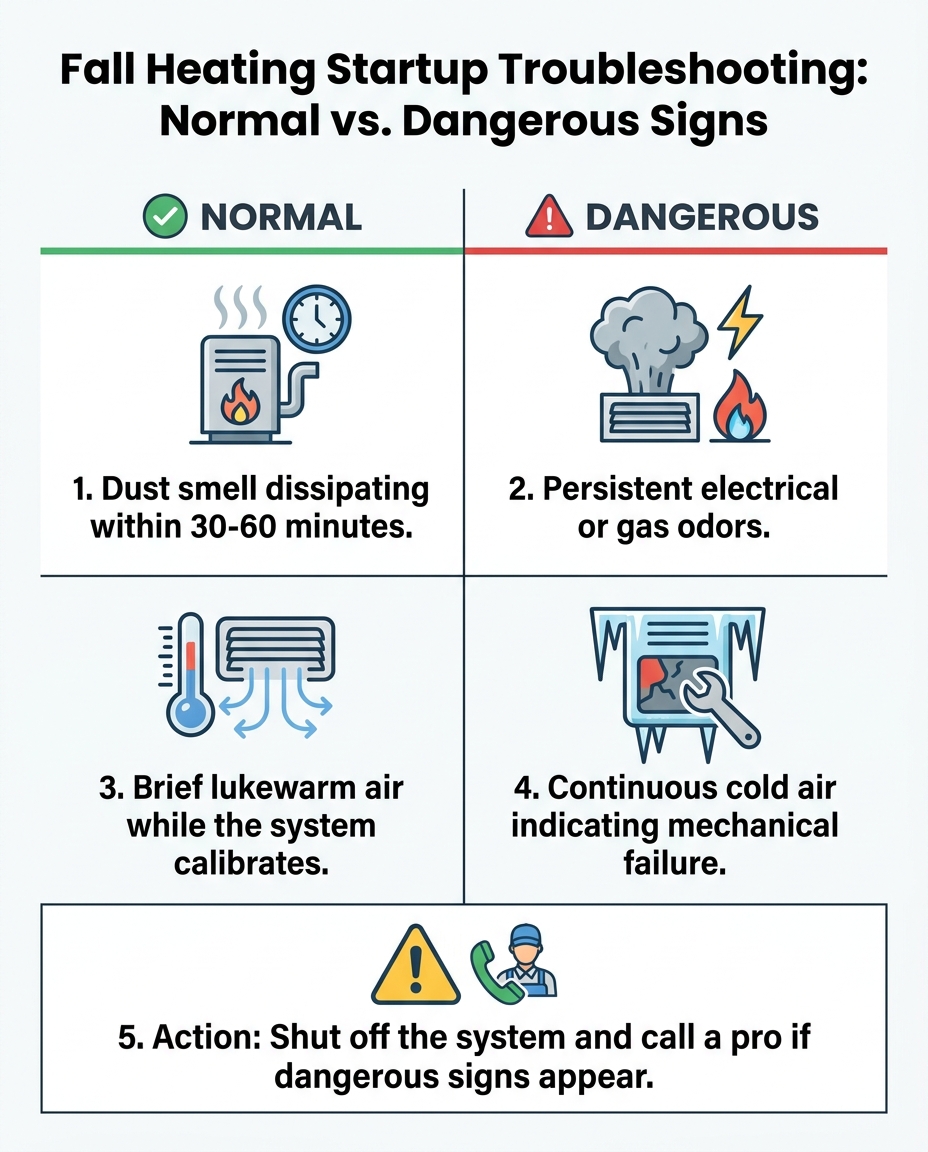

The second most common issue homeowners face during a mid-fall heating startup is a system that blows cold or lukewarm air. You hear the equipment running, air is moving out of the registers, but the house simply isn't getting any warmer. The root cause of this problem usually depends on whether you have a heat pump or a gas furnace.
Heat pump quirks: Heat pumps operate differently than traditional furnaces. They don't generate heat by burning fuel; they transfer heat from the outside air into your home. When you first turn a heat pump on, it may take a few minutes for the refrigerant cycle to reverse and begin producing warm air. Additionally, heat pumps naturally output air that is slightly cooler to the touch than a gas furnace—usually around 90 to 95 degrees. While this is plenty warm enough to heat a room to 70 degrees, it can feel lukewarm against your skin, which sits at 98.6 degrees.
Furnace blower delays: Gas furnaces have a built-in safety delay. When the thermostat calls for heat, the burners ignite first. The blower motor waits to turn on until the heat exchanger is sufficiently warm. If the blower turns on too early, it will blast cold air through your house. If you are constantly feeling cold air from a furnace, the fan setting on your thermostat might be switched to "ON" instead of "AUTO," causing the fan to run even when the burners are off.
The role of airflow: Restricted airflow is the hidden culprit behind many lukewarm air complaints. If your air filter is clogged with summer dust and allergens, the blower motor cannot pull enough air over the heat exchanger. This causes the internal temperature of the furnace to spike. To prevent a fire, a safety switch called the high-limit switch will shut down the burners, but the fan will keep running to cool the system down. The result? You get a house full of cold air. Always start your troubleshooting by checking the thermostat settings and inspecting the air filter.
As the weather shifts, your HVAC system isn't the only appliance working overtime. The sudden drop in temperatures across San Jose and South Bay microclimates means the incoming ground water entering your home is significantly colder. Your water heater has to burn more gas and run for longer cycles just to produce the same temperature of hot water you enjoyed in July. This increased demand often makes underlying issues much more apparent.
When discussing gas appliance safety, the conversation inevitably turns to the pilot light and the thermocouple. Whether it is located in an older gas furnace or a standard tank water heater, the thermocouple is the primary safety guard standing between your family and a dangerous gas leak.
The thermocouple is a small, probe-like device positioned directly in the flame of the pilot light. It operates on a simple but brilliant principle of physics called the thermoelectric effect.
• Heat detection: When the pilot flame burns, it heats the tip of the thermocouple.
• Electrical generation: This heat generates a tiny electrical current (measured in millivolts).
• Valve control: This small electrical charge travels down a copper wire to an electromagnet inside the main gas valve, holding the valve open so gas can flow to the burners.
• Safety shutdown: If a draft blows the pilot light out, or if the flame becomes too weak, the thermocouple cools down. The electrical current stops, the electromagnet releases, and a spring violently snaps the gas valve shut.
This mechanism ensures that unburned natural gas cannot pour into your home if the flame goes out. If you find yourself constantly having to relight your water heater, or if the pilot light refuses to stay lit the moment you let go of the control knob, the thermocouple is likely failing. While it might seem like a small part, ignoring these symptoms or trying to bypass the safety mechanism can lead to catastrophic gas accumulation. Because of the precision required, you should always understand the risks of replacing a water heater thermocouple yourself before attempting any adjustments.
In an era of endless online tutorials, it is tempting to view a mid-fall heating startup issue as a weekend project. However, when it comes to gas-powered appliances like furnaces and water heaters, the stakes are simply too high for guesswork. A mistake made while patching drywall is an eyesore; a mistake made while threading a gas line or calibrating a burner is a life safety hazard.
The hidden danger of carbon monoxide: Gas appliances must vent their exhaust gases safely out of your home. If a heat exchanger is cracked, or if a burner is improperly calibrated and producing a lazy yellow flame instead of a crisp blue one, the system can generate lethal amounts of carbon monoxide (CO). CO is completely invisible, tasteless, and odorless. Professional technicians carry specialized combustion analyzers to detect trace amounts of this gas—tools that are not available in a standard homeowner's toolbox.
Code compliance and insurance risks: Local building codes strictly regulate how gas appliances are installed, vented, and repaired. Step-by-step DIY repairs on licensed components often violate these codes. If an amateur repair leads to a fire or a gas leak, your homeowners insurance policy may deny the claim due to unauthorized, unlicensed work on a critical home system.
The value of experience: We leverage our 20 years of experience to ensure safe, code-compliant, and accurate gas water heater and furnace repairs. A trained technician does not just swap parts until the system turns on; they diagnose the root cause. If a thermocouple failed, they investigate why. Was the pilot tube clogged? Is the gas pressure too high? Professional calibration ensures long-term efficiency and, most importantly, absolute peace of mind when you go to sleep at night.
While gas repairs and electrical diagnostics must be left to the professionals, there are several safe, proactive steps you can take to prepare your home for the cold weather. Performing these tasks before the first major cold front hits San Jose and South Bay microclimates will help your system run efficiently and prevent nuisance breakdowns.
1. Replace the air filter: Start the season with a clean slate. A fresh, high-quality pleated filter protects the blower motor from dust and ensures maximum airflow over the heat exchanger. Check the filter monthly throughout the winter.
2. Clear the outdoor heat pump unit: If you rely on a heat pump, the outdoor condenser needs room to breathe. Fall winds often blow leaves, twigs, and debris into the metal fins. Gently brush away any debris and ensure there is at least two feet of clear space around the entire unit.
3. Test all carbon monoxide detectors: Before you turn on any gas appliance for the season, press the test button on your CO detectors. Replace the batteries if you haven't done so in the last six months. Ensure you have a working detector on every level of your home, especially near sleeping areas.
4. Open and unblock all air registers: Walk through your home and ensure that rugs, furniture, and curtains are not blocking the supply vents or return grilles. Closing vents in unused rooms does not save energy; it actually increases static pressure inside the ductwork and forces the blower motor to work harder.
5. Schedule seasonal professional care: The most effective way to catch small issues before they escalate into mid-winter emergencies is through professional oversight. Enrolling in a routine maintenance plan ensures your system is cleaned, calibrated, and safety-checked by an expert every single year.
Navigating a mid-fall heating startup doesn't have to be a source of anxiety. By understanding the mechanical realities of your system, you can easily distinguish between the harmless, temporary smell of dust burning off and the critical warning signs of a mechanical failure. When you apply the right home maintenance tips and troubleshooting strategies, you empower yourself to make safe, confident decisions about your home's comfort.
Never ignore a persistent burning odor, and never attempt to bypass the safety mechanisms on your gas appliances. When in doubt, rely on expert diagnostics to keep your equipment running smoothly and safely. Taking the time to address these symptoms properly ensures your home remains a warm, safe sanctuary all winter long.
Why does my heater smell like burning dust?
Your heater smells like burning dust because airborne particles settle on the heat exchanger during the summer months when the system is dormant. When the heater is turned on for the first time in the fall, those settled particles instantly incinerate. This creates a musty, singed odor that travels through your ductwork. It is a completely normal part of the seasonal transition.
How long does a furnace smell last when first turned on?
A normal furnace smell should last between 30 and 60 minutes during the initial startup. The odor will be strongest in the first 15 minutes and gradually fade as the dust finishes burning off the metal components. If the smell persists for several hours or gets stronger over time, you should turn the system off and seek professional help.
Why is my heat pump blowing cold air?
Your heat pump may blow cold air initially because it takes a few minutes for the refrigerant cycle to reverse and begin extracting heat from the outside air. Additionally, heat pumps produce air that is around 90 to 95 degrees, which can feel lukewarm or cool compared to your body temperature. If the air remains genuinely cold after 15 minutes, you may have a clogged filter, a thermostat issue, or a failing reversing valve.
Is it safe to run a furnace that smells like burning?
It is safe to run a furnace if the smell is strictly a dusty, musty odor that fades within the first hour of operation. However, if the smell resembles melting plastic, electrical ozone, or rotten eggs, it is absolutely not safe to run the system. You should immediately shut off the power at the thermostat and contact a professional technician to prevent a fire or gas hazard.
What are the signs of a failing water heater thermocouple?
The most obvious sign of a failing water heater thermocouple is a pilot light that refuses to stay lit. You may find yourself having to relight the pilot constantly, or the flame might extinguish the moment you release the gas control knob. Because the thermocouple controls the main gas valve, its failure will completely stop your water heater from producing hot water.
When should I call a professional for a heating smell?
You should call a professional for a heating smell if the odor lasts longer than one hour, or if it smells like burning wires, melting plastic, or natural gas. You should also call an expert if the smell is accompanied by loud grinding noises, smoke coming from the vents, or the system repeatedly shutting itself off. These are clear indicators of a mechanical or electrical failure that requires licensed diagnostics.

Leslie was amazing for her outstanding customer service skills with me the other day. Thanks to her help my air conditioner is now all set up. She answered all my questions and took away all my problems. Leslie broke it down step by step to set it up easier. Now thanks to her my air conditioner is working perfectly. I really appreciate it Leslie and I’ll be sure to ask for you if I ever come back.
I contacted Precision Heating and Cooling for my home's AC repair. They were punctual and very professional. Guillermo was very kind and thorough. I would highly recommend them!
I am writing to express my sincere appreciation for the excellent work performed by Pablo and Alejandro from Precision Heating and Cooling. Their commitment to quality and customer satisfaction is truly commendable. Awesome job guys!
I would like to extend my sincere gratitude to Alejandro for his exceptional hard work. His passion for helping others is evident, and he consistently goes above and beyond in his service. Alejandro's thorough cleaning of my fireplace has truly made a significant difference. His dedication and professionalism are greatly appreciated.
I was very impressed. Came at night (after 9pm) to fix our AC during the middle of a heat wave the day before a national holiday! Technician was very courteous and efficient, got the job done quickly. Will definitely call them again for any AC servicing I need!
Fast and efficient, arrived when scheduled for repairs and replacement parts were ordered and installed quickly. Techs were very friendly and professional. AC system works great now! I highly recommend their services if you need repairs. Tim


.avif)
