


.avif)






Recent Blogs
Stay updated with our latest blog posts.


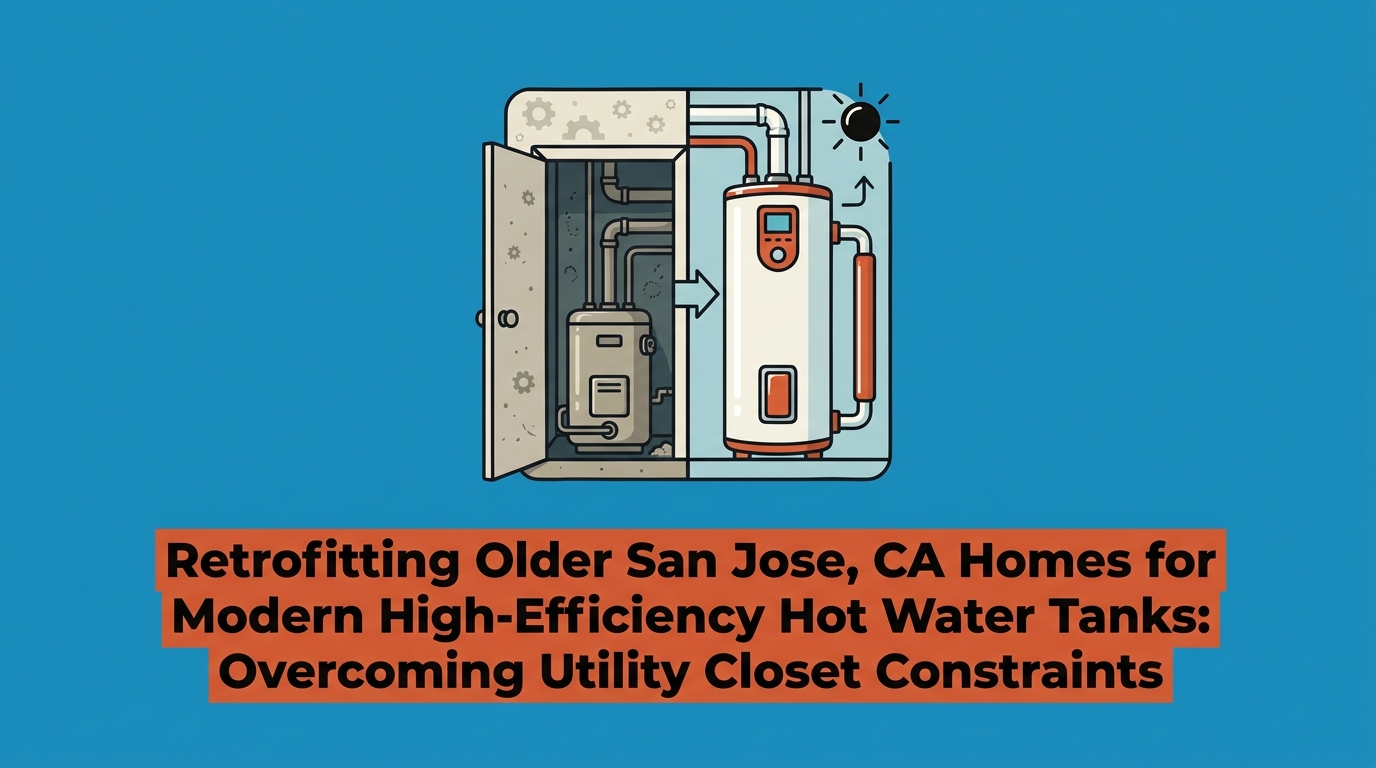
Your hot water tank is failing, and the rusty puddle slowly spreading across your utility room floor means you need a replacement fast. But if you live in an older property, retrofitting older San Jose homes for modern high-efficiency hot water tanks involves a surprising roadblock: the new units simply do not fit in the old spaces. It is late summer, and as we transition away from peak cooling season, many homeowners discover their aging plumbing systems can no longer keep up with the shifting demands of the household. What used to be a simple, one-to-one appliance swap has evolved into a complex spatial planning problem.
While San Jose's mild Mediterranean climate means we don't subject our plumbing to extreme, pipe-bursting freezes, our notoriously high local utility rates make high-efficiency upgrades an absolute necessity as summer cooling bills transition to fall heating needs. You cannot afford to run an inefficient system, but installing a highly efficient one requires navigating the physical dimensions of older utility closets that were built for a different era of appliances.
This is where Precision Heating & Cooling's deep local expertise comes into play. We anticipate these exact spatial roadblocks in mid-century homes long before arriving on-site, ensuring you aren't left with a disassembled closet and a tank sitting in your driveway. The primary hurdle isn't just plumbing; it is a structural challenge that forces a core decision: do you modify your home's existing architecture, or pivot to a different heating technology entirely? Before you schedule professional HVAC and plumbing services, you need to understand exactly why that old closet suddenly feels so small.
Most homeowners don't realize that water heaters have undergone a massive regulatory shift over the last decade. The root of the spatial problem traces directly back to the National Appliance Energy Conservation Act (NAECA). This federal mandate was designed to drastically reduce the amount of energy wasted by residential appliances, specifically targeting "standby heat loss"—the energy your tank wastes just keeping water hot while you aren't using it.
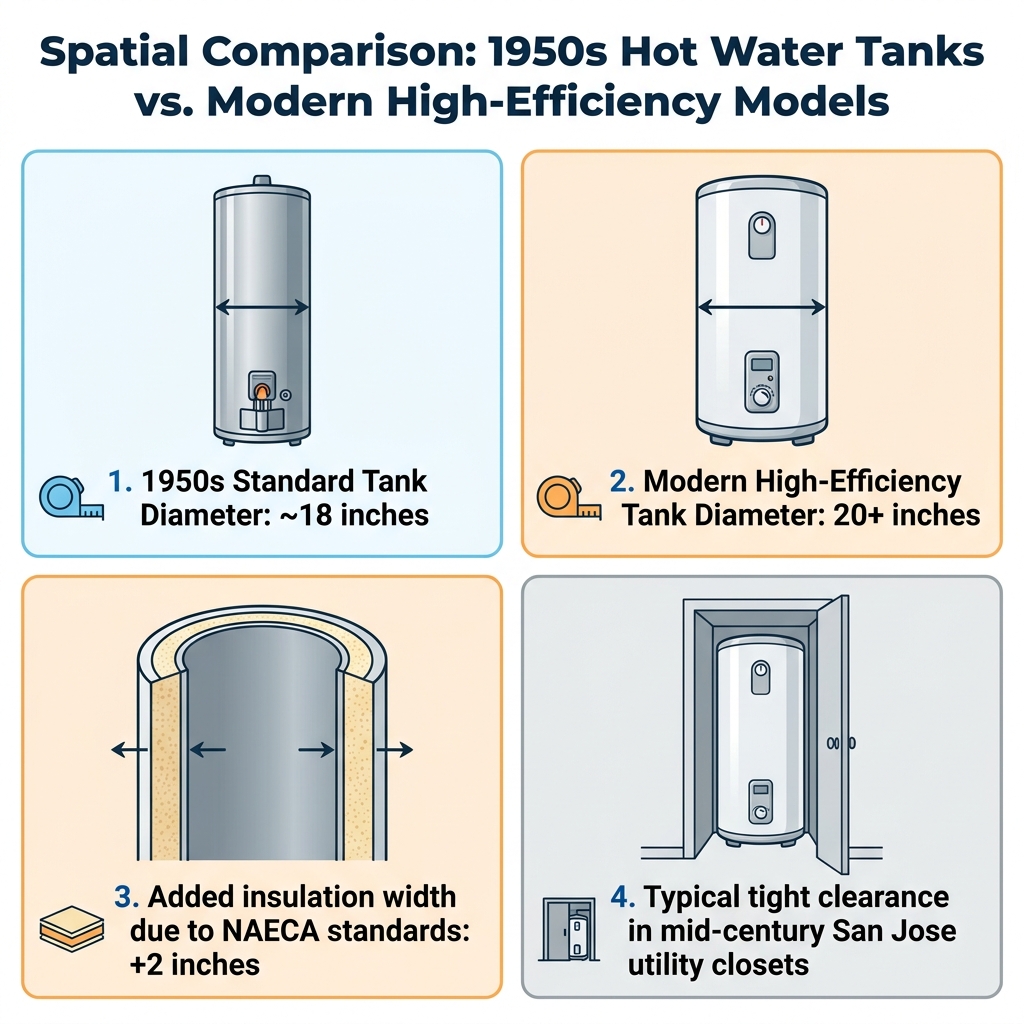
To meet these strict new efficiency standards, manufacturers had to significantly increase the amount of foam insulation injected between the inner steel tank and the outer metal jacket. The result? A mandatory 2 inches of additional width due to modern insulation standards for almost all standard residential tanks. Treating a water heater installation and replacement as a simple wrench-and-pipe job completely ignores this physical reality.
The physical impact of upgraded insulation:
• Average 40-Gallon Diameter — Pre-2015 Standard Tanks: Approx. 18 inches — Modern High-Efficiency Tanks: 20 to 22+ inches
• Average Height — Pre-2015 Standard Tanks: Shorter, more compact — Modern High-Efficiency Tanks: Up to 2 inches taller
• Energy Efficiency — Pre-2015 Standard Tanks: High standby heat loss — Modern High-Efficiency Tanks: Excellent heat retention
• Installation Footprint — Pre-2015 Standard Tanks: Fits tight historical closets — Modern High-Efficiency Tanks: Requires expanded clearances
That extra bulk means a modern 40-gallon tank is noticeably wider and taller than a 40-gallon tank manufactured 15 or 20 years ago. Two inches might not sound like much on paper, but when you are trying to maneuver a heavy steel cylinder through a narrow door frame, those two inches represent the difference between a routine installation and a major home renovation project.
San Jose experienced a massive housing boom in the post-war era, leaving the city with beautiful, character-rich neighborhoods. However, many of San Jose's tract homes built in the 1950s-1960s were designed with highly specific, incredibly tight utility closets. Builders back then were maximizing living space, tucking water heaters into narrow hallway niches, tight garage corners, or small alcoves off the kitchen.
These original closets were framed precisely to accommodate the older tanks of the era, which featured a standard 18-inch diameter. Because modern tanks often exceed 20 inches in diameter, they literally cannot fit through the original closet doors or slide past the existing wooden framing. It is a simple matter of geometry clashing with mid-century architecture.
Key spatial constraints to check in your older home:
• Doorframe width: Measure the actual clearing of the door frame, not just the door itself. Many older utility doors are only 20 inches wide.
• Combustible clearances: Modern codes require specific airspace between the hot water tank and any combustible materials (like drywall or wooden studs) to prevent fire hazards.
• Vertical clearance: Taller modern tanks can interfere with existing overhead shelves, ductwork, or the rigid gas lines plumbed into the space decades ago.
• Drain pan space: Code requires a drain pan under the tank. If the tank is wider, the pan must be wider, further eating into the floor footprint.
Homeowners must assess their closet footprint carefully before purchasing a replacement unit. Failing to measure the actual opening—and the space inside—guarantees installation day surprises that will leave your home without hot water for days while structural modifications are arranged.

The physical width of the tank is only half the battle. California's Title 24 energy efficiency codes dictate strict, non-negotiable standards for all new hot water tank installations across the state. These regulations are designed to lower greenhouse gas emissions and improve indoor air quality, but they add a layer of deep complexity to retrofitting an older home.
High-efficiency models often require updated venting systems that differ entirely from the natural draft flues used in the mid-century. Older tanks typically relied on a simple metal B-vent that allowed hot exhaust gases to naturally rise up and out through the roof. Today's high-efficiency units extract so much heat from the combustion process that the exhaust gases are actually cooler. Because they lack the thermal lift to draft naturally, these systems often require power venting mechanisms and specialized PVC or CPVC exhaust pipes.
Upgrading this venting safely through older roofs or walls requires professional assessment to ensure absolute code compliance. Improper venting not only violates state regulations but poses significant safety risks. If exhaust gases fail to vent properly, carbon monoxide can backdraft into tight indoor utility closets and seep into your living spaces. Navigating Title 24 requirements for new hot water tank installations is a critical step that ensures your family's safety and keeps your property legally compliant.
If you prefer to retain a traditional tank system—perhaps due to upfront budget constraints or specific household water usage habits—the physical closet space must be expanded. You cannot simply force a 22-inch tank into a 20-inch opening, and you cannot ignore the mandatory safety clearances around the unit.
This process is highly invasive. It usually involves removing door frames, cutting away drywall, and altering the structural footprint of the utility space. Furthermore, because the new tank sits differently on the floor, the rigid plumbing and gas lines may need to be rerouted to accommodate the wider tank's new connection points. This is absolutely not a DIY project; modifying framing, altering ventilation, and moving gas lines requires licensed professional oversight to prevent catastrophic leaks or structural damage.
Before a sledgehammer ever touches a wall, a licensed professional must evaluate the space. Expanding a closet isn't always as simple as knocking down some drywall.
1. Identifying load-bearing walls: We must determine if the adjacent walls are load-bearing. Removing a stud that supports the roof structure requires temporary shoring and the installation of a structural header.
2. Evaluating living space impact: Expanding the closet means borrowing space from somewhere else. We evaluate the impact on surrounding living spaces, hallways, or adjacent bedrooms to minimize disruption to your floor plan.
3. Rerouting utilities: Walls often hide electrical wires, HVAC ducts, or other plumbing lines. Expanding the closet footprint requires mapping these hidden utilities to avoid costly accidental damage during the rebuild.
4. Rebuilding to code: Once the space is opened up, the new framing and drywall must be finished to current fire-code standards, ensuring the utility closet remains a safe, isolated environment.
For homes where closet expansion is structurally impossible, or where the carpentry costs make modification cost-prohibitive, pivoting to a tankless system is a highly effective solution. Instead of fighting the spatial constraints of a 1960s tract home, you can bypass them entirely.
Tankless units heat water on demand rather than storing it in a massive steel cylinder. Because they mount directly to the wall, they completely eliminate the need for a large floor footprint. You regain your utility closet space, and you never have to worry about a 40-gallon tank rusting out and flooding your floors.
While they solve the spatial problem beautifully, tankless retrofits do require their own specific infrastructure upgrades. Because they heat water instantly, they draw a massive amount of energy in short bursts. For gas tankless units, this usually means an assessment of the home's existing gas line capacity; the half-inch gas line that powered your old tank will likely need to be upgraded to a three-quarter-inch line to deliver enough fuel. For electric units, your main electrical panel must be evaluated to ensure it can handle the heavy, dedicated amperage required. Despite these infrastructure updates, this option often aligns perfectly with Title 24 efficiency goals while neatly sidestepping the frustrating width penalty of modern tanks.
Upgrading an older home's plumbing infrastructure is an investment in long-term efficiency, safety, and overall property value. While the initial retrofit—whether modifying a closet or upgrading gas lines for a tankless unit—requires planning, the ongoing energy savings of a high-efficiency system are substantial.
To help offset the investment, qualifying high-efficiency installations may be eligible for generic utility rebates or federal tax credits aimed at reducing residential energy consumption. Because these programs change frequently and vary based on the specific equipment installed, homeowners should verify current incentive programs with their local utility provider or a qualified tax professional before finalizing their equipment choice.
When unexpected structural modifications are required to make a new tank fit, the scope of the project can shift rapidly. Flexible payment solutions can help bridge the gap, allowing you to handle the necessary framing, venting, and plumbing work without compromising on safety or code compliance. Exploring financing options for high-efficiency upgrades ensures you can complete the retrofit correctly the first time, protecting your home for decades to come.
The short answer is insulation requirements. Federal energy regulations, specifically the NAECA mandate, require modern tanks to feature thicker foam insulation to reduce standby heat loss. This added insulation adds significant physical bulk to the unit, typically making modern tanks at least two inches wider and slightly taller than older models of the same gallon capacity.
Often, it will not fit without modifications. Older utility closets in mid-century San Jose homes were built specifically for 18-inch tanks, which was the standard at the time. Because modern insulated tanks frequently exceed 20 inches in diameter, they often cannot clear the original door frames or meet the mandatory airspace clearances required by modern fire codes.
California enforces strict efficiency rules under Title 24. This mandate dictates stringent energy efficiency and specific venting standards that must be met during any new installation or replacement. For older homes, this often means upgrading from a traditional natural draft vent to a specialized power venting system to ensure exhaust gases are safely removed from the home.
Yes, tankless systems are an excellent spatial solution. Because they are wall-mounted and do not store water, they free up your entire floor space, making them ideal for tight mid-century utility closets. However, you must have a professional verify that your home's gas lines and electrical panel can support the high on-demand energy draw of a tankless unit.
Modifications are mandatory if clearances cannot be met. If the new tank cannot clear the door frame, or if it cannot safely maintain the required code clearances from combustible walls, structural framing and drywall modifications are legally required. Forcing a tank into a space that is too small poses severe fire and carbon monoxide risks.
Don't wait for a late-summer plumbing emergency to find out a new tank won't fit in your utility closet. Dealing with a failing water heater is stressful enough without the sudden realization that your home's architecture needs to be altered just to get the new unit through the door. A local expert can assess your home's unique mid-century footprint, measure your existing clearances, and outline the best path forward before the situation becomes urgent. Talk to a professional about your specific spatial constraints, and explore your retrofit options—whether that means a safe closet modification or a space-saving tankless upgrade—to ensure your home remains safe, efficient, and fully compliant.

Leslie was amazing for her outstanding customer service skills with me the other day. Thanks to her help my air conditioner is now all set up. She answered all my questions and took away all my problems. Leslie broke it down step by step to set it up easier. Now thanks to her my air conditioner is working perfectly. I really appreciate it Leslie and I’ll be sure to ask for you if I ever come back.
I contacted Precision Heating and Cooling for my home's AC repair. They were punctual and very professional. Guillermo was very kind and thorough. I would highly recommend them!
I am writing to express my sincere appreciation for the excellent work performed by Pablo and Alejandro from Precision Heating and Cooling. Their commitment to quality and customer satisfaction is truly commendable. Awesome job guys!
I would like to extend my sincere gratitude to Alejandro for his exceptional hard work. His passion for helping others is evident, and he consistently goes above and beyond in his service. Alejandro's thorough cleaning of my fireplace has truly made a significant difference. His dedication and professionalism are greatly appreciated.
I was very impressed. Came at night (after 9pm) to fix our AC during the middle of a heat wave the day before a national holiday! Technician was very courteous and efficient, got the job done quickly. Will definitely call them again for any AC servicing I need!
Fast and efficient, arrived when scheduled for repairs and replacement parts were ordered and installed quickly. Techs were very friendly and professional. AC system works great now! I highly recommend their services if you need repairs. Tim


.avif)
