


.avif)






Recent Blogs
Stay updated with our latest blog posts.


As we hit peak July summer here in San Jose, our team at Precision Heating & Cooling prepares for the inevitable rush of emergency calls. Before the first major dry spell hits, you need to understand exactly what happens to your AC compressor when it runs non-stop in 95-degree heat. When the temperatures spike in our service area, it is incredibly common for homeowners to notice their air conditioning systems running for hours on end without ever shutting off. While you might assume your system is just working hard to keep you comfortable, continuous operation pushes modern cooling equipment dangerously past its mechanical design limits.
If your equipment is already struggling, learn more about our comprehensive approach to HVAC systems or schedule immediate air conditioning repair and service.
This non-stop operation introduces a mechanical reality known as thermal overload. This isn't just an industry buzzword; it is a critical physical state where the internal components of your outdoor unit begin to overheat, degrade, and face potential catastrophic failure. San Jose's intense, dry summer heatwaves create the perfect storm for continuous AC operation, forcing equipment to run under maximum load for extended periods. As a homeowner, your most important decision point during these extreme weather events is learning to recognize the physical signs of distress. By catching these symptoms early, you can prevent permanent compressor damage and save yourself from a total system replacement.
To understand why non-stop operation is so dangerous, you first have to understand how your air conditioner was engineered to function under normal conditions. Residential cooling systems are sized and installed based on strict standard cooling load calculations. Under a typical summer load, your compressor is designed to cycle on and off roughly two to three times per hour. This cycling process is vital—it gives the mechanical components time to rest, allows internal pressures to equalize, and ensures the system operates at peak energy efficiency.
However, every HVAC system is built around a maximum outdoor design temperature. In our years of servicing San Jose neighborhoods, we've seen firsthand how our specific microclimate can experience rapid temperature spikes, pushing standard Bay Area AC systems designed for milder weather into continuous, unrelenting operation. When the outdoor temperature climbs to a 95-degree ambient temperature or higher, the system's ability to transfer heat efficiently drops dramatically. The thermostat demand can never be met because the system is constantly losing ground against the overwhelming heat pouring into your home. If you want to dive deeper into this specific phenomenon, you can read more about why San Jose AC units struggle to keep up during heatwaves.
Your outdoor condenser coil acts as a massive heat exhaust. It relies entirely on the temperature difference between the outside air and the hot, pressurized refrigerant flowing through its coils. When the air outside is relatively mild, the heat from inside your home transfers easily into the outdoor air. But as you face extreme heat, this vital temperature differential shrinks.
The extreme heat penalty: Because the outside air is already incredibly hot, the condenser struggles to release the heat it absorbed from your house. To compensate, the compressor is forced to work exponentially harder, compressing the refrigerant to even higher pressures to force that heat out. This is exactly why your unit stops cycling—it is trapped in a continuous loop of trying to reject heat into an environment that is already saturated with it.
• Normal (80°F - 85°F) — Cycling Frequency: 2 to 3 times per hour — Heat Rejection Efficiency: Optimal / High — Compressor Stress Level: Low (Normal Wear)
• Extreme (95°F+) — Cycling Frequency: 0 times (Continuous) — Heat Rejection Efficiency: Severely Reduced — Compressor Stress Level: Critical (Thermal Overload Risk)
When your system runs endlessly in a 95-degree ambient temperature, the danger moves from simple inefficiency to severe mechanical degradation. The compressor is often referred to as the heart of your air conditioning system, and just like a car engine, it requires constant lubrication to survive. Inside that sealed steel shell, refrigerant oil is responsible for lubricating the high-speed motor bearings, pistons, and scrolls.
Under normal cycling conditions, this oil travels through the copper refrigerant lines and safely returns to the compressor. But when the system operates continuously without ever shutting down, a dangerous phenomenon occurs: the high velocity and continuous flow can trap the refrigerant oil in the indoor evaporator coil. Without a resting cycle to allow the oil to drain and flow back properly, the compressor is slowly starved of its vital lubrication.
The physics of oil return in a split system rely heavily on the system's ability to cycle off. When the compressor stops, pressures equalize, and oil that has migrated through the system can pool and return to the compressor sump upon the next startup. If the unit runs for ten hours straight during a July peak summer day, the oil remains trapped far away from the moving parts that desperately need it.
The resulting mechanical wear: Starving the compressor of lubrication leads to extreme internal friction. Metal grinds against metal. This friction generates massive amounts of secondary heat, compounding the high temperatures already caused by the outdoor weather. The internal components begin to warp, and the electrical windings inside the motor start to break down under the thermal stress.
Fortunately, modern hermetic compressors are engineered with a built-in safety mechanism designed to prevent the motor from literally melting down. This component is called the internal thermal overload protector. It is a temperature-sensitive switch buried deep inside the compressor windings.
When the internal temperature of the motor reaches a critical, dangerous threshold, this switch forcefully breaks the electrical circuit, shutting the compressor down completely. However, this creates a confusing situation for the homeowner: while the compressor has shut itself off to survive, the outdoor fan and the indoor blower fan will often continue to run, blowing warm, unconditioned air through your vents.
Another crucial factor in thermal overload is the physical state of the refrigerant itself. Most homeowners understand that refrigerant is responsible for cooling the air inside the house, but it serves a second, equally important purpose: the cool suction gas returning from the indoor coil is strictly required to cool the compressor motor itself.
When your system is fighting a 95-degree ambient temperature for hours on end, the cooling properties of the refrigerant begin to degrade. The evaporator coil inside your home is overwhelmed by the heat, meaning the refrigerant returning to the outdoor unit is much warmer than it should be. Instead of bathing the hard-working compressor motor in cool, refreshing gas, it returns as a hot vapor.
The compounding cycle of destruction: This elevated suction line temperature creates a rapid, destructive cycle. A hotter motor degrades the remaining compressor oil even faster. Degraded, thinned-out oil creates more metal-on-metal friction. More friction generates even more internal heat. Once the outdoor temperature remains elevated for extended hours, this cycle accelerates rapidly. If the system is not allowed to rest, the internal temperatures will inevitably trigger the thermal overload protector—or worse, cause the electrical windings to short out entirely, resulting in a dead compressor.
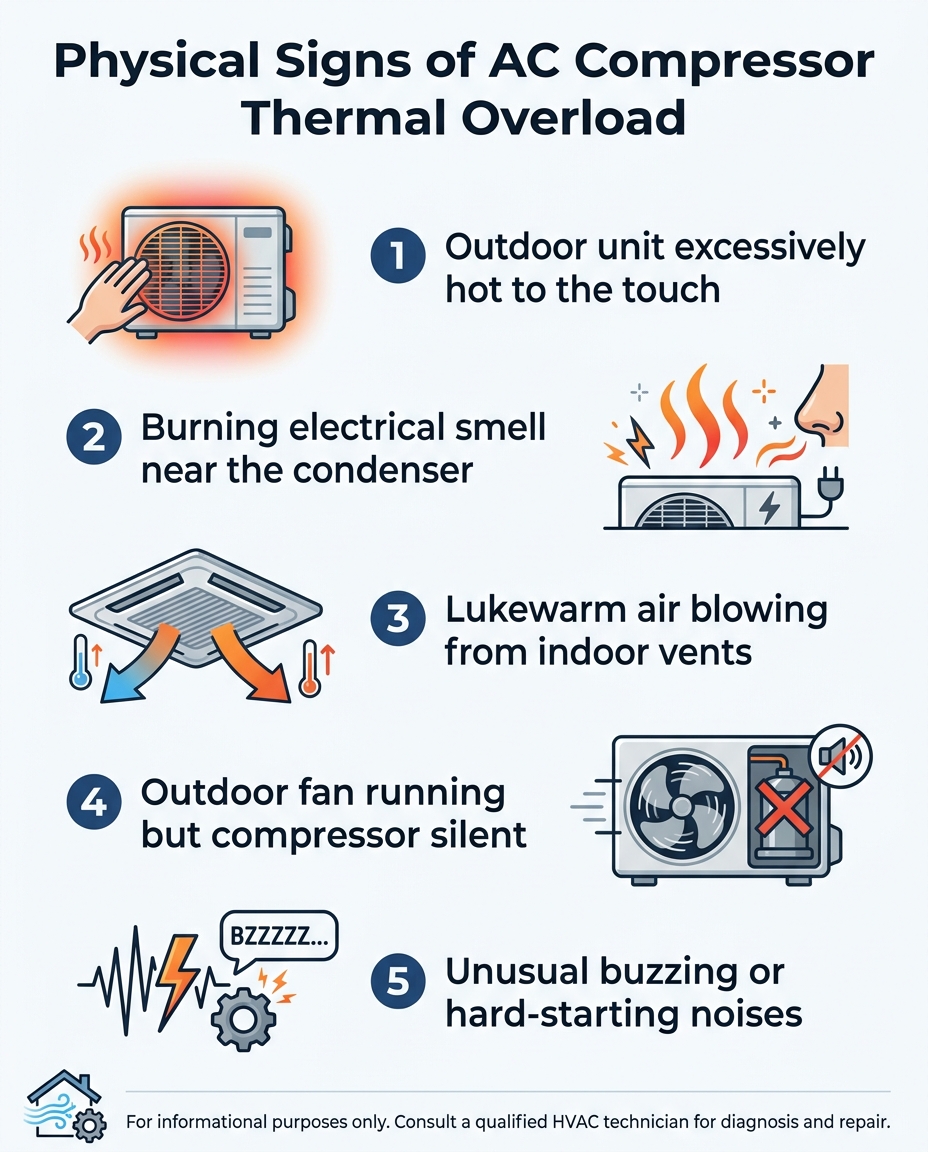
Knowing the mechanical theory is important, but as a homeowner, you need to know exactly what to look for when the weather hits a 95-degree ambient temperature. If your system has been running continuously, you must monitor the equipment for physical signs of distress. Catching these symptoms early is the difference between a simple service call and a catastrophic equipment failure.
Our team at Precision Heating & Cooling frequently responds to these exact scenarios. Just recently, a San Jose homeowner reached out to us during a major heatwave when their AC unit simply stopped running after hours of continuous operation. Because they noticed the signs and called promptly, one of our technicians was able to quickly service the unit and get it running again before permanent damage occurred. To protect your own system, watch for these critical warning signs:
• Excessive cabinet heat: The outdoor unit's metal cabinet is excessively hot to the touch, far beyond normal outdoor warming.
• Electrical odors: You detect a distinct, burning electrical smell or the scent of hot oil emitting from near the condenser.
• Loss of cooling power: The system is blowing lukewarm or completely warm air from the indoor vents despite running non-stop.
• Silent compressor syndrome: The outdoor fan is spinning and blowing air, but the compressor itself is completely silent (a primary indicator that the thermal switch has tripped).
• Abnormal acoustics: You hear unusual buzzing, deep humming, or hard-starting noises coming from the condenser, indicating the motor is locked up or struggling to overcome extreme pressure.

If you observe any of the critical signs listed above during a July peak summer heatwave, you have reached the exact decision point where you must intervene. Waiting for the system to "fix itself" or hoping the house will eventually cool down will only guarantee severe mechanical damage. You must take control and manually shut the system down to save the equipment.
The psychological trap: When the house is hot, the natural instinct is to walk over to the thermostat and lower the temperature even further, hoping to force the system to blow colder air. In our professional experience, this is the worst possible action you can take. Lowering the thermostat only guarantees the system will never attempt to cycle off, pushing a heat-stressed compressor closer to the brink of failure.
Follow these exact steps to protect your system:
1. Turn the thermostat to OFF: Immediately switch your indoor thermostat from "COOL" to the "OFF" position. This is the safest, most immediate action you can take to stop the demand for cooling.
2. Leave the indoor fan on (Optional): You can switch the fan setting from "AUTO" to "ON" to keep air circulating through the house, but the cooling cycle must be stopped entirely.
3. Allow for a massive cooldown period: Explain to your family that a tripped thermal overload switch can take up to 24 hours to fully reset. The internal motor is encased in a thick steel shell and buried in hot refrigerant; it cools down incredibly slowly.
4. Do not attempt a restart: Do not turn the system back on after just thirty minutes. If the thermal switch hasn't reset, the system will pull locked-rotor amps, generating a massive surge of heat that further damages the internal windings.
Emphasize to everyone in the home that shutting the system down is a protective measure, not a permanent fix. Once a compressor hits thermal overload, it requires professional follow-up to ensure it survived the event and to address the underlying airflow or mechanical issues that caused the extreme stress.
Once you have safely powered down your heat-stressed system, professional intervention is the essential next step. Diagnosing a unit that has experienced thermal overload requires specialized tools and deep technical knowledge. At Precision Heating & Cooling, our licensed technicians carry the specialized tools and deep technical knowledge required to diagnose a unit that has experienced thermal overload. We know exactly how to provide prompt, reliable relief for units battered by our unique Bay Area dry heat.
When one of our professionals arrives, they aren't just looking at the thermostat. They are conducting high-voltage electrical tests to determine if the compressor survived. They will test the dual run capacitor, which often fails under extreme heat and can mimic a locked compressor. They will measure the exact amp draw of the motor to see if internal friction has permanently damaged the bearings. They will also check the refrigerant charge using precise gauges to ensure the system has the proper mass flow to cool the motor.
A strict warning regarding DIY attempts: Homeowners should never attempt to open the condenser cabinet, test capacitors, or check refrigerant levels themselves. These systems contain deadly high voltage and highly pressurized chemicals regulated by the EPA. Opening a live electrical panel during a thermal overload event is exceptionally dangerous.
We routinely hear from local residents whose AC units aren't working correctly even after being serviced by other companies. Our team is committed to providing an honest assessment of heat-stressed systems, resolving underlying issues with trustworthy, accurate service. That honest assessment is critical to determining if your compressor has life left in it. To prevent these thermal overload events entirely, we highly recommend enrolling in a comprehensive preventative maintenance plan. Routine maintenance ensures your coils are clean, your oil is returning properly, and your electrical components are prepared to handle extreme heat without failing.
Understanding the strict mechanical limits of your air conditioning system empowers you to act before a complete breakdown ruins your summer. When the weather brings a July peak summer heatwave to our region, remember that continuous, non-stop operation is a massive red flag. By recognizing the physical warning signs of thermal overload—excessive heat, strange noises, and warm air—you can step in, shut the system down, and protect your investment.
Don't wait for your compressor to grind to a permanent halt. If your system has been running non-stop and is visibly struggling to keep your home comfortable, take action immediately. Schedule a professional inspection with Precision Heating & Cooling today so you can enjoy reliable, uninterrupted cooling when you need it most.
What happens if an AC compressor overheats?
When an AC compressor overheats, the internal thermal overload protector will trip, shutting off power to the motor to prevent it from melting down. If this safety switch fails or is repeatedly triggered, the internal electrical windings will short out, resulting in a completely dead, unrepairable compressor. The system will blow warm air because the outdoor unit is no longer circulating refrigerant.
How can you tell if an AC compressor is in thermal overload?
The most obvious sign of thermal overload is that the outdoor fan is spinning, but the compressor itself is completely silent and the system is blowing warm air indoors. You may also notice the outdoor metal cabinet is excessively hot to the touch, or you might smell a faint burning electrical odor. Additionally, if the unit makes a loud buzzing sound and then clicks off, it is likely struggling to start against extreme heat and pressure.
Should I turn off my AC if it runs constantly?
Yes, if your AC is running constantly without cycling off and the house is not getting cooler, you should turn it off at the thermostat immediately. Continuous operation in extreme heat without a resting cycle starves the compressor of vital lubricating oil and causes severe friction. Shutting it down prevents catastrophic mechanical failure and gives the motor time to cool.
How long can an AC run continuously without breaking?
While modern AC systems are robust, running continuously for more than 8 to 12 hours during peak extreme heat puts immense strain on the internal components. The exact breaking point depends on the age of the unit, the cleanliness of the coils, and the outdoor ambient temperature. Eventually, the lack of an off-cycle will trap refrigerant oil in the indoor coil, leading to severe compressor friction and overheating.
How long does it take for an AC compressor to cool down after thermal overload?
It can take anywhere from 4 to 24 hours for a tripped AC compressor to fully cool down and reset its internal thermal overload switch. The compressor motor is encased in a thick, sealed steel shell, which retains heat for a very long time. Attempting to force the system to restart before it has completely cooled will only generate more heat and further damage the equipment.

Leslie was amazing for her outstanding customer service skills with me the other day. Thanks to her help my air conditioner is now all set up. She answered all my questions and took away all my problems. Leslie broke it down step by step to set it up easier. Now thanks to her my air conditioner is working perfectly. I really appreciate it Leslie and I’ll be sure to ask for you if I ever come back.
I contacted Precision Heating and Cooling for my home's AC repair. They were punctual and very professional. Guillermo was very kind and thorough. I would highly recommend them!
I am writing to express my sincere appreciation for the excellent work performed by Pablo and Alejandro from Precision Heating and Cooling. Their commitment to quality and customer satisfaction is truly commendable. Awesome job guys!
I would like to extend my sincere gratitude to Alejandro for his exceptional hard work. His passion for helping others is evident, and he consistently goes above and beyond in his service. Alejandro's thorough cleaning of my fireplace has truly made a significant difference. His dedication and professionalism are greatly appreciated.
I was very impressed. Came at night (after 9pm) to fix our AC during the middle of a heat wave the day before a national holiday! Technician was very courteous and efficient, got the job done quickly. Will definitely call them again for any AC servicing I need!
Fast and efficient, arrived when scheduled for repairs and replacement parts were ordered and installed quickly. Techs were very friendly and professional. AC system works great now! I highly recommend their services if you need repairs. Tim


.avif)
