


.avif)






Recent Blogs
Stay updated with our latest blog posts.


Understanding when an HVAC failure is a true emergency could be the difference between a stressful night and a dangerous one. Not every breakdown needs a midnight phone call — but some absolutely do.
Quick Answer: An HVAC failure is a true emergency when it involves any of the following:
| Situation | Emergency? |
|---|---|
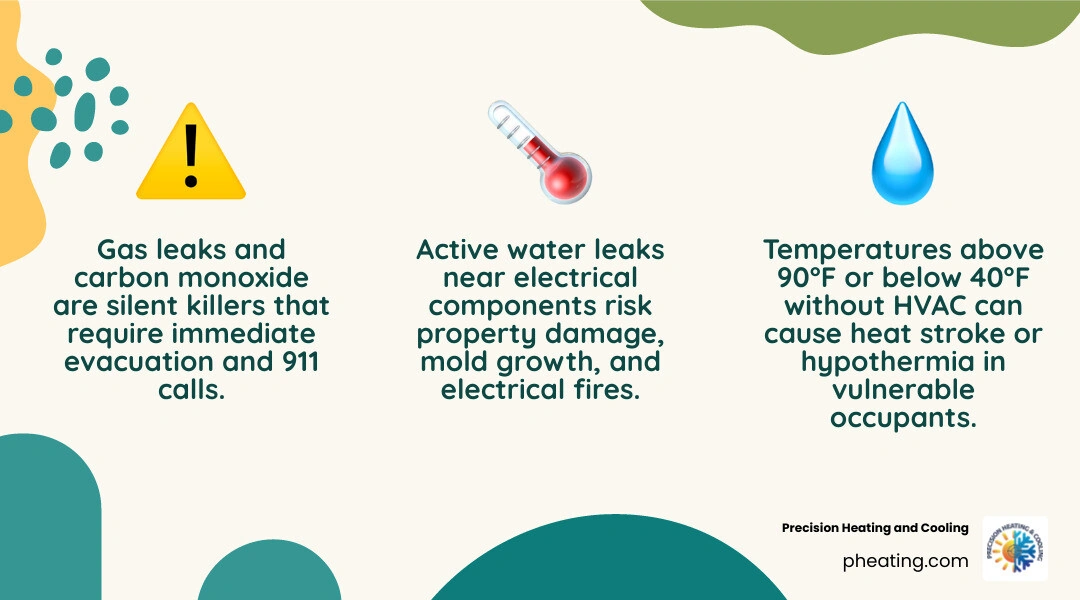
| Gas smell or rotten egg odor from HVAC | Yes — evacuate immediately |
| CO detector alarm sounding | Yes — evacuate and call 911 |
| Burning smell, sparks, or smoke from unit | Yes — shut off power at breaker |
| Outdoor temp above 90°F with no cooling | Yes — especially with vulnerable occupants |
| Outdoor temp below 40°F with no heat | Yes — frozen pipe and hypothermia risk |
| Active water leak near electrical components | Yes — property damage risk |
| Slightly uneven temperatures in mild weather | No — can wait for business hours |
| Weak airflow with no other symptoms | No — check filter first |
| System running longer than usual | No — schedule routine service |
It's 10 PM on a Friday. Your AC just stopped. The temperature inside is climbing past 85°F, and you have a baby or an elderly parent in the house. Is that a true emergency? Yes — and you shouldn't have to guess.
This guide is built to help San Jose Bay Area homeowners cut through the confusion. Whether it's a safety hazard, an extreme temperature situation, or a mechanical failure that could cause serious property damage, we'll walk you through exactly what qualifies, what to do first, and when it's safe to wait until morning.
I'm Tony Lara, an HVAC professional with hands-on experience diagnosing the kind of system failures that cross the line from inconvenient to genuinely dangerous — including real situations where knowing when an HVAC failure is a true emergency protected both families and homes. In the sections ahead, we'll cover every major red flag so you can act with confidence, not panic.
Must-know when an hvac failure is a true emergency terms:
To keep your home running smoothly, it helps to distinguish between a system that is simply acting up and one that is in a state of crisis. We define a true HVAC emergency using three core pillars: immediate safety risks, severe health threats, and imminent property damage.
If your air conditioner stops working on a mild 72°F afternoon in Los Gatos, it is undoubtedly annoying. You might find yourself sweating slightly or feeling restless, but it does not threaten your safety, health, or home structure. That is a routine repair. You can comfortably wait to schedule a standard service appointment during regular business hours.
However, if that same system fails in Cupertino during a blistering 98°F heatwave, the equation changes instantly. Within hours, indoor temperatures can climb into the high 80s or 90s, turning your home into an oven. If you have an infant or an elderly relative living with you, this environment quickly becomes a health hazard.
To help you make the right call, we have put together a comprehensive breakdown of how we classify these situations:
When you are trying to decide whether to call in the professionals, your gut instinct is often a reliable guide. If something smells, sounds, or feels incredibly wrong, it is always better to prioritize safety over comfort. For more localized advice on handling these stressful situations, take a look at our emergency hvac repair tips for the silicon valley homeowners.
Some HVAC issues pose an immediate threat to your life and home. In these situations, you should not worry about troubleshooting or checking your thermostat settings. Your priority is to shut down the system, protect your family, and get professional help on the way.
The most critical hazards involve combustion and fuel sources. If you use a gas furnace to heat your home during a chilly winter night, a failure in the combustion process can lead to hazardous gas leaks or carbon monoxide buildup. If you smell a strong rotten-egg odor, the gas utility company has added a chemical called mercaptan to make naturally odorless gas easily detectable.
Additionally, if you smell a strong, persistent burning odor that resembles burning plastic, rubber, or electrical wiring, your system may be experiencing a severe mechanical or electrical failure. This is not the typical "dusty" smell that occurs when you turn your heater on for the first time in the fall; this is an active hazard that requires an immediate shutdown. For urgent heating breakdowns, check out our guide on emergency heating repair.
HVAC systems pull more electricity than almost any other appliance in your home. When internal electrical components fail, they can quickly turn into severe fire hazards.
Keep an eye out for these critical electrical warning signs:
If you suspect your electrical components are failing in Santa Clara, shut the system down at the breaker and consult our emergency heat pump repair guide santa clara ca.
Carbon monoxide (CO) is often referred to as the "silent killer" because it is entirely colorless, tasteless, and odorless. According to the CDC, unintentional carbon monoxide poisoning sends over 100,000 Americans to emergency departments every single year, with malfunctioning heating systems standing as one of the most common culprits.
If your furnace has a cracked heat exchanger, carbon monoxide can escape from the combustion chamber directly into your home's ductwork, circulating through every room.
If your CO detector alarm sounds, or if anyone in your household experiences sudden, unexplained flu-like symptoms (such as headaches, dizziness, nausea, or confusion) that seem to improve when leaving the house, follow this strict emergency protocol:
If your heating system is old, failing, or leaking combustion gases, it may be time to consider a modern, safe replacement. Learn more through our emergency heater installation san jose guide.
Sometimes, the system failure itself isn't the hazard—the weather outside is. In the San Jose Bay Area and Central Valley, our summers can bring triple-digit heat, while winter nights can drop to freezing.
To help homeowners gauge when weather turns a breakdown into a crisis, we use the 90/40 Rule:
While a healthy adult might tolerate a hot or cold house for a day, certain populations cannot safely regulate their body temperatures. An HVAC outage becomes an immediate emergency if your household includes:
If you are dealing with a cooling failure in Palo Alto and have vulnerable family members at home, do not wait. Check out our emergency ac repair palo alto ca page to get immediate help.
When winter temperatures drop below 40°F, a heating failure is not just a comfort issue—it is a direct threat to your home's plumbing.
A standard home's insulation typically only retains habitable, safe heat for about 8 to 12 hours after a heating system completely fails in freezing weather. Once the indoor temperature drops below 50°F, the water pipes running through your uninsulated crawlspaces, attics, or outer walls are at risk of freezing.
When water freezes, it expands. This expansion can easily split copper, PEX, or PVC pipes. When the home warms back up, the ice melts, leading to catastrophic water leaks that can cause tens of thousands of dollars in structural damage and mold growth.
If your heat pump fails during a cold snap in Sunnyvale, protect your pipes by opening under-sink cabinet doors to let room heat circulate around the plumbing, and leave your faucets on a slow drip to keep water moving. Then, refer to our emergency heat pump repair sunnyvale guide to restore your heat fast.
Some mechanical issues inside your air conditioner or heater do not start with smoke or gas leaks, but they can still devastate your property and pocketbook if left unchecked.
If you notice ice forming on your outdoor AC unit's brass valves or across your indoor evaporator coil, your system is in trouble. This ice buildup is usually caused by two main culprits: severe airflow restriction (like a completely blocked air filter) or a refrigerant leak.
Running an air conditioner with frozen coils can cause compressor slugging. Your compressor is designed to pump gaseous refrigerant. If the coils are frozen, liquid refrigerant can flood back into the compressor, instantly destroying it. Because the compressor is the "heart" of your system, replacing it is a major, costly repair.
If you notice ice, turn your system off at the thermostat immediately, set the fan to "On" to help melt the ice, and get professional help. For residents in Cupertino, you can find swift support through our emergency ac repair cupertino ca service.
Your air conditioner does not just cool your air; it also dehumidifies it. The moisture stripped from the air collects in a drain pan and flows out of your home through a condensate drain line.
If this drain line becomes clogged with algae, dust, or debris, the water has nowhere to go. It will overflow the internal drain pan. If your indoor unit is located in your attic or a closet, this water can quickly soak through your drywall, leading to ceiling collapses, ruined flooring, and rapid mold growth within 24 to 48 hours.
If you notice water pooling around your indoor unit or dripping from your ceiling, shut your system off immediately. If you need help with water-related HVAC or water heater emergencies in Sunnyvale, our emergency water heater install sunnyvale guide offers excellent insights into how we handle water-related home service emergencies.
Before you call for an emergency technician at 2 AM, it is wise to run through a few basic checks. Believe it or not, about 40% of HVAC emergencies actually start with simple thermostat malfunctions or minor issues that you can resolve yourself in under five minutes.
If your system is completely unresponsive, follow this quick troubleshooting checklist:
We know that when your comfort system fails, you have questions that need immediate answers. Here are some of the most common inquiries we receive from homeowners in the San Jose Bay Area and Central Valley.
Generally, we consider an outdoor temperature above 90°F or below 40°F to be the threshold where an HVAC failure becomes a true emergency. However, these limits are tighter if your home houses vulnerable residents, such as infants, seniors, or individuals with chronic medical conditions. In those cases, even a drop below 50°F or a rise above 80°F indoors can warrant an emergency call.
Absolutely. Your thermostat is the brain of your heating and cooling system. If its batteries die, if a wire comes loose, or if its internal sensors fail, it cannot send the signal to your furnace or air conditioner to turn on. Always check your thermostat screen and batteries before calling for emergency repair.
Homeowners who invest in regular, professional HVAC maintenance are 50% less likely to experience a total emergency breakdown. During a routine spring or fall tune-up, technicians can spot frayed wiring, clean clogged condensate drains, test safety controls, and replace failing capacitors before they cause your system to fail on the hottest or coldest day of the year.
When your heating or cooling system fails, understanding when an HVAC failure is a true emergency helps you protect your family, safeguard your property, and avoid unnecessary panic. If you are facing a gas leak, a carbon monoxide warning, dangerous electrical issues, or extreme weather without a working system, you should never hesitate to call for professional help.
At Precision Heating and Cooling, we have spent over two decades serving homeowners throughout the San Jose Bay Area and Central Valley—including Cupertino, Los Gatos, Clovis, Palo Alto, Santa Clara, Sunnyvale, and Hanford. We pride ourselves on delivering reliable service, competitive pricing, and flexible payment options to ensure your home remains safe and comfortable year-round.
If your system is down and you need fast, trustworthy help, don't wait in discomfort. Request AC Repair Today and let our experienced team bring the safety and comfort back to your home.

Leslie was amazing for her outstanding customer service skills with me the other day. Thanks to her help my air conditioner is now all set up. She answered all my questions and took away all my problems. Leslie broke it down step by step to set it up easier. Now thanks to her my air conditioner is working perfectly. I really appreciate it Leslie and I’ll be sure to ask for you if I ever come back.
I contacted Precision Heating and Cooling for my home's AC repair. They were punctual and very professional. Guillermo was very kind and thorough. I would highly recommend them!
I am writing to express my sincere appreciation for the excellent work performed by Pablo and Alejandro from Precision Heating and Cooling. Their commitment to quality and customer satisfaction is truly commendable. Awesome job guys!
I would like to extend my sincere gratitude to Alejandro for his exceptional hard work. His passion for helping others is evident, and he consistently goes above and beyond in his service. Alejandro's thorough cleaning of my fireplace has truly made a significant difference. His dedication and professionalism are greatly appreciated.
I was very impressed. Came at night (after 9pm) to fix our AC during the middle of a heat wave the day before a national holiday! Technician was very courteous and efficient, got the job done quickly. Will definitely call them again for any AC servicing I need!
Fast and efficient, arrived when scheduled for repairs and replacement parts were ordered and installed quickly. Techs were very friendly and professional. AC system works great now! I highly recommend their services if you need repairs. Tim


.avif)
