


.avif)






Recent Blogs
Stay updated with our latest blog posts.


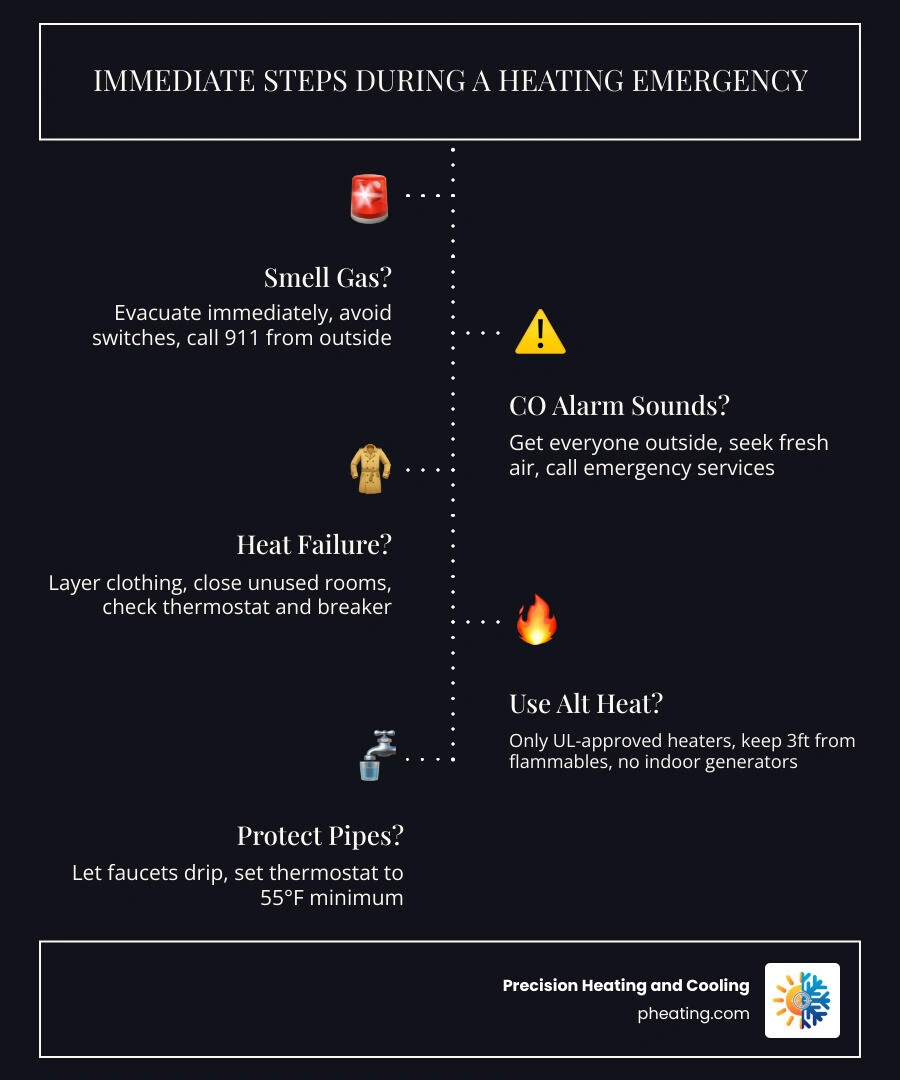
Knowing how to stay safe during a heating emergency could be the difference between a stressful night and a genuinely dangerous situation. Here are the most important steps to take right away:
Heating emergencies don't announce themselves. One cold night, your furnace stops working — and suddenly you're scrambling to figure out what's safe, what's dangerous, and what to do first. It's a stressful situation, and the wrong move (like reaching for a gas valve you've never touched or firing up a generator in the garage) can turn a bad night into a life-threatening one.
The stakes are real. Extreme cold is hard on homes and the people inside them, and the improvised heating solutions many people reach for — space heaters left unattended, generators run indoors, or fireplaces used without proper inspection — carry serious risks of their own. According to the U.S. Consumer Product Safety Commission (CPSC), portable heaters are involved in an average of 1,600 fires per year, and generators have been linked to roughly 750 carbon monoxide deaths over a single decade.
The good news is that a clear, step-by-step plan makes all the difference. Whether your furnace has gone quiet on the coldest night of the year or you're not sure if that smell is a gas leak, knowing exactly what to do — and in what order — keeps you and your family safe until help arrives.
I'm Tony Lara, an HVAC professional with hands-on experience helping homeowners navigate exactly these kinds of situations, including knowing how to stay safe during a heating emergency when every minute counts. In the steps below, I'll walk you through everything from gas leak protocols and CO detection to safe alternative heating and when to call for emergency repair.
When the temperature inside your home begins to drop, panic can easily set in. However, the first ten minutes of a home temperature crisis are the most critical. Staying calm allows you to methodically assess the situation and determine whether you are dealing with a simple system glitch or a severe safety hazard.
Before you assume your heating system requires a complete overhaul, there are a few basic troubleshooting steps you can perform safely. Often, what feels like a catastrophic failure is actually a minor, easily correctable issue.
If these basic steps do not restore your heat, it is time to stop troubleshooting and prioritize safety. To understand the full scope of what to do next, you can reference our Emergency HVAC Repair Complete Guide for structured, step-by-step guidance on navigating system failures.
If you smell gas, your troubleshooting steps stop immediately. Natural gas is naturally odorless, colorless, and tasteless. Because of this, utility companies add a harmless chemical called mercaptan to the gas supply. Mercaptan has a highly distinct, unpleasant odor often described as "rotten eggs" or sulfur. This additive is designed to warn you of a leak before the gas reaches a highly explosive concentration.
If you detect this rotten egg smell, or if you hear a persistent hissing sound near your gas lines or furnace, you must treat this as an active emergency. Follow this strict evacuation protocol:
If your system is not turning on but you do not smell gas, the issue may be mechanical. Homeowners facing this issue can read our guide, My Furnace Is Not Turning On I Need A Repair Service In Los Gatos, to understand common non-emergency failure points.
Unlike a natural gas leak, a carbon monoxide (CO) leak does not come with a built-in warning smell. CO is completely odorless, colorless, and tasteless, earning it the reputation of the "silent killer." Carbon monoxide is produced when fuel-burning appliances (like gas furnaces, fireplaces, wood stoves, or water heaters) do not burn their fuel completely or fail to vent exhaust fumes properly. A cracked heat exchanger in your furnace is a common source of CO leaks.
Because you cannot smell or see carbon monoxide, you must rely on your physical symptoms and visual clues around your heating system to identify a leak.
The early signs of carbon monoxide poisoning can easily be mistaken for the flu or common winter illnesses, but they do not include a fever. Key symptoms to watch for include:
If multiple people (and pets) in your home suddenly experience these symptoms at the same time, or if your symptoms improve when you leave the house, suspect carbon monoxide immediately.
Additionally, keep an eye out for physical warning signs on your heating appliances. Blue flames on your gas burner indicate clean, complete combustion. If you see yellow, orange, or flickering flames instead, your system is not burning fuel properly. Other warning signs include heavy condensation on windows near the appliance, soot buildup, or a pilot light that frequently goes out. If you notice these issues, consult our resource on Signs You Need Heater Repair And What We Can Do to address these warning signs before they escalate into an active hazard.
Once you have established that your home is safe from immediate hazards like gas leaks or carbon monoxide, your next priority is managing the declining indoor temperature. If the outdoor temperature is near or below freezing, your home will lose heat rapidly. Conserving your own body heat is your first line of defense while you wait for repairs.
To keep your family warm, practice "room isolation." Choose one small, central room in the house to gather in—preferably one with few windows and doors. Close the doors to all other rooms, closets, and hallways. This concentrates your collective body heat and any temporary heat sources into a single, manageable space. To prevent drafts, roll up towels or blankets and place them firmly against the cracks at the bottom of doors and windows.

Dressing in layers is far more effective than wearing one heavy coat. Start with a moisture-wicking base layer, add an insulating middle layer (like fleece or wool), and finish with a wind-resistant outer layer. Don't forget hats, gloves, and thick socks, as a significant amount of body heat is lost through your head and extremities. Finally, stay hydrated and eat high-calorie meals; your body needs fuel to generate heat and regulate its core temperature.
To help you weigh your options, the table below compares passive warming techniques with active emergency heating methods:
| Method Type | Action | Pros | Cons / Safety Risks |
|---|---|---|---|
| Passive | Room Isolation | Easy to do, costs nothing, completely safe | Only slows down heat loss; does not generate new warmth |
| Passive | Layered Clothing & Blankets | Highly effective, mobile, zero fire risk | Limits dexterity; does not warm the actual room |
| Passive | Consuming Warm Fluids & Food | Boosts metabolism, provides instant comfort | Requires a safe way to heat food/water without power |
| Active | UL-Approved Space Heaters | Generates quick, localized warmth | Fire hazard if placed near flammables; draws high electrical power |
| Active | Fireplaces & Wood Stoves | High heat output, cozy, independent of power grid | Requires proper venting; risk of chimney fires or CO buildup |
| Active | Outdoor Portable Generators | Powers critical heaters and appliances | High carbon monoxide risk if placed closer than 20 feet to the home |
If you choose to use active alternative heat sources, safety must remain your top priority. Improvised heating methods are highly useful, but they can easily introduce fire and carbon monoxide hazards if used incorrectly.
If you are using a portable generator to keep your space heaters or furnace running during a power outage, never run the generator indoors, in a garage, in a carport, or near an open window. Generators produce massive amounts of carbon monoxide—as much as hundreds of idling cars. A generator must be placed outdoors, on a flat surface, at least 20 feet away from your home, with the exhaust pointed away from all doors, windows, and vents.
Fireplaces and wood-burning stoves are excellent traditional heat sources, but they require preparation. Never use a fireplace unless your chimney has been professionally inspected and cleaned within the last year to remove creosote—a highly flammable byproduct of wood combustion. Always use a sturdy metal or glass screen to catch stray sparks or embers.
When seeking emergency warmth, never use your kitchen oven or range to heat your home. Doing so is an extreme fire hazard and can quickly fill your living space with toxic carbon monoxide. For further insights on keeping your living spaces warm safely, read our guide on Heater Repair Services Your Solution To A Warm And Cozy Home.
Electric space heaters are highly popular during heating emergencies, but they are also responsible for nearly 30% of all home heating fires. To keep your home safe, follow these strict operational rules:
For more information on handling heating repairs and navigating system failures safely, you can check out our article on Emergency Heating Repair.
While you are keeping your family warm, don't forget about your home's plumbing. When water freezes, it expands with immense force. If the water inside your pipes freezes, it can easily split copper, PEX, or galvanized steel lines, leading to catastrophic flooding once the system thaws.
To protect your pipes during a heating emergency, take these immediate preventative steps:
Knowing when to call for professional help is equally important. If you experience a complete loss of heat during freezing weather, or if you notice strange sounds (like loud banging, grinding, or screeching) coming from your furnace, do not attempt to repair the system yourself. Modern heating systems are complex and involve high-voltage electricity and volatile fuels.
If you live in the San Jose Bay Area or the Central Valley—including communities like Cupertino, Los Gatos, Palo Alto, Santa Clara, Sunnyvale, Clovis, or Hanford—you can rely on professional local technicians to safely diagnose and repair your system. To help you troubleshoot your system before calling, read our Heating Repair San Jose Tips for expert guidance.
The single best way to survive a heating emergency is to prevent it from happening in the first place. Regular, proactive maintenance keeps your system running efficiently and catches minor wear-and-tear issues before they escalate into mid-winter breakdowns.
For a complete look at maintaining your system and keeping your home safe throughout the winter, read our comprehensive Ultimate Heating Repair San Jose CA guide, or consult our detailed Furnace Repair San Jose Guide for expert troubleshooting and maintenance checklists.
The safest alternative heat source during a power outage is a UL-approved indoor-safe propane heater (such as those rated for indoor use with automatic low-oxygen shutoff sensors), or using an outdoor generator placed at least 20 feet away to run electric space heaters. Always ensure proper ventilation and keep a working carbon monoxide detector in the room.
Typically, a well-insulated home can go 24 to 36 hours without heat before pipes are at risk of freezing, depending on the outdoor temperature. In poorly insulated homes or during extreme, sub-zero freezes, pipes can freeze in as little as 4 to 8 hours. Keeping faucets dripping slowly is crucial to delaying this process.
If your carbon monoxide alarm sounds, do not stop to investigate or open windows. Immediately gather all family members and pets, exit the home to get fresh air, and call 911 from a safe distance. Do not re-enter the home until emergency responders have cleared the building.
A heating emergency is undoubtedly stressful, but having a clear, structured plan ensures you can navigate the cold safely. By prioritizing immediate safety protocols—like evacuating during a suspected gas leak, recognizing the silent signs of carbon monoxide, and operating alternative heat sources with extreme care—you protect what matters most.
At Precision Heating and Cooling, we are proud to serve homeowners across the San Jose Bay Area and the Central Valley, including Cupertino, Los Gatos, Palo Alto, Santa Clara, Sunnyvale, Clovis, and Hanford. With over two decades of hands-on experience, our team is dedicated to providing reliable service, competitive pricing, and flexible payment options to keep your home comfortable and safe all year round.
If you are facing a system breakdown or want to schedule your annual safety inspection, don't wait for the cold to set in. Schedule Emergency AC and Heating Repair Services with us today, and let our experienced team restore your peace of mind.

Leslie was amazing for her outstanding customer service skills with me the other day. Thanks to her help my air conditioner is now all set up. She answered all my questions and took away all my problems. Leslie broke it down step by step to set it up easier. Now thanks to her my air conditioner is working perfectly. I really appreciate it Leslie and I’ll be sure to ask for you if I ever come back.
I contacted Precision Heating and Cooling for my home's AC repair. They were punctual and very professional. Guillermo was very kind and thorough. I would highly recommend them!
I am writing to express my sincere appreciation for the excellent work performed by Pablo and Alejandro from Precision Heating and Cooling. Their commitment to quality and customer satisfaction is truly commendable. Awesome job guys!
I would like to extend my sincere gratitude to Alejandro for his exceptional hard work. His passion for helping others is evident, and he consistently goes above and beyond in his service. Alejandro's thorough cleaning of my fireplace has truly made a significant difference. His dedication and professionalism are greatly appreciated.
I was very impressed. Came at night (after 9pm) to fix our AC during the middle of a heat wave the day before a national holiday! Technician was very courteous and efficient, got the job done quickly. Will definitely call them again for any AC servicing I need!
Fast and efficient, arrived when scheduled for repairs and replacement parts were ordered and installed quickly. Techs were very friendly and professional. AC system works great now! I highly recommend their services if you need repairs. Tim


.avif)
