


.avif)






Recent Blogs
Stay updated with our latest blog posts.


The heat pump benefits for Silicon Valley homeowners are hard to ignore: one system handles both heating and cooling, uses significantly less energy than a gas furnace, and qualifies for thousands of dollars in local and federal rebates right now.
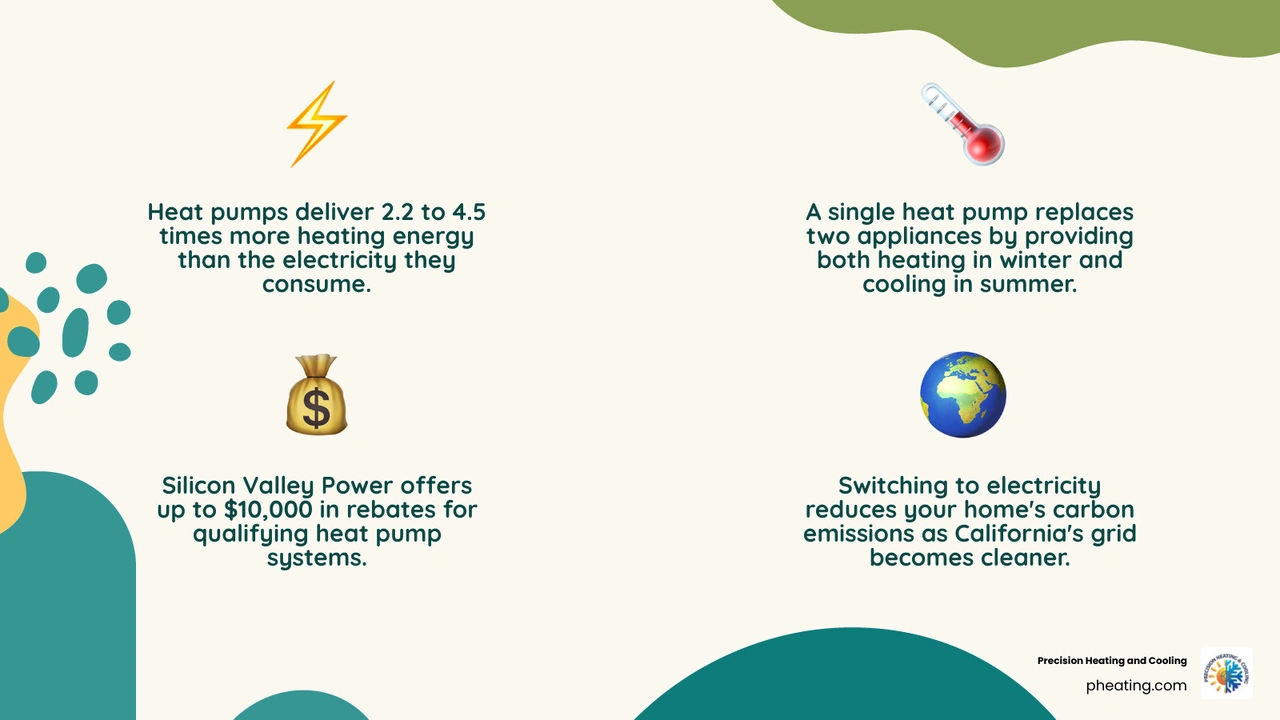
Here is a quick look at the core benefits:
Silicon Valley's Mediterranean climate — with its cool mornings, warm afternoons, and rarely extreme winters — is essentially tailor-made for heat pump technology. While much of the country needs backup heating systems on the coldest nights, Bay Area homes typically don't face those extremes. That means a properly sized heat pump can handle your home's full heating and cooling load without compromise, while costing less to run month after month.
There is a quiet shift happening across Santa Clara County. Homeowners who once assumed gas heating was the obvious choice are discovering that a modern heat pump not only matches that comfort level but often exceeds it — with fewer safety concerns, lower utility bills, and the added advantage of qualifying for substantial financial incentives that reduce the upfront investment considerably.
My name is Tony Lara, and I've spent my career in the HVAC field helping homeowners navigate exactly these kinds of decisions — including the growing demand for heat pump benefits for Silicon Valley homeowners who want smarter, cleaner comfort. In the sections ahead, I'll walk you through everything you need to know to make a confident, well-informed choice for your home.
To truly appreciate why a Bay Area Heat Pump is such a game-changer, it helps to understand how these systems interact with our unique local climate. Places like Cupertino, Sunnyvale, Santa Clara, Palo Alto, and Los Gatos experience mild coastal-influenced weather. We enjoy cool, foggy mornings followed by warm, dry afternoons.
Traditional heating systems work by generating heat through combustion (burning natural gas) or electric resistance (heating up coils). This is an energy-intensive process. A heat pump, however, does not generate heat at all. Instead, it uses a small amount of electricity to transfer existing heat from one place to another.
To learn the science behind this process, you can read our detailed guide on How Does a Heat Pump Work. In short, during the winter, the system extracts ambient heat from the outdoor air—even when it feels chilly to you—and moves it indoors. During the summer, the process reverses: the system absorbs heat from inside your home and pumps it outdoors, acting as a highly efficient air conditioner.
Because they move heat rather than create it, heat pumps can deliver up to three times more heat energy than the electrical energy they consume. In a region with high utility rates, this massive efficiency advantage translates directly to lower monthly bills and a significantly smaller carbon footprint.
When evaluating home comfort options, it is helpful to look at how modern heat pumps stack up against traditional dual-fuel setups (a gas furnace paired with a standard central air conditioner).
| Feature | Modern Heat Pump System | Traditional Gas Furnace & AC |
|---|---|---|
| Primary Energy Source | Electricity | Natural Gas (Heating) / Electricity (Cooling) |
| Heating Efficiency (COP) | 3.0 to 4.5 (300% – 450% efficient) | 0.80 to 0.98 (80% – 98% efficient) |
| Cooling Efficiency | High (Inverter-driven variable speeds) | Standard (Single or two-stage) |
| Carbon Emissions | Zero direct emissions | Significant carbon footprint from gas combustion |
| Safety Risks | None (No combustion or gas lines) | Risks of carbon monoxide leaks and gas line issues |
| Space Requirements | Single outdoor footprint | Separate indoor furnace and outdoor AC unit |
As shown above, gas furnaces top out at about 98% efficiency, meaning some energy is always lost through venting. Heat pumps operate at several hundred percent efficiency because of their heat-transfer design.
If your current air conditioner is struggling during hot summer afternoons, or if your furnace is starting to show signs of age, it might be time to transition. Knowing When to Consider Heat Pump Replacement Services can save you from emergency breakdowns. For a complete look at how this transition works in the local area, check out our Heat Pump Installation San Jose Complete Guide.
The gas-to-electric transition is a major pillar of California’s environmental goals, but the personal benefits to your household are even more immediate.
For residents in Santa Clara, upgrading to an electric system is highly encouraged by local municipal programs. You can read more about local requirements and system design in our Local Heat Pump Installation Santa Clara Guide.
When planning your upgrade, you will choose between a ducted central heat pump or a ductless mini-split system. Both offer incredible efficiency, but they serve different architectural needs.
Ductless systems offer incredible flexibility because they allow for room-by-room zoning. You can heat the living room while keeping the bedrooms cool, saving energy by only conditioning the spaces you are currently using. Furthermore, ductless mini-splits avoid the 20% to 30% energy loss typical of leaky or uninsulated ducted systems.
To explore how these systems fit different neighborhoods, take a look at our Heat Pump Installation Sunnyvale Guide or the Best Heat Pump Installation Guide Los Gatos CA.

One of the most compelling reasons to make the switch in July 2026 is the unprecedented level of financial support available to local homeowners. By stacking federal, state, and municipal incentives, you can significantly lower your net investment.
Here is a breakdown of the primary rebate and incentive programs available in Santa Clara County:
To maximize these savings, it is crucial to work with an approved, licensed contractor who understands how to properly document and file these applications so no money is left on the table.
Investing in a heat pump is a long-term commitment to your home's comfort and value. To ensure your system runs efficiently for its full 15-to-20-year expected lifespan, regular care is essential.
Because a heat pump handles both heating and cooling duties, it operates year-round. This makes seasonal checkups twice as important compared to a traditional seasonal air conditioner. We highly recommend scheduling professional maintenance before the peak heating and cooling seasons begin. To understand what goes into these visits, read our guide on Why Heat Pump Needs Spring Maintenance. If you ever run into performance issues, our Heat Pump Troubleshooting guide can help you identify simple fixes before calling in our team.
Because heat pumps run entirely on electricity, transitioning from a gas furnace may require an upgrade to your home’s electrical infrastructure.
A standard heat pump typically requires a dedicated 240V circuit. If your home still has an older 100-amp electrical panel, you may need to upgrade to a 200-amp panel to accommodate the new load. Fortunately, many local utility rebates and federal tax credits offer dedicated add-on incentives specifically to cover the cost of panel upgrades when completed alongside a heat pump installation.
Many homeowners are also opting for smart electrical panels, such as SPAN panels, which allow you to monitor and manage your home's energy consumption in real time, maximizing the return on your electrification investment.
Yes, exceptionally well. While older generations of heat pumps struggled when temperatures approached freezing, modern systems utilize advanced variable-speed inverter compressors. These systems are designed to extract heat from outdoor air even in sub-freezing conditions. Since winter mornings in cities like Cupertino and Palo Alto rarely drop below the high 30s or low 40s, a modern heat pump will keep your home perfectly warm without needing any backup heat.
It depends on your home’s current electrical capacity. If you have a modern 200-amp panel, you likely have plenty of room for the required 240V circuit. If you have an older 100-amp panel, an upgrade may be necessary. We can assess your electrical panel during our initial home comfort consultation to determine if an upgrade is required and help you secure available rebates to offset those costs.
A high-quality, professionally installed heat pump system typically lasts between 15 and 20 years. Because Silicon Valley has a very mild climate, systems here experience less wear and tear than they would in regions with extreme snow or intense, prolonged humidity, often allowing them to reach the upper end of their lifespan with regular maintenance.
Upgrading to a heat pump is one of the smartest investments you can make for your Silicon Valley home in 2026. By combining heating and cooling into a single, ultra-efficient electric system, you can enjoy superior year-round comfort, cleaner indoor air, and substantial monthly utility savings—all while taking advantage of historic rebate programs that make the transition more affordable than ever.
At Precision Heating and Cooling, we bring over two decades of local experience to every project. Serving Cupertino, Los Gatos, Palo Alto, Santa Clara, and Sunnyvale, our team specializes in designing and installing custom heat pump systems tailored to your home’s unique layout. We pride ourselves on reliable service, competitive pricing, and flexible payment options to fit your budget.
If you are ready to experience the many benefits of a modern heat pump, contact us today to schedule your personalized home comfort consultation. Explore our Precision Heating and Cooling Heat Pump Services to learn more and take the first step toward a more comfortable, efficient home.

Leslie was amazing for her outstanding customer service skills with me the other day. Thanks to her help my air conditioner is now all set up. She answered all my questions and took away all my problems. Leslie broke it down step by step to set it up easier. Now thanks to her my air conditioner is working perfectly. I really appreciate it Leslie and I’ll be sure to ask for you if I ever come back.
I contacted Precision Heating and Cooling for my home's AC repair. They were punctual and very professional. Guillermo was very kind and thorough. I would highly recommend them!
I am writing to express my sincere appreciation for the excellent work performed by Pablo and Alejandro from Precision Heating and Cooling. Their commitment to quality and customer satisfaction is truly commendable. Awesome job guys!
I would like to extend my sincere gratitude to Alejandro for his exceptional hard work. His passion for helping others is evident, and he consistently goes above and beyond in his service. Alejandro's thorough cleaning of my fireplace has truly made a significant difference. His dedication and professionalism are greatly appreciated.
I was very impressed. Came at night (after 9pm) to fix our AC during the middle of a heat wave the day before a national holiday! Technician was very courteous and efficient, got the job done quickly. Will definitely call them again for any AC servicing I need!
Fast and efficient, arrived when scheduled for repairs and replacement parts were ordered and installed quickly. Techs were very friendly and professional. AC system works great now! I highly recommend their services if you need repairs. Tim



.avif)
