


.avif)






Recent Blogs
Stay updated with our latest blog posts.


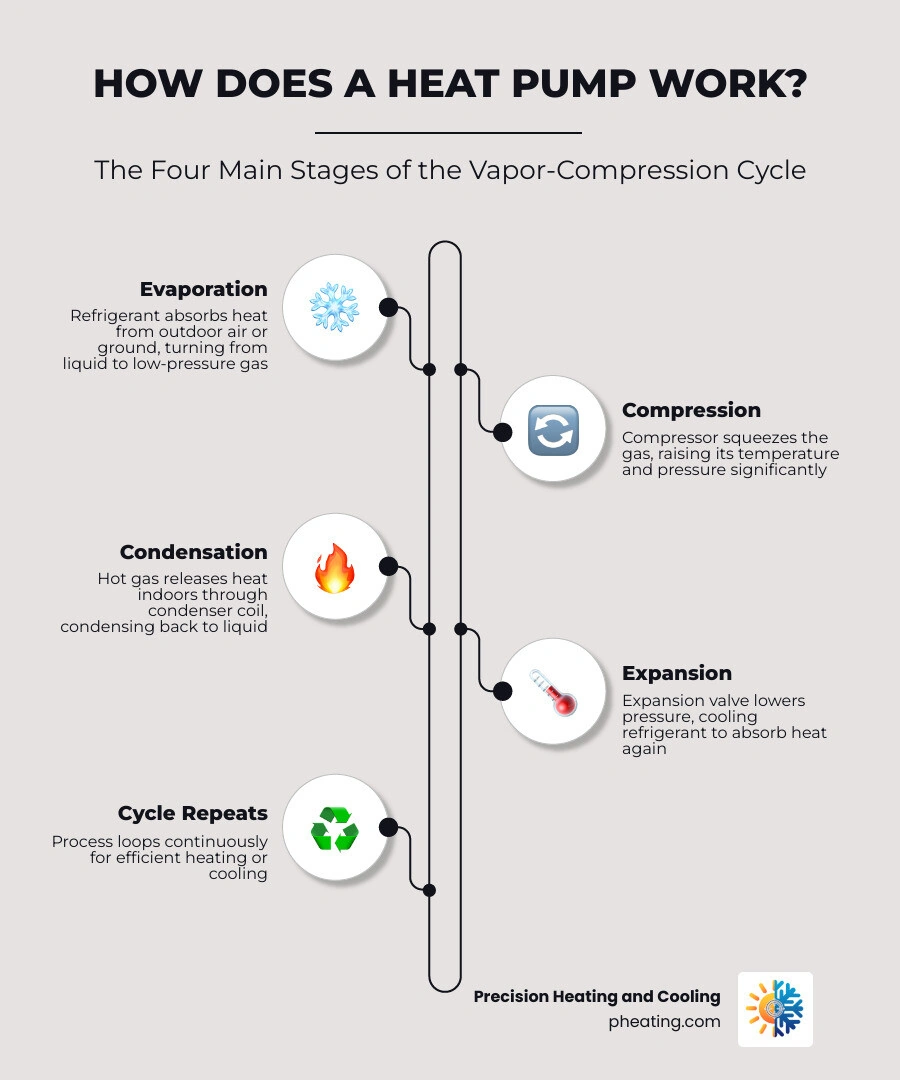
How does a heat pump work? Here's the short answer:
In cooling mode, the same process simply runs in reverse — pulling heat from inside your home and pushing it outdoors.
Most people assume heating a home means burning something — gas, oil, or propane. That's how we've done it for generations. But a heat pump doesn't burn anything. Instead, it moves heat that already exists in the air or ground around your home, using a fraction of the energy a traditional furnace requires. The result is a single system that heats in winter, cools in summer, and can deliver up to four times more energy in warmth or cooling than the electricity it consumes. That's not a marketing claim — it's basic thermodynamics. Even on a cold day, there's enough thermal energy in outdoor air to extract and amplify for indoor comfort.
If you're a homeowner in the San Jose Bay Area thinking about upgrading your home comfort system, understanding how this technology works puts you in a much stronger position to make the right call.
I'm Tony Lara, an HVAC professional with hands-on experience solving real-world heating and cooling challenges — including helping homeowners understand how does a heat pump work and whether it's the right fit for their home. In the sections ahead, I'll walk you through the mechanics, the types, and everything else you need to know to make a confident decision.
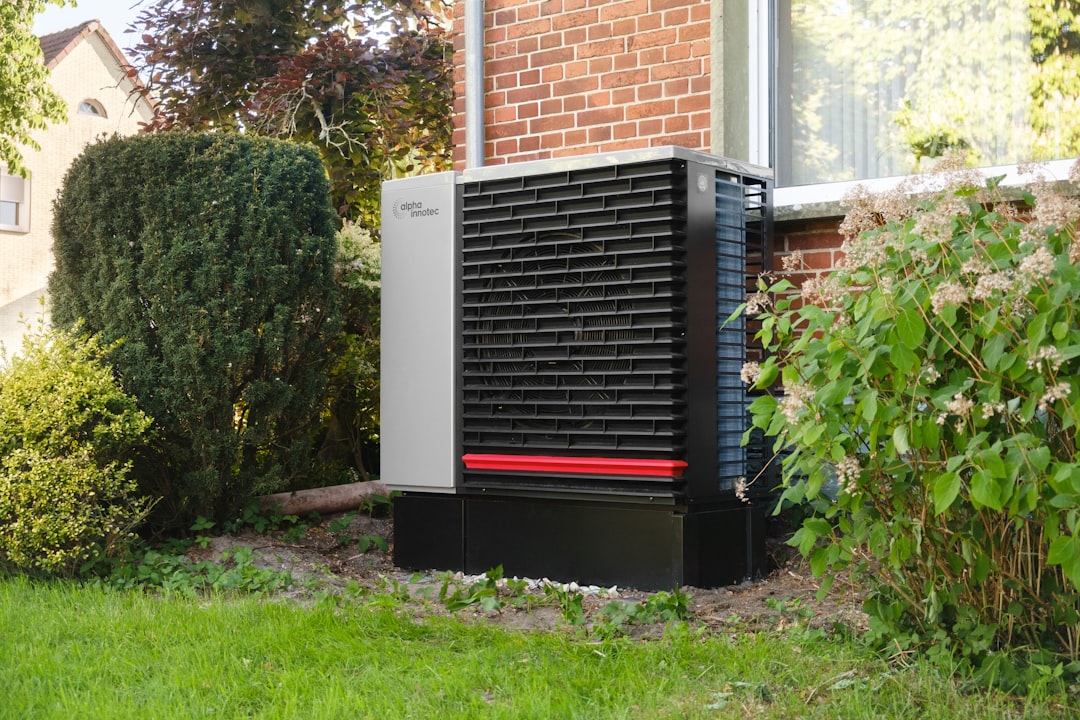
To understand how does a heat pump work, you have to stop thinking about "cold" as the opposite of heat. In physics, "cold" is simply the absence of heat. Even when it’s 32°F outside in Hanford or Clovis, there is still a massive amount of thermal energy in the air. On the Kelvin scale, 32°F is about 273K, while a warm 80°F day is roughly 300K. That’s only a 10% difference in total heat energy!
A heat pump uses a special substance called refrigerant to bridge that gap. Refrigerant is the "hero" of the story because it has an incredibly low boiling point. While water boils at 212°F, many modern refrigerants boil at temperatures as low as -50°F. This allows them to "boil" into a gas even in freezing weather, absorbing heat from the outdoor environment in the process.
The system relies on four main mechanical components to make this magic happen:
If your current system is struggling to keep up with these transitions, you might need a professional Heat Pump Service San Jose CA to ensure these components are working in harmony. If the "heart" stops beating, we also provide expert Heat Pump Repair San Jose CA to get your home back to the perfect temperature.
When you flip your thermostat to "Heat" on a chilly morning in Sunnyvale, the system begins a fascinating thermodynamic journey.
Keeping this cycle efficient requires clean coils and proper refrigerant levels. For residents in the South Bay, scheduling a Heat Pump Service Sunnyvale CA is the best way to prevent efficiency drops. Meanwhile, our friends in the Central Valley can rely on Heat Pump Maintenance Hanford CA to ensure their systems are ready for those foggy winter mornings.
The most brilliant part of a heat pump is that it’s essentially a two-way street. Unlike a furnace, which can only heat, or a standard AC, which can only cool, a heat pump uses a reversing valve to switch the direction of the refrigerant flow.
In the summer, the process is flipped. The indoor coil becomes the evaporator (absorbing heat from your living room), and the outdoor coil becomes the condenser (rejecting that heat into the backyard).
Whether you need a Heat Pump Service Palo Alto CA to prep for a heatwave or an urgent Heat Pump Repair Palo Alto CA because your reversing valve is stuck, we've got the expertise to keep your "cool" intact.
When we talk about efficiency, we often use the Coefficient of Performance (COP). A typical gas boiler or furnace might have an efficiency of 95%—meaning for every dollar you spend on gas, you get 95 cents of heat.
A heat pump, however, typically has a COP of around 4. This means for every 1 kWh of electricity used, it moves 4 kWh of thermal energy. That is 400% efficiency!
| System Type | Efficiency (COP/AFUE) | Energy Source | Primary Benefit |
|---|---|---|---|
| Heat Pump | 3.0 – 5.0 (300-500%) | Electricity | Heats & Cools, Ultra-Efficient |
| Gas Boiler | 0.90 – 0.98 (90-98%) | Natural Gas | Powerful heat in extreme cold |
| Electric Furnace | 1.0 (100%) | Electricity | Low install cost, high run cost |
Because they move heat rather than creating it, heat pumps are 3-5 times more energy efficient than gas boilers. This is why so many models earn the Energy Star certification, signaling they meet strict EPA guidelines for energy savings.
To keep these high-efficiency numbers, regular check-ups are vital. Residents in Clovis should consider Heat Pump Maintenance Clovis CA to ensure their COP stays high, while San Jose homeowners can book a Heat Pump Tune Up San Jose CA to optimize their system’s performance before the seasons change.
Not every home is built the same, which is why there are several ways to harness heat pump technology:
If your old central air unit is on its last legs, a Heat Pump Replacement Sunnyvale CA might be the upgrade your home deserves. And for those with existing systems, Heat Pump Maintenance Los Gatos CA is essential for protecting your investment, especially for complex geothermal or multi-zone mini-split setups.
A common myth is that heat pumps stop working when it gets cold. While it’s true that older models struggled when temperatures dropped below 35°F, modern Cold Climate Heat Pumps (CCHPs) are game-changers.
Equipped with variable-speed compressors (inverter technology), these units can ramp up their power to extract heat even when it's -22°F outside. In our service areas like Hanford or Clovis, where winter nights can occasionally get frosty, these systems are more than capable. For extra peace of mind, most systems include supplemental electric heat strips that kick in only during the most extreme cold snaps.
If you notice your system struggling during a cold spell, don't wait for a total breakdown. A quick Heat Pump Service Hanford CA can diagnose if your defrost cycle or backup heat is working correctly. If you're already feeling the chill, our Heat Pump Repair Clovis CA team is ready to help.
The key to a long-lasting heat pump is a professional installation. At Precision Heating and Cooling, we start with a Manual J load calculation. This isn't just a fancy term; it's a precise scientific formula that considers your home's square footage, insulation quality, and window orientation to ensure your heat pump is sized perfectly. An oversized unit will "short cycle," while an undersized unit will run constantly and drive up your bills.
Once installed, maintenance is the name of the game:
For a flawless setup, look into Heat Pump Installation Palo Alto CA. If you're already a heat pump owner in Santa Clara, we offer comprehensive Heat Pump Service Santa Clara CA and Heat Pump Maintenance Santa Clara CA to keep your system running like new for decades.
As of May 2026, the industry has largely transitioned away from R-410A due to its high Global Warming Potential (GWP). Most new installations now use R-32 or R-454B. These modern refrigerants are much more environmentally friendly and allow the heat pump to operate more efficiently in extreme temperatures. If you have an older system using R-22 or R-410A, a Heat Pump Tune Up Santa Clara CA can help ensure your system is leak-free and running as cleanly as possible.
Yes! Under the Inflation Reduction Act, homeowners can often claim a tax credit of up to 30% (capped at $2,000 per year) for high-efficiency heat pump installations. Locally, organizations like Silicon Valley Clean Energy and Peninsula Clean Energy offer substantial rebates that can significantly offset the initial cost. There’s also the TECH Clean California program, which provides additional incentives for switching from gas to electric. If you're ready to take advantage of these savings, a Heat Pump Replacement Santa Clara CA is a smart financial move in 2026.
With proper preventive maintenance, you can expect a 15-20 year lifespan from a high-quality heat pump. Because these systems work year-round (unlike a furnace that rests in summer), they do experience more wear and tear. This makes regular service even more critical. If you're in the Cupertino area, our Heat Pump Service Cupertino CA is designed to catch small component issues before they lead to a system-wide failure.
Understanding how does a heat pump work reveals why this technology is the future of home comfort. By moving heat rather than creating it, these systems offer a sustainable, cost-effective, and incredibly efficient way to stay comfortable in the San Jose Bay Area and Central Valley.
At Precision Heating and Cooling, we bring over two decades of experience to every job. Whether you’re in Cupertino, Los Gatos, Clovis, or Hanford, our team is dedicated to providing reliable service and competitive pricing. We don't just fix HVAC systems; we build long-term relationships with our community by ensuring your home remains a sanctuary of comfort.
Ready to experience the efficiency of a modern heat pump? Learn more about our professional heat pump services and let us help you find the perfect solution for your home.

Leslie was amazing for her outstanding customer service skills with me the other day. Thanks to her help my air conditioner is now all set up. She answered all my questions and took away all my problems. Leslie broke it down step by step to set it up easier. Now thanks to her my air conditioner is working perfectly. I really appreciate it Leslie and I’ll be sure to ask for you if I ever come back.
I contacted Precision Heating and Cooling for my home's AC repair. They were punctual and very professional. Guillermo was very kind and thorough. I would highly recommend them!
I am writing to express my sincere appreciation for the excellent work performed by Pablo and Alejandro from Precision Heating and Cooling. Their commitment to quality and customer satisfaction is truly commendable. Awesome job guys!
I would like to extend my sincere gratitude to Alejandro for his exceptional hard work. His passion for helping others is evident, and he consistently goes above and beyond in his service. Alejandro's thorough cleaning of my fireplace has truly made a significant difference. His dedication and professionalism are greatly appreciated.
I was very impressed. Came at night (after 9pm) to fix our AC during the middle of a heat wave the day before a national holiday! Technician was very courteous and efficient, got the job done quickly. Will definitely call them again for any AC servicing I need!
Fast and efficient, arrived when scheduled for repairs and replacement parts were ordered and installed quickly. Techs were very friendly and professional. AC system works great now! I highly recommend their services if you need repairs. Tim


.avif)
