


.avif)






Recent Blogs
Stay updated with our latest blog posts.


How ductless systems work for heating and cooling comes down to one elegant idea: moving heat instead of generating it. Here's a quick breakdown:
Whether you're dealing with a room that's always too hot, a home addition without ducts, or simply rising energy bills, ductless mini-split systems offer a flexible, highly efficient answer for year-round comfort.
I'm Tony Lara, an HVAC professional with hands-on experience helping homeowners understand exactly how ductless systems work for heating and cooling — from the refrigerant cycle to proper sizing and installation. In this guide, I'll walk you through everything you need to know to make a confident decision for your home.
If your monthly utility statement makes you want to hide under the covers, you aren't alone. In April 2026, the average household energy bill is roughly $1,900 annually, and nearly half of that goes straight toward heating and cooling. Traditional systems often feel like legacy tech in a smart world—clunky, loud, and expensive.
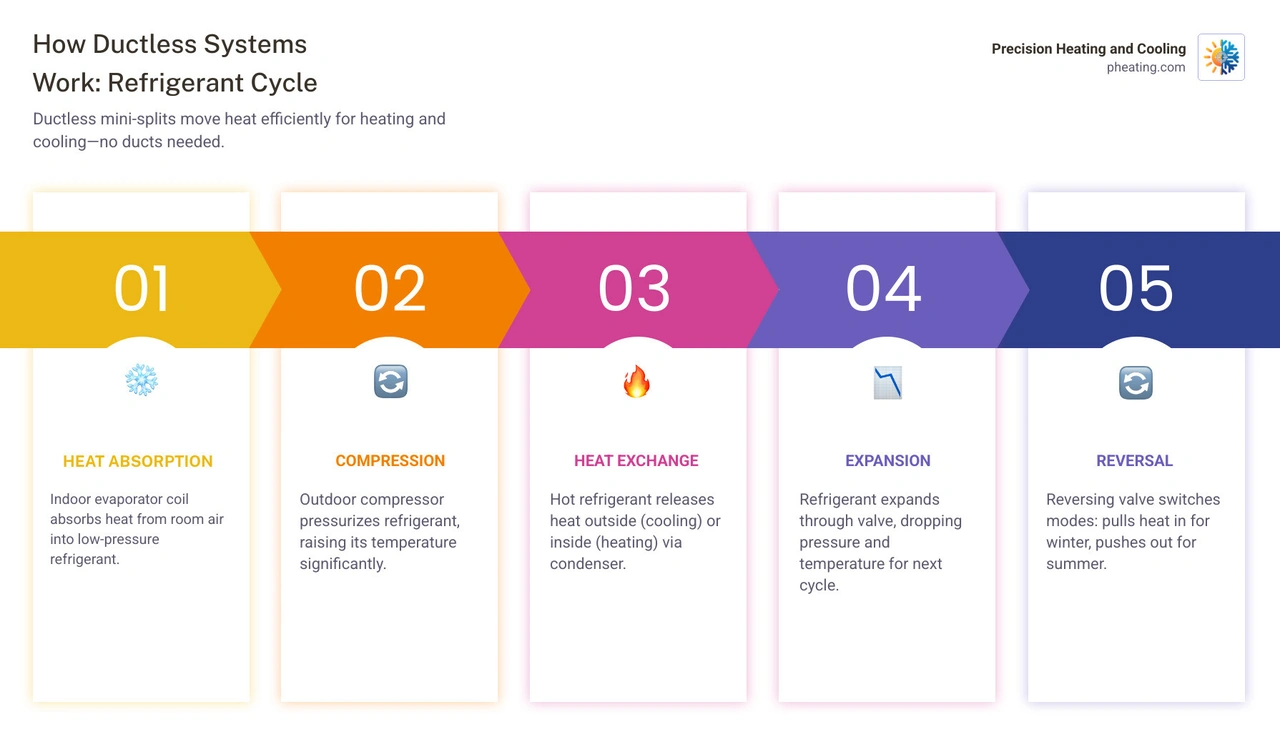
Ductless systems, also known as mini-splits, change the game by focusing on heat transfer. Instead of burning fuel to create heat or using massive amounts of electricity to "create" cold air, these systems use a chemical cooling compound called refrigerant to move heat from one place to another.
At the heart of this process is inverter technology. Unlike standard HVAC systems that are either "all on" or "all off" (which wastes a ton of energy), a ductless system's compressor can ramp up or down like a dimmer switch. This allows it to maintain a steady temperature without the constant, energy-draining restarts. If you are exploring Ductless HVAC Services San Jose CA, you’ll find that this technology is the primary driver behind those lower bills.
For homeowners specifically looking for Ductless AC Installation Sunnyvale CA, understanding the reversing valve is key. This small component is what allows the system to switch between cooling and heating modes instantly, providing year-round utility from a single investment.
When you set your thermostat to "cool," the indoor unit acts as an evaporator. A fan pulls the warm air from your room across a cold evaporator coil filled with liquid refrigerant.
Many people ask us, "Can a system really pull heat from the air when it's cold outside?" The answer is a resounding yes. Even when it feels chilly to us, there is still ambient heat energy in the air.
In heating mode, the cycle reverses. The outdoor unit absorbs heat from the environment, and the refrigerant carries it inside. Through a process of expansion and compression, the system amplifies that heat and releases it into your living room. This is why Ductless AC Installation Hanford CA has become so popular—it provides a high-efficiency alternative to electric baseboard heaters or propane furnaces, which are often much more expensive to run.
To understand how ductless systems work for heating and cooling, it helps to know what’s actually being installed in your home. These systems are comprised of three main parts:
Because the connection only requires a small 3-inch hole, the installation is minimally invasive. However, if you notice your system isn't hitting the right temperatures, you might need a Ductless AC Repair Cupertino CA Guide to troubleshoot components like the expansion valve, which regulates refrigerant flow.
Efficiency is where ductless systems truly shine. In traditional central HVAC, ductwork can account for more than 30% of energy consumption due to leaks or heat loss, especially if those ducts run through an unconditioned attic or crawlspace. Ductless systems bypass this loss entirely by delivering air directly into the room.
When shopping, look for two main ratings:
| System Type | Typical SEER2 Range |
|---|---|
| Standard Central AC | 14 - 16 |
| High-Efficiency Ducted | 17 - 25 |
| Ductless Mini-Split | 15.2 - 35 |
As you can see, a Ductless Mini Split AC Palo Alto CA can be significantly more efficient than even the best ducted alternatives.
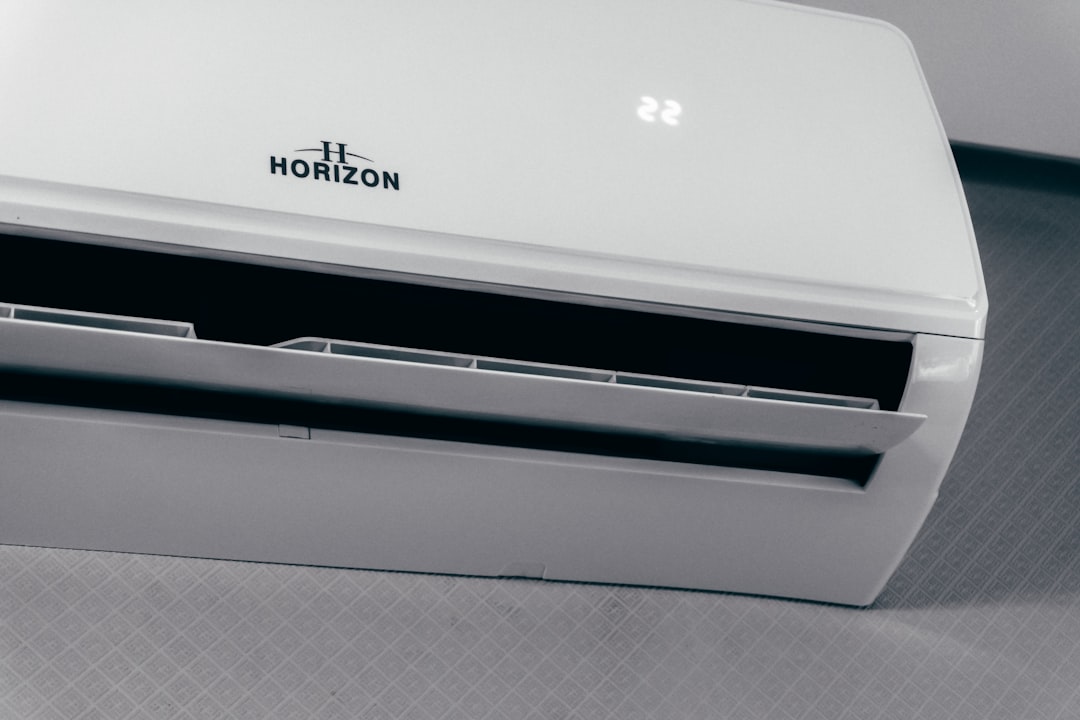
One of the biggest myths about ductless systems is that you're stuck with a "white box" on the wall. While wall-mounted units are the most common and cost-effective, we offer several styles to match your home's aesthetic:
In places like the San Jose Bay Area, home layouts vary wildly. You might have a 1950s bungalow in Willow Glen or a sprawling two-story in Almaden Valley. A single thermostat in the hallway rarely keeps every room comfortable.
Ductless systems solve this through zoning. Each indoor unit has its own thermostat. This means you can keep the kitchen cool while you're cooking, but leave the guest room unconditioned when nobody is staying there. This "spot conditioning" prevents energy waste and ensures you aren't paying to cool rooms you aren't using. If a unit in one of your zones stops responding, you may need Mini Split Repair Los Gatos CA to get your personalized comfort back on track.
By choosing a Ductless Mini Split AC San Jose CA, you’re taking control of your home’s micro-climates.
A multi-split system allows one outdoor compressor to support multiple indoor air handlers (typically up to 5 or even 8 units). The inverter-driven compressor is smart enough to know exactly how much refrigerant to send to each zone based on the demand. If only the master bedroom needs cooling at night, the compressor runs at a whisper-quiet, low-power state. For those in Sunnyvale, keeping your system in top shape with Ductless AC Repair Sunnyvale CA ensures these zones remain independent and efficient.
Ductless systems aren't just for whole-home replacements. They are perfect for:
Ductless systems are incredibly durable, often lasting 15 to 20 years, but they aren't "set it and forget it" machines. To get the most out of your investment, you need to stay on top of a few basics.
The most important task is cleaning your filters. Because ductless units move air directly within the room, they act as high-efficiency air purifiers. We recommend:
While you might see DIY kits online, professional installation is critical for several reasons. First, handling refrigerant requires a specialized license. Second, the system must be sized correctly using a "load calculation." An oversized unit will "short cycle," turning on and off too frequently, which wears out the compressor and fails to remove humidity.
We ensure your system is safely wired, your refrigerant lines are vacuum-sealed to prevent leaks, and your manufacturer's warranty remains fully protected.
Depending on the model and the total capacity of the outdoor unit, you can typically connect between 1 and 8 indoor units. For a standard 2,000-square-foot home, a 4-zone or 5-zone system is often sufficient to cover the main living areas and bedrooms.
Yes! Modern "Hyper-Heat" models are engineered to provide 100% heating capacity at temperatures as low as 5°F and can continue to operate efficiently down to -13°F. In our California climate, they are more than capable of handling our coldest winter nights.
Homeowners often see a 30% to 60% reduction in energy use compared to traditional electric heating or older central AC systems. By eliminating duct loss (the 30% energy waste mentioned earlier) and using ENERGY STAR-certified equipment, the savings add up quickly.
Understanding how ductless systems work for heating and cooling is the first step toward a more comfortable, energy-efficient home. At Precision Heating and Cooling, we’ve spent over two decades helping neighbors across the San Jose Bay Area and the Central Valley find the perfect HVAC solutions.
Whether you need a single-zone unit for a new home office or a multi-zone system for your entire house, we provide the expertise, reliable service, and competitive pricing you deserve. As we move through 2026, energy standards are higher than ever, and there's never been a better time to upgrade.
Ready to experience the quiet, zoned comfort of a mini-split? Visit our Ductless page to learn more or schedule your consultation today. We’re here to keep you comfy, one room at a time.

Leslie was amazing for her outstanding customer service skills with me the other day. Thanks to her help my air conditioner is now all set up. She answered all my questions and took away all my problems. Leslie broke it down step by step to set it up easier. Now thanks to her my air conditioner is working perfectly. I really appreciate it Leslie and I’ll be sure to ask for you if I ever come back.
I contacted Precision Heating and Cooling for my home's AC repair. They were punctual and very professional. Guillermo was very kind and thorough. I would highly recommend them!
I am writing to express my sincere appreciation for the excellent work performed by Pablo and Alejandro from Precision Heating and Cooling. Their commitment to quality and customer satisfaction is truly commendable. Awesome job guys!
I would like to extend my sincere gratitude to Alejandro for his exceptional hard work. His passion for helping others is evident, and he consistently goes above and beyond in his service. Alejandro's thorough cleaning of my fireplace has truly made a significant difference. His dedication and professionalism are greatly appreciated.
I was very impressed. Came at night (after 9pm) to fix our AC during the middle of a heat wave the day before a national holiday! Technician was very courteous and efficient, got the job done quickly. Will definitely call them again for any AC servicing I need!
Fast and efficient, arrived when scheduled for repairs and replacement parts were ordered and installed quickly. Techs were very friendly and professional. AC system works great now! I highly recommend their services if you need repairs. Tim



.avif)
