
Rainbow Colored Google Icon With White Outline | Precision Heating & Cooling
Black Star Icon | Precision Heating & CoolingBlack Star Icon | Precision Heating & CoolingBlack Star Icon | Precision Heating & CoolingBlack Star Icon | Precision Heating & CoolingBlack Star Icon | Precision Heating & Cooling
Leave Us A Review
Perfection Guaranteed!
Proudly Serving Our Customers Since 2000
Black Cross Icon | Precision Heating & Cooling
Background Design Element | Precision Heating & Cooling
Home
Orange Outlined Right Icon | Precision Heating & Cooling
Blog
Orange Outlined Right Icon | Precision Heating & Cooling
White Dotted Header Element | Precision Heating & Cooling

How to Prevent Mold with Humidity Control in Your Home

Beautify Shot of an American City With Cars on Road | Precision Heating & Cooling
Semi Circular White Hero Background Image | Precision Heating & Cooling
How to Prevent Mold with Humidity Control in Your Home

Why How Humidity Control Prevents Mold in Your Home Matters

Understanding how humidity control prevents mold in your home is the first step to protecting your family and property from structural damage. Excess indoor moisture acts like an open invitation for toxic spores to colonize your walls, carpets, and ceilings. For many local families, dealing with musty smells and damp closets is a frustrating daily struggle. If you are facing these issues, professional indoor air quality services in San Jose, CA can help restore balance to your living space. By keeping relative humidity levels low, you stop mold before it even has a chance to start growing.

If you want to protect your home from excess moisture, check out our indoor air quality solutions or contact us online to schedule an inspection today.

How Humidity Control Prevents Mold: Quick Summary

To prevent mold from growing in your home, you must control the moisture levels in the air. Here is how proper humidity management keeps your home safe:

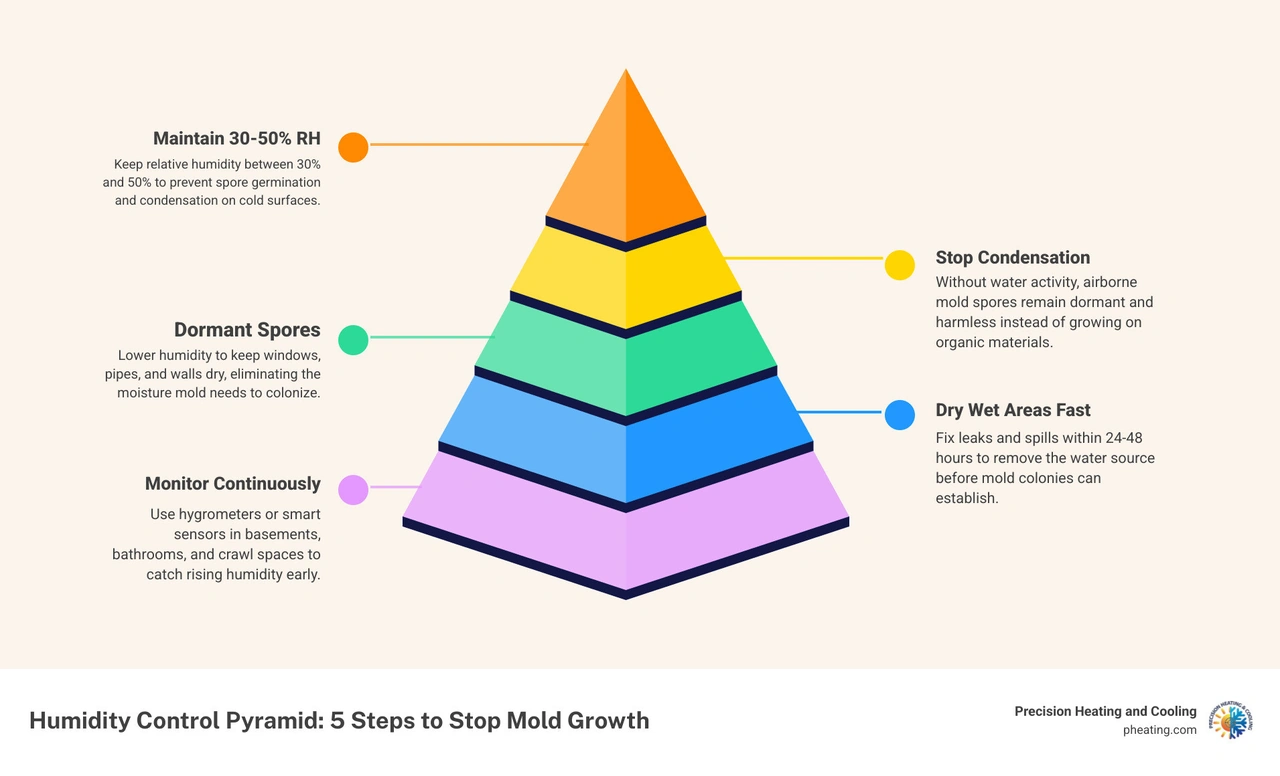
  • Keep Relative Humidity Below 50%: Mold needs moisture to grow. Keeping your indoor relative humidity (RH) between 30% and 50% stops mold spores from growing.
  • Prevent Condensation: High humidity creates condensation on cold surfaces like windows, pipes, and walls. Lowering the humidity keeps these surfaces dry.
  • Stop Spore Germination: Mold spores are always in the air but cannot grow without water. Controlling the humidity keeps the spores dormant and harmless.
  • Dry Wet Areas Quickly: If you have a leak or spill, drying the area within 24 to 48 hours prevents mold from starting.

As an HVAC specialist at Precision Heating and Cooling, I have spent years helping homeowners design systems that show exactly how humidity control prevents mold in your home. My hands-on experience with whole-house dehumidifiers and ventilation systems allows me to resolve even the toughest moisture challenges in the San Jose area.

How humidity control prevents mold by maintaining low relative humidity levels infographic

The Science of Mold: How Humidity Control Prevents Mold in Your Home

To truly understand how humidity control prevents mold in your home, we have to look at the science of mold. Mold is not just a cosmetic issue; it is a living, breathing fungus that reproduces by releasing tiny, invisible spores into the air. These spores are everywhere—both indoors and outdoors—floating quietly, waiting for the perfect moment to land, colonize, and feast on your home’s structural components.

However, mold spores cannot grow if moisture is not present. While they are incredibly resilient, they are completely powerless without water. This is why controlling moisture levels on surfaces and in indoor spaces is the single most effective way to eliminate the potential for mold growth.

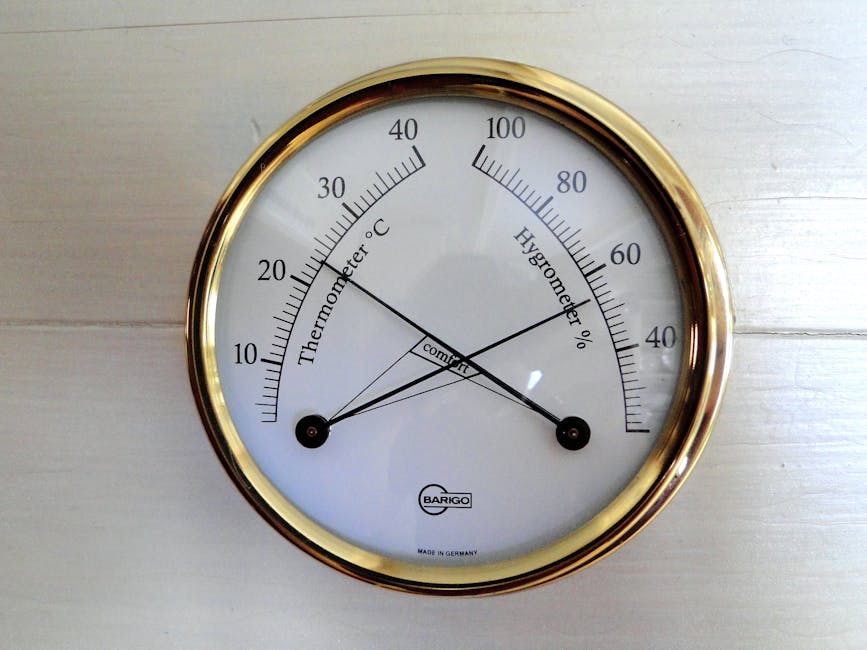
A digital hygrometer showing relative humidity

To grow, mold requires four basic conditions:

  1. A Food Source: Any organic matter will do. Mold loves cellulose, which is found in abundance in drywall, wood framing, carpet backing, wallpaper, and even dust.
  2. An Appropriate Temperature: Most mold species thrive in the same temperature range that humans find comfortable (typically between 60°F and 80°F).
  3. Oxygen: Since mold is an aerobic organism, it needs air to breathe.
  4. Moisture: This is the ultimate catalyst. While you cannot realistically remove oxygen, organic matter, or comfortable temperatures from your living space, you can control moisture.

In scientific terms, mold requires a certain level of "water activity" on a surface—typically a water activity level of 0.75 or higher—to germinate. This correlates directly to a sustained indoor relative humidity (RH) of above 60% to 65%.

Another critical scientific concept to understand is the dew point. The dew point is the exact temperature and moisture concentration at which water vapor in the air begins to condense into liquid water. When warm, humid indoor air collides with a cold surface (like a single-pane window during a chilly Los Gatos night or a cold-water pipe in a crawl space), the air cools rapidly. As it cools, its ability to hold water vapor decreases. Once it hits the dew point, condensation forms instantly. This condensation provides the immediate liquid water that dormant mold spores need to spring to life.

By actively managing your indoor climate, you can prevent the air from ever reaching its dew point on indoor surfaces. To learn more about how this works, read our comprehensive guide on Mastering Humidity Control for Optimal Indoor Air Quality and Comfort.

The Ideal Indoor Humidity Range for Mold Prevention

So, what is the magic number to keep your home safe? According to the U.S. Environmental Protection Agency (EPA) guidelines, keeping indoor relative humidity below 60%—and ideally between 30% and 50%—is the absolute best way to prevent mold growth.

The American Society of Heating, Refrigerating and Air-Conditioning Engineers (ASHRAE) Standard 55 recommends a similar range of 30% to 50% relative humidity for optimal thermal comfort and biological control. Let's break down what happens at different humidity levels:

  • Above 70% RH (Very High Risk): If relative humidity stays above 70% indoors for a prolonged period, it will almost certainly lead to rapid mold growth and dust mite infestations.
  • 60% to 70% RH (High Risk Zone): Mold can easily begin to colonize cool surfaces, closet corners, and areas with poor air circulation.
  • 30% to 50% RH (The Safe Zone): This is the sweet spot. Within this range, the air is dry enough to prevent condensation on cold surfaces, yet humid enough to prevent dry skin, throat irritation, and static electricity.
  • Below 30% RH (Too Dry): While mold cannot grow here, extremely dry air can cause wood floors to crack, paint to peel, and respiratory tracts to become irritated, making you more susceptible to viruses.

By targeting a year-round average of 40% to 50% RH, you create an environment where mold simply cannot survive, while maintaining maximum comfort for your family in cities like Cupertino, CA and Palo Alto, CA.

How Excess Moisture and High Humidity Trigger Mold Spores

When indoor conditions are warm and humid, mold does not waste any time. In fact, mold growth can begin within 24 to 48 hours when moisture is present on surfaces.

The process starts when floating mold spores land on a damp surface. Within hours, the spore absorbs moisture, germinates, and begins sending out microscopic root-like structures called hyphae. These hyphae digest the organic material (like your drywall or wood framing), physically breaking it down and causing structural decay.

Excess moisture can enter your home through several common pathways:

  • High Ambient Humidity: In humid weather or during rainy winter months in Santa Clara, CA, outdoor moisture naturally migrates indoors.
  • Daily Household Activities: Simple tasks like hot showers, boiling pasta, washing dishes, and drying clothes release a surprising amount of moisture. In fact, did you know that an average person releases roughly one liter of water vapor overnight just through breathing and perspiration?
  • Slow Plumbing Leaks: A tiny drip behind a drywall panel or under a sink can go unnoticed for weeks, keeping the surrounding materials constantly damp.
  • Poor Ventilation: When moisture-producing rooms (like bathrooms and kitchens) lack proper exhaust systems, humid air gets trapped, raising the local relative humidity.

Once mold takes root, it begins producing millions of new spores, which are released into the air to start the cycle all over again. If left unchecked, this process leads to warped wood, ruined drywall, peeling wallpaper, and a deeply unpleasant, musty living environment.

How to Measure and Monitor Indoor Humidity Levels

You cannot manage what you do not measure. Many homeowners struggle with mold issues simply because they do not realize how humid their indoor air actually is. Fortunately, monitoring your indoor climate is simple, affordable, and incredibly effective.

The primary tool for measuring indoor moisture is a hygrometer (sometimes called a humidity sensor or moisture meter). Digital hygrometers are widely available online or at hardware stores in Sunnyvale, CA and Hanford, CA, typically costing between $10 and $40.

To get an accurate picture of your home’s climate, we recommend placing a few hygrometers in high-risk areas. Position them four to six feet off the floor, away from direct sunlight, drafty windows, heating vents, or active air conditioning units. For the most accurate baseline, check the readings both in the morning and evening for at least one week.

If you prefer a high-tech approach, many modern smart thermostats and whole-home air quality monitors come with built-in humidity sensors. These systems can track humidity trends over time and even send alerts to your smartphone if the relative humidity climbs above your set limit (such as 55% RH).

In addition to digital tools, your home will often drop subtle physical hints that your humidity is too high. Keep an eye out for these common warning signs:

  • Frequent Window Condensation: Water droplets, fogging, or ice forming on the inside of window panes or metal window frames.
  • Musty, Earthy Odors: A distinct, damp smell that lingers in closets, basements, or bathrooms, even after a thorough cleaning.
  • Peeling or Bubbling Paint: Moisture trapping itself behind paint or wallpaper, causing it to separate from the drywall.
  • Soggy or Discolored Drywall: Soft spots, yellowing stains, or dark rings on ceilings and walls.
  • Warping Wood: Hardwood floors that cup or buckle, or wooden cabinet doors that suddenly stick or swell.

If you suspect your home has hidden moisture issues, our team can perform a detailed inspection. Learn more about our regional services on our Indoor Air Quality San Jose CA page.

Key Signs of High Humidity in Different Rooms

Not all rooms are created equal when it comes to humidity. Different spaces have unique moisture loads, and understanding these differences helps you target your prevention efforts effectively:

  • Bathrooms: The ultimate high-humidity zone. Showers and baths can easily spike local humidity levels to 90% or higher. Look for mold growing on grout, caulk, ceilings, and around exhaust fan grilles.
  • Basements and Crawl Spaces: Because these areas are below or close to the ground, they are naturally cooler and prone to dampness. Soil moisture can easily migrate through concrete foundations. Look for white, powdery salt deposits on concrete walls (known as efflorescence—often confused with mold) or rust on metal pipes and structural hangers.
  • Kitchens: Cooking, boiling water, and running the dishwasher release massive amounts of steam. Watch for condensation on the back of cabinets, under the kitchen sink, or on the walls near your stove.
  • Bedrooms: As mentioned, human respiration can raise bedroom humidity overnight. If your bedroom windows are constantly foggy in the morning, or if you notice mold growing behind large furniture pushed against exterior walls, your bedroom RH is too high.
  • Crawl Spaces: Unsealed crawl spaces can trap immense amounts of moisture. If the relative humidity in a crawl space stays above 55%, moisture can migrate upward through your subfloor, leading to mold growth under your carpets and floorboards.

Practical Steps for Moisture Control and Post-Flood Response

Preventing mold is not about waiting for a problem to occur and then buying cleaning sprays. It is about establishing a proactive, continuous defense system.

To keep your home dry and healthy, follow these best practices for general home maintenance and water management:

  • Maintain Proper Foundation Drainage: Ensure the ground around your home slopes away from the foundation. The industry standard is a 5% slope (a drop of 6 inches over the first 10 feet) to prevent rainwater from pooling against your basement or crawl space walls.
  • Keep Gutters and Downspouts Clean: Clogged gutters cause water to overflow, pouring directly down your exterior walls and pooling at the foundation. Clean your gutters at least twice a year.
  • Install Ground Vapor Barriers: If your home has a dirt crawl space, lay down a durable 6-mil polyethylene vapor barrier across the entire floor. Overlap the seams by at least 12 inches and seal them with construction tape to block moisture from evaporating out of the soil.
  • Seal Air Leaks: Use caulk and weatherstripping to seal gaps around windows, doors, and electrical outlets. Air movement accounts for more than 98% of all water vapor movement in building cavities, so stopping air leaks is crucial for moisture control in walls.
  • Keep Untreated Wood Away from Soil: Ensure there is a capillary break (like a metal sill plate gasket) between your concrete foundation and wooden framing.

How Humidity Control Prevents Mold in Your Home After Water Damage

When a plumbing leak, heavy rainstorm, or local flood occurs in areas like Clovis, CA or Hanford, CA, you are on a very tight clock. Because mold can colonize damp materials within 24 to 48 hours, immediate action is required to prevent a massive mold outbreak.

If your home experiences water damage, execute this step-by-step emergency protocol immediately:

  1. Stop the Water Source: Locate and turn off the main water shut-off valve immediately if the source is an indoor plumbing leak.
  2. Ensure Safety First: Turn off the circuit breakers to any wet areas before stepping into standing water to avoid electrical shock.
  3. Remove Standing Water: Use a wet/dry vacuum, sump pump, or commercial water extraction equipment to remove as much liquid water as possible.
  4. Discard Unsourced Porous Materials: Absorbent materials like carpet padding, ceiling tiles, and heavily soaked drywall must be cut out and discarded. Once these materials harbor mold spores deep within their fibers, they are nearly impossible to clean completely.
  5. Clean Hard Surfaces: Scrub non-porous surfaces (like tile, concrete, and metal) with detergent and clean water, then dry them completely.
  6. Deploy High-Capacity Dehumidifiers and Air Movers: Set up heavy-duty dehumidifiers and industrial fans to pull moisture out of the air and structural framing. Keep these units running continuously until moisture meters confirm that the wood and drywall have dropped to safe levels (typically under 14% moisture content).
  7. Do Not Paint Over Wet or Moldy Surfaces: Painting or caulking over damp drywall or active mold simply traps the moisture inside, allowing the mold to eat away at the wood and drywall undetected until it completely rots.

Leveraging HVAC Systems and Dehumidifiers for Mold Prevention

Your home's heating, ventilation, and air conditioning (HVAC) system is your primary weapon in the fight against high humidity. Many homeowners do not realize that their air conditioner is actually a powerful dehumidifier in disguise.

When your air conditioner runs, warm, humid indoor air is pulled across a freezing-cold evaporator coil. As the air cools, it reaches its dew point, causing water vapor to condense onto the coil. This liquid moisture drips down into a condensate pan and drains safely out of your home.

However, standard air conditioners are designed primarily to control temperature, not humidity. During mild but humid spring and fall months, your AC may "short-cycle"—meaning it turns on, cools the home quickly, and shuts off before it has run long enough to pull significant moisture out of the air. This leaves your home feeling cool, clammy, and prone to mold growth.

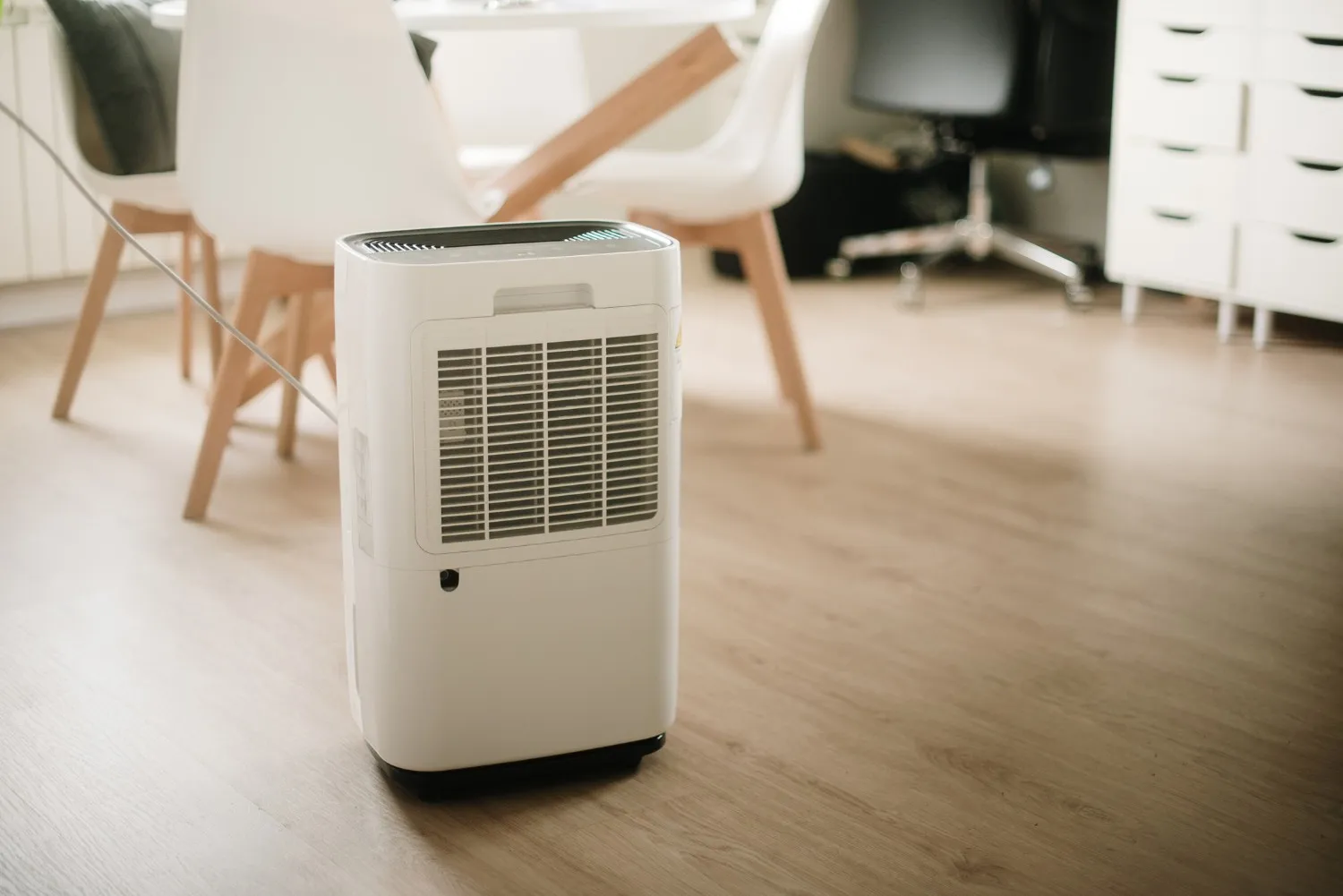
To solve this, we often recommend installing a dedicated whole-house dehumidifier. These systems integrate directly with your existing HVAC ductwork to monitor and control relative humidity independently of your thermostat's temperature settings. If you want to explore these options for your home, check out our services for Whole House Dehumidification San Jose CA and Whole House Dehumidifier Installation Santa Clara CA.

The Role of Whole-House Dehumidifiers and Air Filtration

While portable dehumidifiers work well for small, localized spaces like a single utility room or a small closet, they have several major drawbacks. They must be emptied manually (unless hooked to a gravity drain), they only treat the air in their immediate vicinity, and they can be noisy and energy-inefficient.

In contrast, a whole-house dehumidifier offers several powerful advantages:

  • Continuous Drainage: These units are hardwired into your home’s plumbing drainage system, meaning you never have to empty a messy water bucket again.
  • Comprehensive Coverage: They draw air from your entire home through your HVAC return ducts, dehumidify it, and distribute dry, fresh air evenly to every room.
  • Superior Energy Efficiency: Whole-house systems are highly efficient and often allow you to raise your thermostat temperature by a few degrees in the summer, because dry air naturally feels much cooler than humid air.
  • Perfect Integration with Filtration: High-quality systems can be paired with high-efficiency air filters (such as MERV 13 filters) to capture airborne mold spores, dust mites, and pet dander.

To learn more about how advanced filtration keeps your indoor air clean, explore the Benefits of Whole Home Air Filtration and discover our specialized services for Whole Home Air Filtration Sunnyvale CA.

How Humidity Control Prevents Mold in Your Home Through HVAC Maintenance

Just like any hard-working machine, your HVAC system requires regular maintenance to keep running efficiently and prevent it from becoming a source of mold itself. Because evaporator coils and drip pans are inherently cool and wet, they are highly susceptible to mold colonization if neglected.

To ensure your system is actively preventing mold rather than spreading it, make sure to follow these maintenance practices:

  • Schedule Annual Professional Servicing: Have an HVAC technician inspect your system at least once a year. They will check refrigerant levels, inspect electrical components, and ensure the entire system is operating at peak dehumidification capacity.
  • Clean the Evaporator Coils: Dust and dirt can accumulate on your coils over time, trapping moisture and providing a perfect food source for mold. Annual cleaning keeps the coils clean and efficient.
  • Inspect and Clean the Drip Pan and Drain Line: If your AC's condensate drain line gets clogged with algae or debris, water will back up into the drip pan, creating a stagnant pool of water. Regularly flushing the drain line prevents overflows and mold growth.
  • Change Air Filters Regularly: Clogged filters restrict airflow, which can cause your evaporator coils to freeze over. When the ice melts, it can overwhelm the drip pan and cause water damage to your furnace or surrounding drywall.
  • Keep Your Ductwork Clean and Sealed: Leaky ducts in unconditioned spaces (like attics or crawl spaces) can draw in hot, humid air, leading to condensation and mold growth inside your ductwork.

For more professional tips on optimizing your HVAC system for cleaner air, read our guide on how to Enhance Indoor Air Quality Through Filtration.

Health Risks of Mold Exposure and When to Call Professionals

Moisture control is not just about protecting your drywall and structural wood—it is about protecting your health. When mold grows indoors, it releases allergens, irritants, and in some cases, highly toxic chemicals called mycotoxins.

Breathing in mold spores can trigger a wide range of health issues, including:

  • Allergic Reactions: Sneezing, runny nose, red or itchy eyes, skin rashes, and throat irritation.
  • Respiratory Issues: Wheezing, coughing, shortness of breath, and chest tightness.
  • Asthma Attacks: Mold is a well-known trigger that can cause severe attacks in individuals with asthma.
  • Chronic Fatigue and Headaches: Prolonged exposure to toxic molds (like Stachybotrys chartarum, commonly known as black mold) can impact the nervous and immune systems.

Certain vulnerable populations are at a much higher risk of developing severe symptoms from mold exposure:

  • Infants and Young Children: Their respiratory systems are still developing, making them highly sensitive to airborne irritants.
  • The Elderly: Aging immune systems are less capable of fighting off fungal infections and respiratory inflammation.
  • Immunocompromised Individuals: People undergoing chemotherapy, organ transplant recipients, or those with autoimmune diseases can develop serious, systemic fungal infections from breathing in mold spores.
  • People with Pre-existing Respiratory Conditions: Anyone with chronic obstructive pulmonary disease (COPD) or severe allergies will experience worsening symptoms in a moldy home.

To dramatically reduce the concentration of airborne mold spores, dust, and viruses in your living space, consider installing a medical-grade air purifier. Discover your options on our Whole Home Air Purifiers San Jose CA page.

When to Seek Professional Mold Inspection and Remediation

As a general rule of thumb established by the EPA, if the moldy area in your home is less than 10 square feet (roughly a 3-foot by 3-foot patch), you can typically handle the cleanup yourself. You can scrub the mold off hard surfaces using detergent and water, making sure to wear protective gear like an N-95 respirator, gloves, and safety goggles.

However, you should seek professional mold inspection and remediation services if you experience any of the following situations:

  • The Affected Area Exceeds 10 Square Feet: Large mold infestations require specialized containment chambers, negative air pressure machines, and professional-grade HEPA vacuums to prevent spores from spreading to the rest of the house during cleanup.
  • You Suspect Hidden Mold: If you smell a persistent musty odor but cannot find the source, mold may be growing behind drywall, under floorboards, or inside your HVAC ductwork. Professional inspectors use thermal imaging cameras and moisture meters to locate hidden pockets of water.
  • The Water Damage Was Caused by Sewage or Contaminated Water: "Black water" floods (from sewer backups or outdoor flooding) contain highly dangerous bacteria and pathogens that require professional hazardous waste cleanup.
  • The Mold Is Growing Inside Your HVAC System: Cleaning mold out of air ducts and furnace coils requires specialized tools and sanitizing agents to prevent spores from blowing into every room when the system turns on.

Frequently Asked Questions About Humidity and Mold

What humidity level stops mold growth most effectively?

To stop mold growth most effectively, keep your indoor relative humidity between 30% and 50%. Within this safe zone, mold spores cannot get the moisture they need to germinate, causing them to remain completely dormant and harmless. If you want to completely halt fungal activity, dropping the RH below 30% will do so, but this can cause discomfort and respiratory irritation for the human occupants.

Can 55% humidity cause mold to grow?

While a room-wide reading of 55% relative humidity is generally safe for most living spaces, mold can still grow if there are cold surfaces in the room. For example, if your room air is 55% RH but your exterior walls or window frames are cold, the local relative humidity right next to those cold surfaces can spike to 90% or higher, causing condensation to form. This localized moisture is more than enough to trigger mold growth in corners or behind furniture.

Is a dehumidifier enough to prevent mold?

While a dehumidifier is an incredibly powerful tool for controlling air moisture, it is not a complete solution on its own if you have an active, physical water leak. If water is constantly dripping from a pipe or seeping through your foundation, a dehumidifier will not stop mold from growing on those directly soaked materials. Dehumidifiers must be used as part of a comprehensive moisture management plan that includes fixing leaks, maintaining proper drainage, and ensuring adequate ventilation.

Conclusion

Preventing mold in your home is not about a single heroic effort; it is about consistent, proactive moisture management. By understanding how humidity control prevents mold in your home, keeping your indoor relative humidity between 30% and 50%, and taking immediate action after any water damage, you can protect both your home's structure and your family's health.

At Precision Heating and Cooling, we have over two decades of experience helping families across the San Jose Bay Area and Central Valley enjoy clean, comfortable, and mold-free homes. Whether you need a whole-house dehumidifier installed in Santa Clara, CA, an annual HVAC tune-up in Los Gatos, CA, or advanced filtration solutions in Cupertino, CA, our reliable team is here to help. We pride ourselves on competitive pricing, reliable service, and flexible payment options to fit any budget.

Don't let damp air and mold take over your living space. Explore our Indoor Air Quality Solutions or contact us online to schedule a professional consultation today!

Happy & Satisfied Family | Precision Heating & CoolingHappy & Satisfied Family | Precision Heating & Cooling
Financing Options From Flexible Financing Options For All Home Owners

Flexible payment options to make your goals affordable and stress-free.

Customer Testimonials

White Colored Star Icon | Precision Heating & CoolingWhite Colored Star Icon | Precision Heating & CoolingWhite Colored Star Icon | Precision Heating & CoolingWhite Colored Star Icon | Precision Heating & CoolingWhite Colored Star Icon | Precision Heating & Cooling

Leslie was amazing for her outstanding customer service skills with me the other day. Thanks to her help my air conditioner is now all set up. She answered all my questions and took away all my problems. Leslie broke it down step by step to set it up easier. Now thanks to her my air conditioner is working perfectly. I really appreciate it Leslie and I’ll be sure to ask for you if I ever come back.

Alf_234
White Colored Star Icon | Precision Heating & CoolingWhite Colored Star Icon | Precision Heating & CoolingWhite Colored Star Icon | Precision Heating & CoolingWhite Colored Star Icon | Precision Heating & CoolingWhite Colored Star Icon | Precision Heating & Cooling

I contacted Precision Heating and Cooling for my home's AC repair. They were punctual and very professional. Guillermo was very kind and thorough. I would highly recommend them!

Claudia H.
White Colored Star Icon | Precision Heating & CoolingWhite Colored Star Icon | Precision Heating & CoolingWhite Colored Star Icon | Precision Heating & CoolingWhite Colored Star Icon | Precision Heating & CoolingWhite Colored Star Icon | Precision Heating & Cooling

I am writing to express my sincere appreciation for the excellent work performed by Pablo and Alejandro from Precision Heating and Cooling. Their commitment to quality and customer satisfaction is truly commendable. Awesome job guys!

Lizeth C.
White Colored Star Icon | Precision Heating & CoolingWhite Colored Star Icon | Precision Heating & CoolingWhite Colored Star Icon | Precision Heating & CoolingWhite Colored Star Icon | Precision Heating & CoolingWhite Colored Star Icon | Precision Heating & Cooling

I would like to extend my sincere gratitude to Alejandro for his exceptional hard work. His passion for helping others is evident, and he consistently goes above and beyond in his service. Alejandro's thorough cleaning of my fireplace has truly made a significant difference. His dedication and professionalism are greatly appreciated.

Daisy M.
White Colored Star Icon | Precision Heating & CoolingWhite Colored Star Icon | Precision Heating & CoolingWhite Colored Star Icon | Precision Heating & CoolingWhite Colored Star Icon | Precision Heating & CoolingWhite Colored Star Icon | Precision Heating & Cooling

I was very impressed. Came at night (after 9pm) to fix our AC during the middle of a heat wave the day before a national holiday! Technician was very courteous and efficient, got the job done quickly. Will definitely call them again for any AC servicing I need!

Robert M.
White Colored Star Icon | Precision Heating & CoolingWhite Colored Star Icon | Precision Heating & CoolingWhite Colored Star Icon | Precision Heating & CoolingWhite Colored Star Icon | Precision Heating & CoolingWhite Colored Star Icon | Precision Heating & Cooling

Fast and efficient, arrived when scheduled for repairs and replacement parts were ordered and installed quickly. Techs were very friendly and professional. AC system  works great now! I highly recommend their services if you need repairs. Tim

Tim C.

Recent Blogs

Stay updated with our latest blog posts.
How to Prevent Mold with Humidity Control in Your Home
Home

How to Prevent Mold with Humidity Control in Your Home

Discover essential tips to keep your home in top shape.
How to Understand HVAC Load Calculations
Home

How to Understand HVAC Load Calculations

Discover essential tips to keep your home in top shape.
How Often to Change Your HVAC Air Filter: Simple Guide
Home

How Often to Change Your HVAC Air Filter: Simple Guide

Discover essential tips to keep your home in top shape.
View All
3D Effect Blue Semi Circular Hero Icon | Precision Heating & Cooling
3D Effect Blue Round Circular Hero Icon | Precision Heating & Cooling