


.avif)





Recent Blogs
Stay updated with our latest blog posts.


Knowing how to maintain your heating and cooling system can mean the difference between a comfortable home year-round and an unexpected breakdown on the hottest day of summer or the coldest night of winter. In fact, nearly half of the average home's annual energy bill goes toward heating and cooling — making your HVAC system one of the most expensive and most important assets in your home.
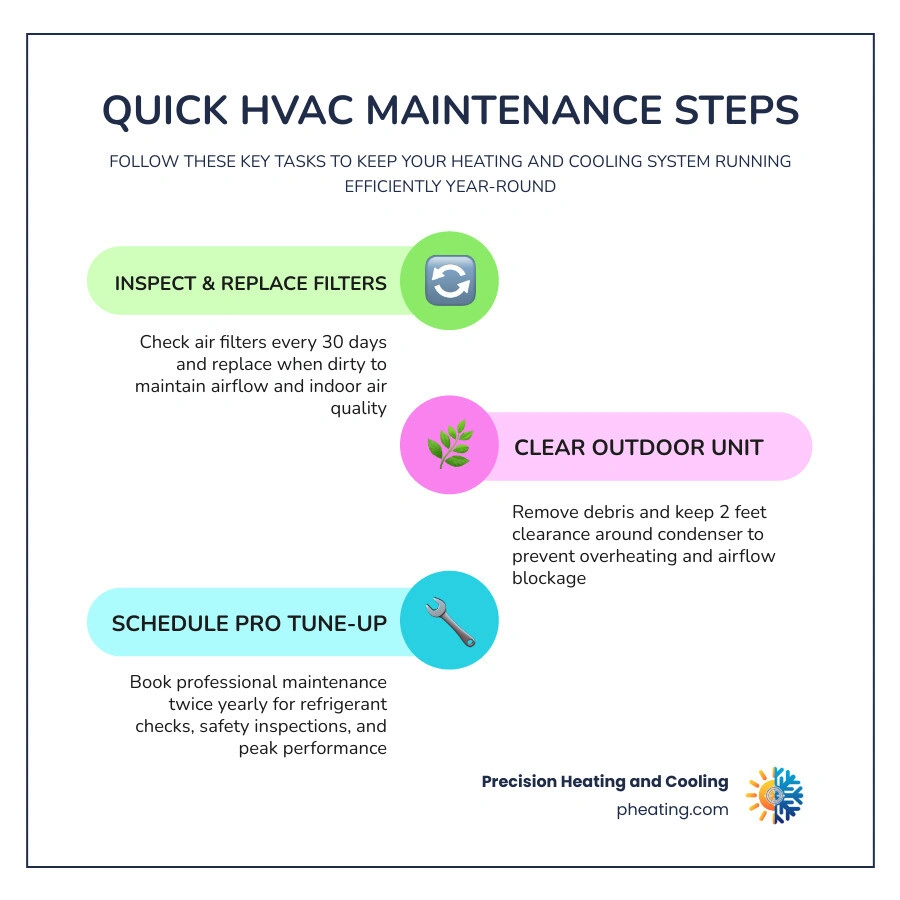
Here is a quick overview of the essential steps to maintain your heating and cooling system:
Systems that receive documented annual maintenance last an average of 18–22 years, while neglected systems often fail in as little as 11–14 years. That gap is not a coincidence — dirt, skipped service calls, and small ignored problems are the leading causes of early HVAC failure.
Whether you own a home in the San Jose Bay Area or the Central Valley, staying on top of routine care protects your comfort, your wallet, and your investment.
I'm Tony Lara, an HVAC professional with hands-on experience helping homeowners get the most out of their heating and cooling systems — including tracking down hard-to-find parts and solving the kind of problems that show up when maintenance gets skipped. In the sections ahead, I'll walk you through everything you need to know about how to maintain your heating and cooling system, from simple monthly tasks you can do yourself to what a proper professional tune-up should actually include.
When we talk about how to maintain your heating and cooling system, we aren't just talking about a "nice to do" weekend project. We are talking about the "lungs" of your home. In May 2026, as energy costs continue to be a primary concern for families in Hanford and Sunnyvale, efficiency is the name of the game.
Did you know that airflow problems can reduce your system's efficiency by up to 15 percent? When your system is dirty or poorly maintained, it has to work twice as hard to move air. This leads to higher utility bills and a home that never quite feels comfortable. By following a regular schedule, you can ensure that about 2/3 of the energy used in your home (which goes to space heating and cooling) is used as effectively as possible.
Safety is paramount, especially for gas-powered furnaces. Maintenance includes checking for cracked heat exchangers and ensuring proper gas pressure, which prevents fire hazards and carbon monoxide leaks. Furthermore, Regular AC Maintenance Extend Your System by reducing the wear and tear on expensive components like the compressor. A well-maintained system can increase your home's resale value by up to 7%.
Many manufacturers, including major brands like Mitsubishi and Carrier, require documented annual service to keep your 10-year parts warranty valid. Without it, a $2,000+ compressor repair could come straight out of your pocket. Additionally, understanding Benefits of Regular Heat Pump Maintenance means better indoor air quality, as clean filters and coils trap pollen and allergens rather than circulating them through your living room.
You don't need a tool belt and a van to perform some of the most critical maintenance tasks. We recommend a "DIY/Pro Split": you handle the basic cleaning and visual checks, and we handle the high-voltage electricity and pressurized refrigerants.
The single most important task for any homeowner is managing the air filters. Filters are rated by MERV (Minimum Efficiency Reporting Value). For most homes in the Bay Area, a MERV 8 to MERV 11 filter is the "sweet spot"—it catches dust, pet dander, and mold spores without putting too much strain on the blower motor.
Neglecting this leads to The Importance of Regular AC Service becoming a repair call rather than a routine check, as clogged filters are the #1 cause of system failure.
Your outdoor unit (the condenser) needs to breathe. In the Central Valley, dust and grass clippings can quickly clog the delicate fins.
Your AC doesn't just cool the air; it removes humidity. This water collects in a drain pan and exits through a PVC pipe. To prevent clogs that cause water damage or mold, pour a cup of 50/50 white vinegar and water down the condensate cleanout every few months. This kills algae and prevents "slime" from blocking the pipe. This is a key part of Spring AC and HVAC Maintenance that saves you from a flooded utility room.
While DIY tasks are great, a professional tune-up is "insurance" for your HVAC system. We recommend scheduling these twice a year: spring for your AC and fall for your heater. This is especially important for our neighbors in Los Gatos and Clovis, where seasonal temperature swings can be dramatic.
When we visit your home for a tune-up, we don't just "look" at the unit. A legitimate professional service should take 60–90 minutes and include:
As you Prepare Heating System for Fall, our technicians focus on gas connections, burner combustion, and the heat exchanger. We perform a combustion analysis to ensure your furnace isn't producing dangerous levels of carbon monoxide. For those interested in long-term peace of mind, our HVAC Maintenance Plans Guide details how regular visits can prevent 80% of common breakdowns.
Maintenance isn't just about the machine; it's about the delivery system. In a typical house, about 20 to 30 percent of the air that moves through the duct system is lost due to leaks, holes, and poorly connected ducts.
If your ducts are in an unconditioned space like an attic or crawlspace, sealing them is vital. We use mastic sealant or metal-backed tape—never standard duct tape, which dries out and falls off within a year. Sealing these leaks ensures the air you pay to cool actually reaches your bedrooms in Palo Alto or Santa Clara.
Upgrading to an ENERGY STAR certified smart thermostat can save nearly $140 annually. These devices provide monthly energy reports, allowing you to track performance and catch issues early.
| Thermostat Type | Annual Savings (Est.) | Key Features |
|---|---|---|
| Manual | $0 | Requires manual adjustment; easy to forget |
| Programmable | $50 - $100 | Schedules for sleep/away times |
| Smart (WiFi) | $140+ | Remote control, energy reports, "learning" tech |
Even with the best maintenance, parts eventually wear out. Knowing the Signs You Need AC Repair from Our Experts can prevent a small fix from turning into a total system replacement.
If your system is over 10–15 years old and you are facing frequent repairs, it might be time to look at When Is the Right Time to Replace Your Heater. Newer ENERGY STAR models are significantly more efficient than units from just a decade ago, often paying for themselves in energy savings over a few years.
In 2026, with shifting air quality patterns, we recommend checking your filter every 30 days. If you have pets or live in a high-pollen area like Hanford, you will likely need to replace it every 1–2 months. If the filter looks grey and solid, it’s time for a swap.
Look for "short-cycling" (the system turning on and off rapidly), ice formation on the copper refrigerant lines, or a sudden spike in your utility bills without a change in weather. If your carbon monoxide detector goes off, that is an immediate emergency.
With proper maintenance, a central AC unit typically lasts 12–17 years, while a gas furnace can last 15–20 years. Heat pumps usually have a lifespan of 10–16 years. Without maintenance, these numbers can drop by 30–50%.
Mastering how to maintain your heating and cooling system is the best way to ensure your home remains a sanctuary of comfort. From the simple act of changing a filter to scheduling your seasonal professional tune-up, every step you take adds years to your equipment and dollars back into your pocket.
At Precision Heating and Cooling, we’ve spent over two decades serving the San Jose Bay Area and Central Valley, from Cupertino to Hanford. We pride ourselves on reliable service and competitive pricing, ensuring your system is ready for whatever the California climate throws its way.
Ready to protect your home's most important asset? Explore our HVAC Maintenance Plan San Jose CA to see how we can take the guesswork out of your seasonal care.
Schedule your professional maintenance today and breathe easier knowing your system is in expert hands.

Leslie was amazing for her outstanding customer service skills with me the other day. Thanks to her help my air conditioner is now all set up. She answered all my questions and took away all my problems. Leslie broke it down step by step to set it up easier. Now thanks to her my air conditioner is working perfectly. I really appreciate it Leslie and I’ll be sure to ask for you if I ever come back.
I contacted Precision Heating and Cooling for my home's AC repair. They were punctual and very professional. Guillermo was very kind and thorough. I would highly recommend them!
I am writing to express my sincere appreciation for the excellent work performed by Pablo and Alejandro from Precision Heating and Cooling. Their commitment to quality and customer satisfaction is truly commendable. Awesome job guys!
I would like to extend my sincere gratitude to Alejandro for his exceptional hard work. His passion for helping others is evident, and he consistently goes above and beyond in his service. Alejandro's thorough cleaning of my fireplace has truly made a significant difference. His dedication and professionalism are greatly appreciated.
I was very impressed. Came at night (after 9pm) to fix our AC during the middle of a heat wave the day before a national holiday! Technician was very courteous and efficient, got the job done quickly. Will definitely call them again for any AC servicing I need!
Fast and efficient, arrived when scheduled for repairs and replacement parts were ordered and installed quickly. Techs were very friendly and professional. AC system works great now! I highly recommend their services if you need repairs. Tim


.avif)
