
Rainbow Colored Google Icon With White Outline | Precision Heating & Cooling
Black Star Icon | Precision Heating & CoolingBlack Star Icon | Precision Heating & CoolingBlack Star Icon | Precision Heating & CoolingBlack Star Icon | Precision Heating & CoolingBlack Star Icon | Precision Heating & Cooling
Leave Us A Review
Perfection Guaranteed!
Proudly Serving Our Customers Since 2000
Black Cross Icon | Precision Heating & Cooling
Background Design Element | Precision Heating & Cooling
Home
Orange Outlined Right Icon | Precision Heating & Cooling
Blog
Orange Outlined Right Icon | Precision Heating & Cooling
White Dotted Header Element | Precision Heating & Cooling

What to Do When Your HVAC Breaks Down Unexpectedly

Beautify Shot of an American City With Cars on Road | Precision Heating & Cooling
Semi Circular White Hero Background Image | Precision Heating & Cooling
What to Do When Your HVAC Breaks Down Unexpectedly

The First 10 Minutes: What to Do When Your HVAC Breaks Down Unexpectedly

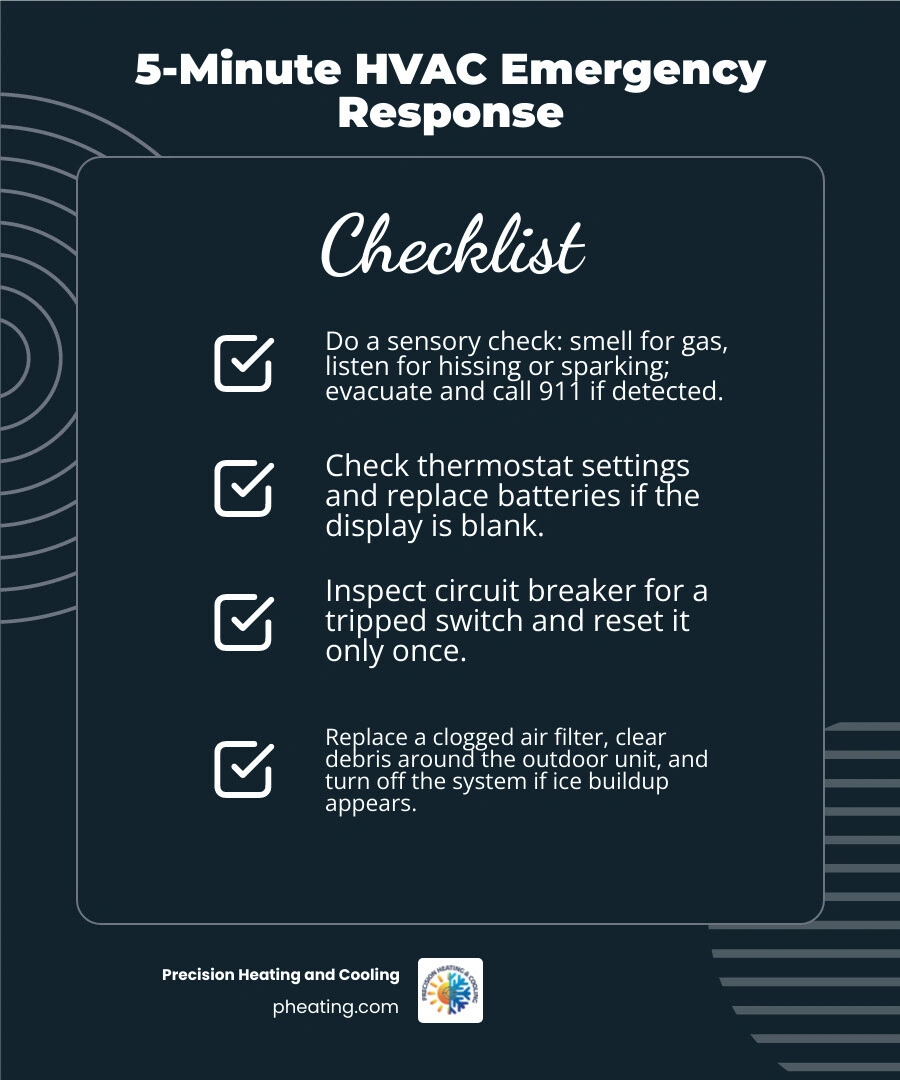
: Your 5-Minute Emergency Response

If you need a quick answer right now, here are the immediate steps to take:

  1. Do a sensory check first - Smell for gas or burning odors, listen for hissing or sparking. If you detect any, evacuate and call 911.
  2. Check your thermostat - Make sure it's set to the correct mode and temperature. Replace batteries if the display is blank.
  3. Inspect your circuit breaker - Look for a tripped breaker and reset it once only.
  4. Check your air filter - A clogged filter is the number one cause of HVAC failure. Replace it if it looks dirty.
  5. Look at your outdoor unit - Clear any debris blocking airflow. Turn the system off if you see ice buildup.
  6. Call a licensed HVAC technician - If the basic checks above don't restore operation, stop troubleshooting and call a professional.

Knowing what to do when your HVAC breaks down unexpectedly can be the difference between a quick, manageable fix and a stressful, costly disaster — especially here in the San Jose Bay Area, where summer heat and winter cold can make a failed system more than just an inconvenience. According to industry data, 70% of homeowners face an HVAC breakdown during peak seasons, almost always at the worst possible moment: the hottest afternoon of summer or the coldest night of winter. The good news is that a calm, systematic approach in the first few minutes can resolve a surprising number of issues before a technician ever needs to step through your door — and it can help protect your family's safety when the problem is more serious.

I'm Tony Lara, an HVAC professional with hands-on experience diagnosing and resolving the exact kind of sudden system failures that leave homeowners wondering what to do when their HVAC breaks down unexpectedly. I've seen how the right steps taken in the first few minutes can prevent further damage and get your home's comfort restored faster.

5-minute HVAC emergency response checklist infographic with steps: sensory check, thermostat, breaker, filter, outdoor unit

Simple guide to what to do when your hvac breaks down unexpectedly:

When your home suddenly goes silent and the air stops moving, it is easy for panic to set in. However, the first ten minutes are critical for establishing a safe, organized response. Before you touch a single dial or open any equipment cabinets, take a deep breath and conduct a quick visual and sensory sweep of your environment. This initial assessment ensures you are not dealing with a hazardous situation that requires immediate evacuation.

Start by checking for any unusual smells, sounds, or visual warning signs. Do you smell sulfur or rotten eggs? Is there a strong odor of burning plastic or ozone? Do you hear loud screeching, metallic banging, or electrical hissing? Are there visible sparks or water pooling rapidly around your indoor unit? If any of these sensory red flags are present, skip the DIY troubleshooting entirely. Turn off your system’s power at the main electrical panel if it is safe to do so, leave the house immediately, and seek professional help.

If your sensory sweep reveals no immediate hazards, you can move on to checking the basic power supply. Sometimes, what looks like a catastrophic system failure is actually a simple electrical interruption. Check to see if other appliances in your home are working to rule out a localized grid blackout. If the rest of your home has power, the issue is concentrated within your heating and cooling system, and you can proceed with basic, safe troubleshooting steps. For a complete look at how to handle these early moments, check out our Emergency HVAC Repair Complete Guide.

Quick Checks for What to Do When Your HVAC Breaks Down Unexpectedly

Before calling for emergency service, there are a handful of quick, safe diagnostic checks that resolve approximately 25% of all emergency calls. Taking five minutes to run through these steps can save you time, stress, and an unnecessary service call.

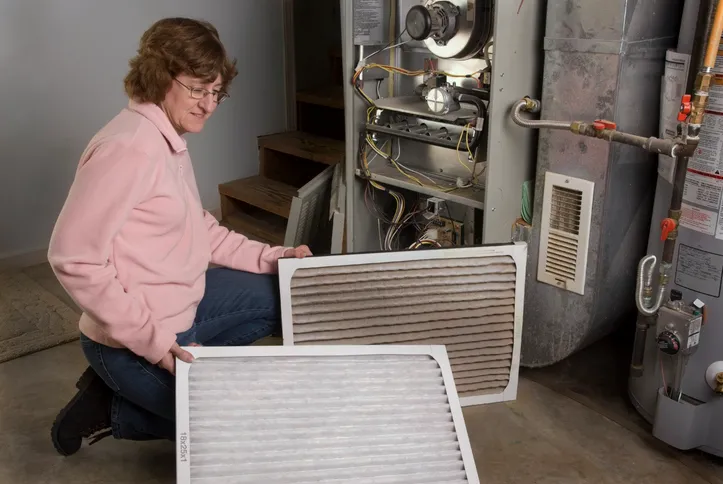
dirty air filter compared to a clean one

  • Thermostat Settings and Batteries: Believe it or not, thermostat problems account for roughly 40% of all HVAC emergencies. A busy household member might have accidentally bumped the system to "Off" or switched it from "Cool" to "Heat." Verify that the thermostat is set to the correct operating mode and that the temperature setting is at least 5 degrees below (for cooling) or above (for heating) the current indoor room temperature. If the display screen is blank, dim, or flickering, replace the batteries immediately.
  • The Circuit Breaker and the "One-Reset Rule": HVAC systems draw a significant amount of electrical power, especially during peak summer or winter weather. This high demand can occasionally trip your home's circuit breakers. Locate your main electrical panel and look for the breakers labeled for your indoor furnace/air handler and your outdoor condenser. If a breaker has tripped to the middle position, switch it completely to the "Off" position first, then flip it back to "On." Crucial Safety Rule: Only reset a tripped breaker once. If it trips a second time, do not try again. Repeatedly resetting a tripping breaker can cause severe electrical fires or indicate a serious short circuit within your system.
  • The Air Filter Check: A clogged air filter is often called the "silent killer" of HVAC systems. When a filter becomes heavily loaded with dust, pet dander, and hair, it severely restricts airflow. This lack of airflow forces your system to work twice as hard, which can cause the furnace to overheat and trigger a safety shutdown, or cause your air conditioner's evaporator coils to freeze into a solid block of ice. If your filter looks like a dusty lint trap, replace it immediately with a fresh one. If your system shut down due to overheating or freezing, leave it turned off for at least 30 to 45 minutes after replacing the filter to allow the safety switches to reset or the ice to thaw before trying to restart it.
  • Outdoor Unit Clearance: Walk outside and inspect your condenser unit. Debris, fallen leaves, tall weeds, or windblown trash can block the delicate metal fins, trapping heat and causing the compressor to overheat and shut down. Ensure there is at least two feet of clear, unobstructed space on all sides of your outdoor unit. If you notice a thick layer of ice forming on the copper refrigerant lines leading into the unit, turn the system off at the thermostat immediately to prevent catastrophic compressor damage, and let it thaw.

For more detailed guidance on handling these common household glitches, you can read our guide on Troubleshooting Common AC Repair Scenarios.

Preparing for a Technician: What to Do When Your HVAC Breaks Down Unexpectedly

If your quick checks do not restore power or airflow, it is time to call in a licensed professional. To help speed up the repair process and ensure the dispatch team sends the right technician with the correct tools, gather a few key pieces of information before you make the call:

  1. System Make and Model: Locate the manufacturer's nameplate on your indoor furnace or outdoor condenser. Jot down the brand name, model number, and serial number.
  2. Error Codes: If you have a modern smart thermostat or if your indoor unit has a small viewing window showing a flashing LED light, write down the specific error codes or the pattern of the flashing lights.
  3. Symptom History: Be ready to describe exactly what happened. Did you hear a loud pop before it shut off? Is the outdoor unit running but the indoor fan is silent? Has the system been short-cycling (turning on and off every few minutes) over the last few days?
  4. Approximate System Age: Knowing whether your system is 3 years old or 15 years old helps the technician determine if parts are likely covered under warranty or if certain components might be reaching the end of their natural lifespan.

Having these details organized helps your service provider diagnose the issue faster over the phone and ensures a smoother, more efficient repair visit. For specialized advice tailored to our local area, take a look at our Emergency HVAC Repair Tips for Silicon Valley Homeowners.

Recognizing a True HVAC Emergency vs. an Urgent Issue

Not every system failure requires an expensive middle-of-the-night emergency dispatch. Distinguishing between a true emergency that threatens your safety and an urgent situation that can safely wait until normal business hours can save you a lot of unnecessary stress.

Situation TypeDescription & ExamplesRecommended Action
True EmergencyImmediate risk to life, safety, or property. Examples: Gas smells, carbon monoxide alarms, electrical sparks, no heat during freezing weather, or no AC with vulnerable residents.Evacuate if necessary, turn off system power, and call for immediate 24/7 service.
Urgent IssueSystem is non-functional but there is no immediate safety hazard. Temperatures are mild outside, and there are no vulnerable family members.Perform basic troubleshooting, implement temporary comfort measures, and schedule a same-day or next-day appointment.
Convenience IssueMinor performance drop or non-critical component failure. Examples: Slightly uneven cooling, a noisy fan blade, or a smart thermostat app glitch.Schedule a standard, non-emergency service appointment during regular business hours.

Safety Hazards to Watch For: Gas, Carbon Monoxide, and Electrical Risks

Your HVAC system relies on a combination of high-voltage electricity, pressurized chemical refrigerants, and, in many cases, highly flammable natural gas. When components fail, they can create serious household hazards that require swift, decisive action.

  • Gas Leaks: Natural gas is naturally odorless, so utility companies add a chemical called mercaptan to give it a highly distinctive "rotten egg" smell. If you smell this odor near your furnace or gas lines, do not attempt to investigate, do not light matches, and do not flip any light switches (which can create a tiny, invisible spark). Leave the house immediately and call 911 and your gas utility provider from a safe distance outside.
  • Carbon Monoxide (CO) Leaks: Carbon monoxide is completely odorless, tasteless, and invisible, earning it the terrifying title of the "silent killer." In a gas furnace, CO is safely vented outdoors through the flue pipe. However, if your furnace’s heat exchanger cracks due to age or stress, CO can leak directly into your home's breathing air. Protect your household by installing CO detectors on every level of your home and replacing them every 7 years. If your CO alarm sounds, or if family members experience sudden, unexplained dizziness, headaches, nausea, or confusion, evacuate the home immediately and call emergency services.
  • Electrical Hazards: If you hear an active buzzing or hissing sound coming from your electrical cabinets, or if you smell a pungent, metallic burning odor, your system may be experiencing a severe electrical short. Turn off the power at your main breaker panel immediately to prevent an electrical fire.

To learn more about keeping your household protected during a system crisis, read our guide on How to Stay Safe During a Heating Emergency.

Staying Safe and Comfortable While Waiting for a Technician

Once you have completed your basic checks and scheduled a professional repair, your primary focus shifts to keeping your household safe and comfortable while you wait for the technician to arrive. Depending on the season, indoor temperatures can swing to uncomfortable or even dangerous extremes surprisingly quickly.

Beyond personal comfort, you also need to take quick steps to protect your property from secondary damage. For example, during a severe winter freeze, a complete heating failure can cause the temperature inside your walls to drop below freezing. If this happens, the water inside your plumbing pipes can freeze, expand, and burst the pipes, leading to catastrophic water damage. To prevent this, open the cabinet doors under your kitchen and bathroom sinks to allow what little warm air remains in your home to circulate around the plumbing. Additionally, turn on your faucets to a very slow, warm drip; moving water is much harder to freeze than standing water. If you are facing a severe heating outage, you can read more about safeguarding your home in our guide on Emergency Heating Repair.

Summer Cooling and Winter Heating Survival Strategies

When you are waiting for a technician during extreme weather, implementing a few smart, practical survival strategies can make a massive difference in your home's temperature.

Managing Extreme Summer Heat

  • Block the Sun: Close all window blinds, shades, and heavy curtains, especially on the sunny south and west sides of your home. Blocking direct sunlight prevents the "greenhouse effect" from rapidly heating up your living spaces.
  • Harness Evaporative Cooling: Use portable box fans or ceiling fans to keep air moving. While fans do not actually lower the room's temperature, the moving air creates a wind-chill effect on your skin, making the room feel 4 to 6 degrees cooler.
  • Apply Cold Compresses: To cool down your body temperature quickly, apply ice packs or cold, damp cloths to your body's key pulse points: your wrists, the back of your neck, your temples, and the inside of your elbows.
  • Stay Hydrated and Limit Appliance Use: Drink plenty of water and avoid dehydrating beverages like coffee or alcohol. Avoid using heat-generating appliances like your oven, stove, dishwasher, or clothes dryer, which can quickly add unwanted heat and humidity to your home.

Managing Severe Winter Cold

  • Trap the Warmth: Choose one central room in the house to gather your family and pets. Close the doors to all unused bedrooms, bathrooms, and closets to concentrate your body heat and any temporary heat sources in one small, manageable space.
  • Seal Out Drafts: Roll up towels or blankets and place them at the base of exterior doors and along drafty window sills to keep precious warm air from escaping.
  • Dress in Layers: Put on multiple thin layers of clothing rather than one heavy jacket. Thin layers trap warm air between them, providing highly effective insulation. Don't forget to wear a warm hat and insulated socks.
  • Use Space Heaters Safely: If you use portable electric space heaters, follow strict safety guidelines: keep them at least three feet away from all flammable materials (curtains, blankets, furniture), plug them directly into wall outlets rather than extension cords, and never leave them running unattended or while you sleep.

Frequently Asked Questions about Unexpected HVAC Failures

What is considered a true HVAC emergency?

A true HVAC emergency is any situation that poses an immediate threat to the health and safety of your household or risks causing severe, permanent damage to your property. This includes gas leaks (indicated by a rotten egg smell), carbon monoxide alarms, active electrical fires or sparking, a complete loss of heating when outdoor temperatures are freezing, or a complete loss of air conditioning during extreme heatwaves if you have vulnerable residents (such as infants, the elderly, or individuals with chronic medical conditions) living in the home.

How does regular maintenance prevent sudden breakdowns?

Regular preventative maintenance is like an oil change for your car; it keeps all the moving parts running smoothly and catches minor wear and tear before it spirals into a catastrophic system failure. During a bi-annual tune-up, a technician will clean your system's coils, check refrigerant levels, inspect electrical connections, and test vital safety controls. This proactive care reduces your likelihood of experiencing an unexpected breakdown by 50% and helps your system run 15-20% more efficiently, saving you money on your monthly energy bills.

What should I do if I smell gas or suspect a carbon monoxide leak?

If you smell gas or suspect a carbon monoxide leak, do not attempt to investigate the issue or shut off your system's gas valve yourself. Evacuate all family members and pets from the home immediately. Do not touch any electrical switches, use your home landline, or open garage doors on your way out, as any small electrical arc can ignite a gas leak. Once you are safely away from the property, call 911 and your local gas utility provider to report the emergency.

Conclusion

An unexpected HVAC breakdown can be incredibly stressful, but having a clear, structured plan of action helps you stay calm, protect your home, and get your comfort restored as quickly as possible. By running through basic checks like your thermostat, circuit breaker, and air filter, you can easily rule out simple, common issues before calling for service. And if you do need professional help, gathering your system's details ahead of time ensures a smooth, efficient repair process.

At Precision Heating and Cooling, we have spent over two decades helping homeowners throughout the San Jose Bay Area and Central Valley navigate these stressful emergencies with ease. Whether you need urgent assistance in Cupertino, Los Gatos, Palo Alto, Santa Clara, Sunnyvale, Clovis, or Hanford, CA, our highly experienced team is ready to deliver fast, reliable service. We pride ourselves on competitive pricing and flexible payment options to ensure that a sudden system failure doesn't put an unexpected strain on your household budget.

If your heating or cooling system is acting up, don't wait for a minor glitch to turn into a total shutdown. Contact us today to schedule a professional evaluation or request expert air conditioning repair to keep your home comfortable all year round.

Happy & Satisfied Family | Precision Heating & CoolingHappy & Satisfied Family | Precision Heating & Cooling
Financing Options From Flexible Financing Options For All Home Owners

Flexible payment options to make your goals affordable and stress-free.

Customer Testimonials

White Colored Star Icon | Precision Heating & CoolingWhite Colored Star Icon | Precision Heating & CoolingWhite Colored Star Icon | Precision Heating & CoolingWhite Colored Star Icon | Precision Heating & CoolingWhite Colored Star Icon | Precision Heating & Cooling

Leslie was amazing for her outstanding customer service skills with me the other day. Thanks to her help my air conditioner is now all set up. She answered all my questions and took away all my problems. Leslie broke it down step by step to set it up easier. Now thanks to her my air conditioner is working perfectly. I really appreciate it Leslie and I’ll be sure to ask for you if I ever come back.

Alf_234
White Colored Star Icon | Precision Heating & CoolingWhite Colored Star Icon | Precision Heating & CoolingWhite Colored Star Icon | Precision Heating & CoolingWhite Colored Star Icon | Precision Heating & CoolingWhite Colored Star Icon | Precision Heating & Cooling

I contacted Precision Heating and Cooling for my home's AC repair. They were punctual and very professional. Guillermo was very kind and thorough. I would highly recommend them!

Claudia H.
White Colored Star Icon | Precision Heating & CoolingWhite Colored Star Icon | Precision Heating & CoolingWhite Colored Star Icon | Precision Heating & CoolingWhite Colored Star Icon | Precision Heating & CoolingWhite Colored Star Icon | Precision Heating & Cooling

I am writing to express my sincere appreciation for the excellent work performed by Pablo and Alejandro from Precision Heating and Cooling. Their commitment to quality and customer satisfaction is truly commendable. Awesome job guys!

Lizeth C.
White Colored Star Icon | Precision Heating & CoolingWhite Colored Star Icon | Precision Heating & CoolingWhite Colored Star Icon | Precision Heating & CoolingWhite Colored Star Icon | Precision Heating & CoolingWhite Colored Star Icon | Precision Heating & Cooling

I would like to extend my sincere gratitude to Alejandro for his exceptional hard work. His passion for helping others is evident, and he consistently goes above and beyond in his service. Alejandro's thorough cleaning of my fireplace has truly made a significant difference. His dedication and professionalism are greatly appreciated.

Daisy M.
White Colored Star Icon | Precision Heating & CoolingWhite Colored Star Icon | Precision Heating & CoolingWhite Colored Star Icon | Precision Heating & CoolingWhite Colored Star Icon | Precision Heating & CoolingWhite Colored Star Icon | Precision Heating & Cooling

I was very impressed. Came at night (after 9pm) to fix our AC during the middle of a heat wave the day before a national holiday! Technician was very courteous and efficient, got the job done quickly. Will definitely call them again for any AC servicing I need!

Robert M.
White Colored Star Icon | Precision Heating & CoolingWhite Colored Star Icon | Precision Heating & CoolingWhite Colored Star Icon | Precision Heating & CoolingWhite Colored Star Icon | Precision Heating & CoolingWhite Colored Star Icon | Precision Heating & Cooling

Fast and efficient, arrived when scheduled for repairs and replacement parts were ordered and installed quickly. Techs were very friendly and professional. AC system  works great now! I highly recommend their services if you need repairs. Tim

Tim C.

Recent Blogs

Stay updated with our latest blog posts.
What to Do When Your HVAC Breaks Down Unexpectedly
Home

What to Do When Your HVAC Breaks Down Unexpectedly

Discover essential tips to keep your home in top shape.
A Comprehensive Guide to How Often Commercial Refrigeration Should Be Serviced
Home

A Comprehensive Guide to How Often Commercial Refrigeration Should Be Serviced

Discover essential tips to keep your home in top shape.
A Comprehensive Guide to Heat Pump Advantages Over Traditional HVAC
Home

A Comprehensive Guide to Heat Pump Advantages Over Traditional HVAC

Discover essential tips to keep your home in top shape.
View All
3D Effect Blue Semi Circular Hero Icon | Precision Heating & Cooling
3D Effect Blue Round Circular Hero Icon | Precision Heating & Cooling